Introduction
Staying hydrated is one of the simplest habits we can develop to support our overall well being. Water is essential for many normal body functions, including regulating body temperature, transporting nutrients, supporting digestion, and maintaining fluid balance. Despite its importance, many people forget to drink enough water during busy workdays, school hours, travel, or household activities.
In my opinion, the best way to stay hydrated is to make drinking water a regular part of everyday life instead of waiting until you feel thirsty. Simple habits, such as keeping a water bottle nearby, drinking water with meals, and choosing water instead of sugary beverages more often, can make hydration easier to manage.
The amount of fluid a person needs can vary depending on age, activity level, weather, diet, and individual health circumstances. For this reason, there is no single daily water target that works perfectly for everyone.
In this article, I will share practical tips for staying hydrated throughout the day, explain common hydration mistakes, and discuss how to build a consistent water drinking routine.
Why Staying Hydrated Is Important
Water plays an important role in maintaining normal body functions. It helps regulate body temperature, supports circulation, assists digestion, and allows the body to remove waste through urine and other processes.
When we lose more fluid than we replace, dehydration can occur. Mild dehydration may cause symptoms such as thirst, a dry mouth, headache, tiredness, or darker urine. More significant dehydration can become serious and may require medical attention.
Hydration is particularly important during hot weather, exercise, and activities that cause heavy sweating. People who work outdoors or spend long periods in warm environments may need to pay extra attention to fluid intake.
Drinking enough water does not guarantee that you will always feel energetic or prevent every health problem. However, maintaining a suitable fluid balance helps your body perform its normal functions.
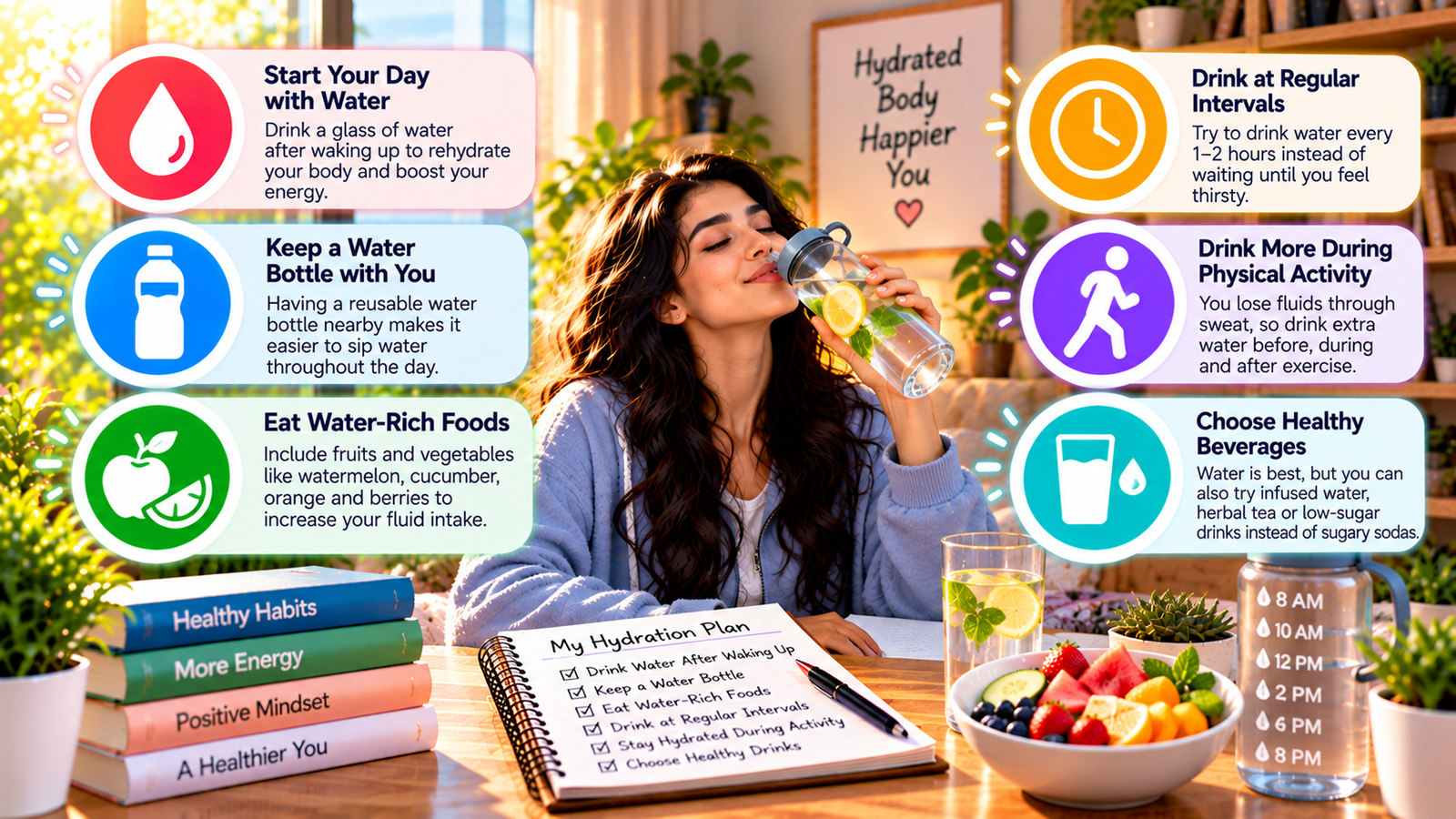
1. Start Your Morning With Water
One easy way to develop a hydration routine is to drink a glass of water after waking up.
During sleep, you usually go several hours without drinking. Having water in the morning can help you begin the day by replacing some of the fluid your body needs.
I recommend keeping a clean glass or reusable water bottle somewhere convenient so you do not have to search for one after waking up.
You can drink water before breakfast or alongside your morning meal, depending on what feels comfortable. There is no need to force yourself to drink a large amount immediately after waking.
The important thing is to establish a routine that you can follow consistently. If you begin your morning with water, it may become easier to remember hydration during the rest of the day.
2. Keep a Water Bottle Within Reach
One common reason people forget to drink water is that it is not easily available. When you are working, studying, driving, or completing household tasks, you may remain busy for hours without thinking about hydration.
Keeping a reusable water bottle nearby can solve this problem. Place it on your desk, carry it in your bag, or keep it in another convenient location where you spend time.
Choose a bottle that is easy to clean, comfortable to carry, and suitable for your daily activities. Some people prefer a bottle with measurement markings because it helps them estimate how much they have consumed.
You do not need an expensive bottle to develop this habit. A simple, clean, reusable container can be enough.
When the bottle becomes empty, refill it when practical. Having water available throughout the day makes regular drinking feel more natural.
3. Drink Water Regularly Instead of Waiting for Thirst
Thirst is a useful signal that your body needs fluid. However, relying entirely on thirst may not work well for everyone, particularly during exercise, hot weather, or situations where people become distracted.
A practical approach is to drink water at regular points throughout the day. For example, have some water after waking up, with breakfast, during work breaks, with lunch, and in the afternoon.
You can also drink before or after physical activity according to your needs and comfort.
There is no need to follow a strict schedule that requires drinking water every few minutes. Instead, connect hydration with activities you already perform.
For example, take a few drinks whenever you finish a task, return from a break, or sit down for a meal. These reminders can help you maintain a consistent routine without making hydration feel like another difficult responsibility.
4. Eat Fruits and Vegetables With High Water Content
Drinking water is not the only way to obtain fluids. Many foods contain significant amounts of water and can contribute to your overall fluid intake.
Some useful choices include:
- Watermelon
- Cucumber
- Oranges
- Strawberries
- Tomatoes
- Lettuce
- Melons
- Peaches
These foods can be especially refreshing during warm weather. You can include them in breakfast, prepare a fruit snack, add cucumber and tomatoes to lunch, or serve vegetables alongside dinner.
Soups and other water rich foods can also contribute to fluid intake.
I believe this is a practical way to support hydration because it combines water intake with a varied diet. However, food should complement regular drinking rather than replace water entirely.
Choose fruits and vegetables that are available, affordable, and suitable for your dietary needs.
5. Increase Water Intake During Hot Weather
Hot weather can increase fluid loss through sweating. This is especially relevant for people who live in warm climates, work outdoors, travel in hot conditions, or spend time in rooms without adequate cooling.
During hot days, keep drinking water available and take regular breaks in a cooler place when possible. Wear suitable clothing and avoid unnecessary strenuous activity during the hottest part of the day when practical.
If you exercise or work outdoors for extended periods, pay attention to how much you sweat and adjust your fluid intake accordingly.
People who sweat heavily for long periods may also lose electrolytes. In such circumstances, an appropriate electrolyte drink may sometimes be useful, depending on the activity and individual needs. For ordinary daily activities, water and regular meals are generally sufficient for most healthy people.
Do not assume that everyone needs sports drinks or electrolyte supplements during routine daily activities.
6. Drink Water Before and After Exercise
Physical activity increases the body’s need to manage fluid loss, particularly when you exercise in hot weather or sweat heavily.
Drinking water before exercise helps you begin activity adequately hydrated. During longer or more demanding workouts, take regular drinks according to your needs and the conditions.
After exercise, replace the fluids lost through sweating. If you have completed a short, light workout, drinking water and eating your usual meals may be sufficient.
For prolonged, intense exercise or activities involving heavy sweating, fluid and electrolyte replacement may require more attention.
Avoid forcing yourself to drink excessive amounts of water quickly. Drinking too much water in a short period can dangerously lower the sodium concentration in your blood.
The goal is to replace fluid sensibly rather than drinking as much as possible.
7. Make Water More Enjoyable
Some people find it difficult to drink plain water because they prefer beverages with more flavor. If this describes you, making water more enjoyable may help you drink it more regularly.
You can add slices of lemon, cucumber, orange, or a few pieces of fresh fruit to a jug of water. Fresh mint can also provide a pleasant taste.
Another option is to keep chilled water in the refrigerator during warm weather. Some people prefer room temperature water, so choose whatever makes drinking easier for you.
Unsweetened flavored water can also be an option if you enjoy it and the ingredients suit your needs.
Try not to rely on sugary drinks simply because they taste better. These beverages can add substantial amounts of sugar to your diet. Water remains a practical everyday choice for hydration.
8. Choose Water More Often Than Sugary Drinks
Soft drinks, sweetened juices, energy drinks, and other sugary beverages can contribute to fluid intake, but drinking them frequently may add more sugar than you intend.
A useful habit is to choose water as your main everyday beverage. You can still enjoy other drinks occasionally, but making water your first choice can help reduce unnecessary added sugar.
If you currently drink sweetened beverages throughout the day, change gradually. Replace one serving with water and continue making small adjustments as the habit becomes easier.
Unsweetened tea and other suitable beverages can also contribute to fluid intake. However, be mindful of caffeine, particularly later in the day if it affects your sleep.
Fruit juice should not automatically be considered equivalent to whole fruit because it may contain less fiber and can be easier to consume in large quantities.
Making water convenient and enjoyable can help you build a healthier drinking routine without feeling that you must change everything at once.
9. Set Simple Hydration Reminders
Busy schedules can make it easy to forget water. Reminders can help you build a routine until drinking regularly becomes more automatic.
You might set an alert on your phone, use a hydration tracking app, or place a small note near your workspace.
Another option is to connect drinking water with everyday activities. Drink some water when you arrive at work, before lunch, after returning from a walk, or when you finish a study session.
Tracking can be useful for people who often forget to drink, but it should not become a source of pressure. You do not need to record every sip if a simple routine works for you.
Pay attention to your body’s needs and adjust your habits according to the weather, activity level, and your general health.
10. Pay Attention to Signs of Dehydration
Recognizing possible signs of dehydration can help you respond before fluid loss becomes more serious.
Common signs may include:
- Feeling thirsty.
- Having a dry mouth.
- Passing urine less frequently than usual.
- Noticing darker yellow urine.
- Feeling unusually tired or lightheaded.
Urine color can provide a general clue about hydration, although it is not a perfect measurement. Vitamins, medications, foods, and some health conditions can change urine color.
If you notice that you are thirsty or your urine is consistently darker than usual, consider whether you need more fluids. Pale yellow urine is often a reasonable general sign of adequate hydration for many healthy adults, but individual circumstances differ.
Severe dehydration may cause confusion, fainting, a rapid heartbeat, or other serious symptoms. Seek urgent medical care if severe symptoms occur.
Older adults, young children, and people who are unwell may need additional attention because dehydration can develop more easily or be harder to recognize.
11. Build a Practical Daily Hydration Routine
A simple routine can help you spread fluid intake throughout the day without drinking excessive amounts at once.
Here is an example you can adapt to your schedule:
Morning: Drink water after waking and have another drink with breakfast if you feel you need it.
Midmorning: Keep your bottle nearby and drink during a suitable break.
Lunch: Have water with your meal and include fruits or vegetables when possible.
Afternoon: Drink according to your thirst, activity, and the weather. Refill your bottle if needed.
Evening: Continue drinking as needed with dinner and during your usual activities.
Before bed: Drink if you are thirsty, but avoid forcing large amounts immediately before sleeping if this causes frequent nighttime bathroom visits.
This is only an example, not a mandatory schedule. Your fluid needs may be higher or lower depending on your body, activities, diet, and environment.
12. Understand How Much Water You Need
There is no universal amount of water that every person must drink each day. Fluid needs vary according to age, body size, physical activity, temperature, pregnancy or breastfeeding, and health conditions.
Water intake also comes from foods and beverages other than plain water. This is why general daily fluid recommendations should not always be interpreted as the amount of plain water you must drink separately.
A useful starting point for many healthy adults is to drink regularly throughout the day, respond to thirst, and pay attention to changes in activity and weather.
However, some people need individualized fluid guidance. Those with certain kidney, heart, or liver conditions may be advised to limit fluids. If a healthcare professional has given you a specific fluid plan, follow that advice rather than increasing water intake on your own.
Avoid treating hydration challenges or online recommendations as a reason to drink excessive amounts of water.
Common Hydration Mistakes to Avoid
One common mistake is drinking very little water during the day and trying to make up for it by consuming a large amount at night. Spreading fluid intake more evenly is often more comfortable and practical.
Another mistake is assuming that everyone needs exactly eight glasses of water every day. This familiar guideline can be a convenient reminder for some people, but actual needs vary.
Some people also confuse healthy hydration with drinking continuously, even when they are not thirsty. Excessive water consumption can be dangerous, particularly when large amounts are consumed rapidly.
Finally, do not ignore changes in thirst or urination that are persistent, unusual, or accompanied by other symptoms. Such changes may have causes beyond ordinary dehydration and may require medical advice.
Conclusion
Staying hydrated throughout the day does not have to be complicated. Simple habits, such as drinking water in the morning, keeping a bottle nearby, having water with meals, eating water rich fruits and vegetables, and drinking more when sweating heavily, can help you maintain a consistent routine.
In my view, the most effective approach is to make water easily available and connect hydration with activities you already perform. You do not need expensive products or a complicated tracking system to begin improving your habits.
Remember that fluid needs differ from person to person. Pay attention to thirst, activity levels, weather conditions, and other individual factors instead of following a strict amount without considering your circumstances.
By making small, sensible changes, you can support normal body functions and develop a hydration routine that fits your everyday life. Consistency, moderation, and awareness of your body’s needs are the keys to making this healthy habit last.