Introduction
Building healthy habits is one of the most practical ways to improve everyday life. Simple activities such as eating balanced meals, staying physically active, getting enough sleep, drinking water regularly, and managing stress can support overall wellbeing. However, developing these habits is not always easy. Many people begin with strong motivation, make several changes at once, and then struggle to maintain them when their daily responsibilities become demanding.
In my opinion, the best way to build healthy habits is to start small and make gradual improvements. You do not need to change your entire lifestyle overnight. Instead, focus on one manageable action, repeat it regularly, and allow it to become part of your normal routine before adding another goal.
Healthy habits are not about being perfect every day. They are about making practical choices that fit your lifestyle and returning to your routine when things do not go as planned.
In this article, I will explain how to build healthy habits one step at a time, set realistic goals, stay consistent, overcome common challenges, and create a daily routine that supports long term wellbeing.
1. Start With One Small Habit
One of the most common mistakes people make when improving their lifestyle is trying to change too many things at once. They may decide to exercise every day, stop eating their favorite foods, wake up much earlier, and completely reorganize their schedule in the same week.
Although this approach may feel exciting at first, it can quickly become overwhelming.
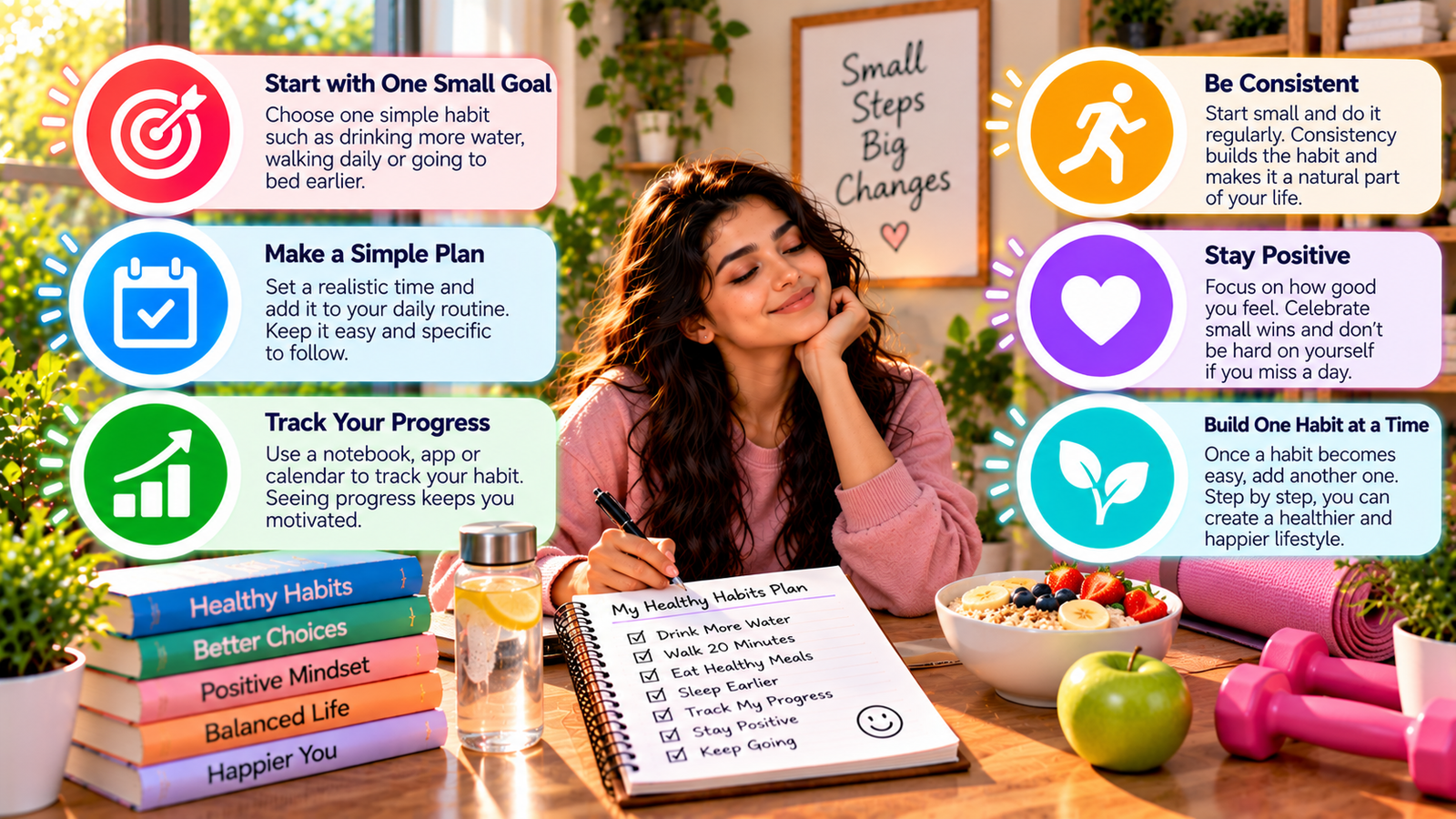
A more practical strategy is to choose one small habit and focus on making it consistent. For example, if you want to become more active, begin with a short daily walk. If you want to improve your eating habits, add a serving of vegetables to one meal. If you want to improve your sleep routine, start by choosing a consistent bedtime.
Small actions require less planning and can be easier to repeat on busy days.
Once the habit becomes familiar, you can gradually increase the effort or introduce another healthy activity.
The goal is to make progress that you can maintain rather than achieve a dramatic change that lasts only a few days.
2. Decide Why You Want to Build the Habit
Understanding your reason for developing a habit can help you stay focused when motivation changes.
Before starting, ask yourself why the habit matters to you. Perhaps you want to feel more energetic, organize your daily routine, spend less time sitting, improve your sleep schedule, or make more time for yourself.
Write down your reason in simple language.
For example, instead of saying, “I want to become healthier,” you could say, “I want to walk regularly because I spend most of my working day sitting.”
A clear reason connects your goal with your everyday life. It also helps you choose actions that are relevant to your needs.
Try to focus on benefits that matter personally rather than following every lifestyle trend you see online.
You do not need a complicated motivation statement. A simple reminder of why you started may be enough to encourage you to continue when your routine becomes difficult.
3. Set Realistic and Measurable Goals
A healthy habit becomes easier to manage when you know exactly what you want to do.
Broad goals such as eating better, sleeping earlier, or exercising more can be useful starting points, but they do not always explain what action you should take today.
Make your goal specific and realistic.
For example, instead of saying, “I will exercise more,” decide to walk for 10 minutes after lunch on weekdays. Instead of saying, “I will eat healthier,” plan to include fruit with breakfast several times a week.
Your goal should fit your current routine, abilities, and available time.
It is also helpful to measure progress in a simple way. You could use a notebook, calendar, or phone reminder to record whether you completed the activity.
Avoid setting targets that leave no room for unexpected responsibilities. A flexible goal is often more sustainable than a demanding schedule that becomes difficult to follow.
As your confidence grows, you can adjust your target gradually.
4. Connect New Habits With Existing Routines
One useful way to remember a new habit is to connect it with something you already do regularly.
This approach works because familiar activities provide natural reminders for new behaviors.
For example:
- After brushing your teeth in the morning, drink a glass of water if you are thirsty.
- After lunch, take a short walk.
- After finishing work, spend five minutes organizing your workspace.
- Before going to bed, prepare your clothes for the next day.
- After returning home, put your keys and other belongings in their designated places.
Choose a connection that makes sense for your lifestyle.
If your mornings are unpredictable, it may be easier to attach a new habit to your lunch break or evening routine.
Keep the new action simple enough to complete without extensive preparation. Over time, the existing activity can serve as a reminder, making the new habit easier to remember and repeat.
5. Make Healthy Habits Easy to Follow
The easier a habit is to begin, the more likely you may be to repeat it.
Think about the small obstacles that make your chosen habit difficult. If you want to walk in the morning but cannot find your shoes, prepare them the night before. If you want to eat more fruit, keep suitable fruit washed and accessible. If you want to read regularly, place a book where you normally relax.
You can also make unhelpful routines less convenient. For example, if you frequently lose time scrolling through your phone, move distracting apps away from your home screen or silence unnecessary notifications during work.
These adjustments reduce the amount of effort needed to make a good choice.
You do not have to rely entirely on willpower. A well organized environment can support your intentions by making healthy actions more convenient.
Start by identifying one obstacle and removing it. Even a small change in your surroundings may make a habit easier to maintain.
6. Begin With a Manageable Amount of Effort
When building a new habit, it is useful to choose an amount of effort that feels manageable even on an ordinary busy day.
If you want to start exercising, you might begin with five or ten minutes of movement. If you want to practice mindfulness, start with a few quiet minutes. If you want to organize your home, focus on one drawer or shelf.
The purpose of starting small is not to limit your progress permanently. It is to make the first step easier and reduce the temptation to postpone it.
You can increase the duration, frequency, or difficulty as the habit becomes more familiar.
For example, a short walk might eventually become a longer walking routine. A few minutes of reading might grow into a regular evening activity.
However, progress does not always need to involve doing more. Sometimes, maintaining a comfortable and realistic routine is the best option.
Choose a level that supports consistency without creating unnecessary pressure.
7. Create a Simple Daily Routine
A daily routine can help you fit healthy habits into your existing responsibilities.
You do not need to schedule every minute of your day. Instead, identify a few natural opportunities for activities that support your wellbeing.
Your morning routine might include washing, eating breakfast, and reviewing your priorities. During the day, you could take movement breaks, drink water regularly, and include balanced foods in your meals. In the evening, you might prepare for the next day and follow a relaxing bedtime routine.
The exact activities will depend on your work schedule, family responsibilities, and personal preferences.
Try to maintain a reasonable balance between work, movement, meals, rest, and leisure.
It is also helpful to prepare for the next day before going to bed. Organizing your bag, choosing clothes, or planning meals can reduce morning stress.
A simple routine provides structure while leaving enough flexibility to handle unexpected changes.
8. Track Your Progress Without Becoming Obsessed
Tracking your habits can help you understand whether your efforts are becoming consistent.
A basic calendar or notebook is often enough. Each day, mark whether you completed the habit you planned to practice.
For example, if your goal is to walk after lunch, record the days you took your walk. If your goal is to maintain a bedtime routine, note whether you followed your planned evening activities.
Review your progress at the end of the week.
Ask yourself which days were easiest, what made the habit difficult, and whether your goal needs adjustment.
Remember that tracking is a tool for learning, not a reason to criticize yourself. Missing a day does not erase the progress you have already made.
Avoid measuring your success only by perfect streaks. It is more useful to notice whether you are becoming more consistent over time.
If tracking begins to create stress, simplify the process or take a break from recording every detail.
9. Learn to Handle Missed Days
Even well established routines can be interrupted by illness, travel, deadlines, family responsibilities, or unexpected events.
Missing a day is a normal part of building habits. The important thing is how you respond afterward.
Instead of thinking that you have failed, identify what prevented you from completing the activity. Perhaps your goal was too demanding, your schedule changed, or you forgot to prepare what you needed.
Use that information to make the habit easier next time.
For example, if you cannot complete your usual workout, you might choose a shorter session when appropriate. If you miss your planned reading time, try again during another suitable part of the day.
You do not need to compensate for a missed activity by doing an excessive amount the following day.
Simply return to your routine when you can.
A flexible attitude helps you avoid the all or nothing thinking that often makes healthy habits difficult to maintain.
10. Improve Your Eating Habits Gradually
Healthy eating is an area where gradual changes can be particularly practical.
Rather than changing your entire diet at once, begin with one improvement that suits your needs.
You could add vegetables to lunch, choose fruit as a convenient snack, prepare more meals at home, or plan your shopping before visiting the market.
Another useful habit is paying attention to portion sizes and eating at a comfortable pace. Try to create meals that include a variety of foods, such as vegetables, fruit, whole grains, and suitable sources of protein.
Planning ahead can also reduce the pressure of deciding what to eat when you are tired or busy.
You do not need to eliminate every food you enjoy. A balanced eating pattern can include personal preferences and occasional treats.
Focus on habits you can maintain with the foods, budget, and cooking facilities available to you.
If you have specific dietary needs or a medical condition that affects your food choices, seek appropriate professional guidance.
11. Build Consistency With Regular Movement
Physical activity is another habit that can be developed one step at a time.
If you currently spend most of the day sitting, you do not have to begin with demanding workouts. Start by finding small opportunities to move.
Take a short walk, stretch gently during a break, use the stairs when suitable, or complete a few simple exercises at home.
Choose an activity that you enjoy or find convenient. Walking, cycling, dancing, gardening, and beginner friendly home workouts are all possible options, depending on your circumstances.
Schedule movement at a time when you are most likely to follow through. Some people prefer the morning, while others find it easier to be active after work or during lunch.
As your routine develops, you can gradually work toward recommended physical activity levels. Adults are generally advised to aim for at least 150 minutes of moderate intensity aerobic activity each week, along with muscle strengthening activities on two or more days, according to their abilities and health needs.
Start at a suitable level and increase activity gradually rather than trying to achieve everything immediately.
12. Develop Better Sleep Habits
Sleep habits can influence how well you manage your everyday responsibilities. A consistent sleep routine can make it easier to plan your day and create time for other healthy activities.
Begin with one practical adjustment. You might choose a more consistent waking time, reduce screen use before bed, or create a short evening routine that helps you relax.
Prepare for bedtime by completing necessary tasks earlier whenever possible. Keep your sleeping space comfortable, dark, and reasonably quiet.
Avoid trying to change your bedtime dramatically overnight if doing so feels unrealistic. Small adjustments may be easier to maintain.
Most adults need at least seven hours of sleep each night, although individual requirements vary.
If you regularly struggle to sleep despite making reasonable adjustments, or if sleep problems significantly affect your daily life, consider speaking with a healthcare professional.
Improving sleep is not about following a perfect nighttime schedule. It is about creating conditions and habits that support adequate rest.
13. Stay Motivated by Recognizing Small Wins
Motivation can help you begin a new habit, but it naturally changes from day to day.
One way to maintain encouragement is to recognize small improvements instead of waiting for major results.
If you walk several times during the week, acknowledge the effort you made. If you prepare meals more regularly or follow a bedtime routine more consistently, notice that progress.
You can also celebrate milestones with simple rewards that support your goals, such as spending time on a favorite hobby, enjoying a relaxing activity, or purchasing a useful item within your budget.
Avoid using rewards that create pressure or undermine the habit you are trying to develop.
It is also helpful to remember that some benefits of healthy routines may be gradual. You may not notice a dramatic difference after a few days, but consistent actions can help establish a more sustainable lifestyle.
Focus on the process you can control rather than expecting immediate results.
14. Adjust Your Habits to Fit Your Lifestyle
A habit that works well for one person may not suit another person’s schedule or circumstances.
Someone who works from home may find it easy to take short walking breaks. A person with a long commute might prefer exercising after dinner. Someone managing family responsibilities may need shorter activities that can fit between other tasks.
Instead of copying another person’s routine exactly, identify what works for you.
Consider your available time, energy, budget, living environment, and responsibilities. Then adapt the habit accordingly.
If your schedule changes frequently, create a flexible version of your routine. You might have a regular plan for normal days and a shorter alternative for especially busy days.
For example, your usual walk might last 20 minutes, while your busy day version lasts five minutes when practical.
The aim is to preserve the habit in a realistic way without forcing yourself to follow a rigid schedule.
15. Review Your Habits Every Week
A short weekly review can help you identify what is working and what needs to change.
Choose a convenient time to reflect on your progress. You might do this on a weekend or at the beginning of a new week.
Ask yourself three simple questions:
- Which healthy habit was easiest to maintain?
- What made the other habits difficult?
- What small adjustment could make next week easier?
You may discover that a habit works better at a different time of day or that you need to prepare supplies in advance.
You might also realize that you have taken on too many goals and should focus on fewer activities.
Make one or two adjustments rather than redesigning your entire routine every week.
This review helps you learn from experience and keep your habits connected to your actual needs.
Common Mistakes to Avoid When Building Healthy Habits
One common mistake is expecting immediate results. Many habits require repeated effort before they begin to feel natural, so give yourself time to adjust.
Another mistake is starting with goals that are too ambitious. A demanding routine can become difficult to maintain when work, family, or other responsibilities increase.
Comparing your progress with other people can also create unnecessary pressure. Everyone has different circumstances, abilities, and starting points.
It is equally important to avoid treating one missed day as a complete failure. Healthy habits develop through repeated practice, and occasional interruptions are normal.
Finally, do not keep a habit simply because it is popular. Choose actions that are suitable for your lifestyle and contribute meaningfully to your personal goals.
The best habits are practical, flexible, and sustainable.
Conclusion
Building healthy habits one step at a time is a realistic way to create lasting improvements in everyday life. You do not need to change everything at once or follow an extremely strict routine. By starting with small actions, setting clear goals, connecting habits with existing activities, and removing unnecessary obstacles, you can gradually develop a lifestyle that supports your wellbeing.
In my opinion, consistency is more important than perfection. A short walk, a balanced meal, a regular bedtime, or a few minutes of organization can be a useful starting point when practiced consistently.
Choose one habit that matters to you and make it easy to follow. Track your progress if helpful, learn from missed days, and adjust your approach when your circumstances change.
Over time, these small actions can become familiar parts of your daily routine. Remember that meaningful progress does not always come from dramatic changes. Often, it comes from making reasonable choices repeatedly and allowing them to grow into lasting habits.