Introduction
Making healthy lifestyle changes is a common goal for people who want to feel better, improve their daily routines, and take better care of themselves. Many people decide to eat healthier, exercise regularly, sleep earlier, or spend less time on their phones. However, staying consistent with these changes can be difficult when work, family responsibilities, and unexpected challenges become part of everyday life.
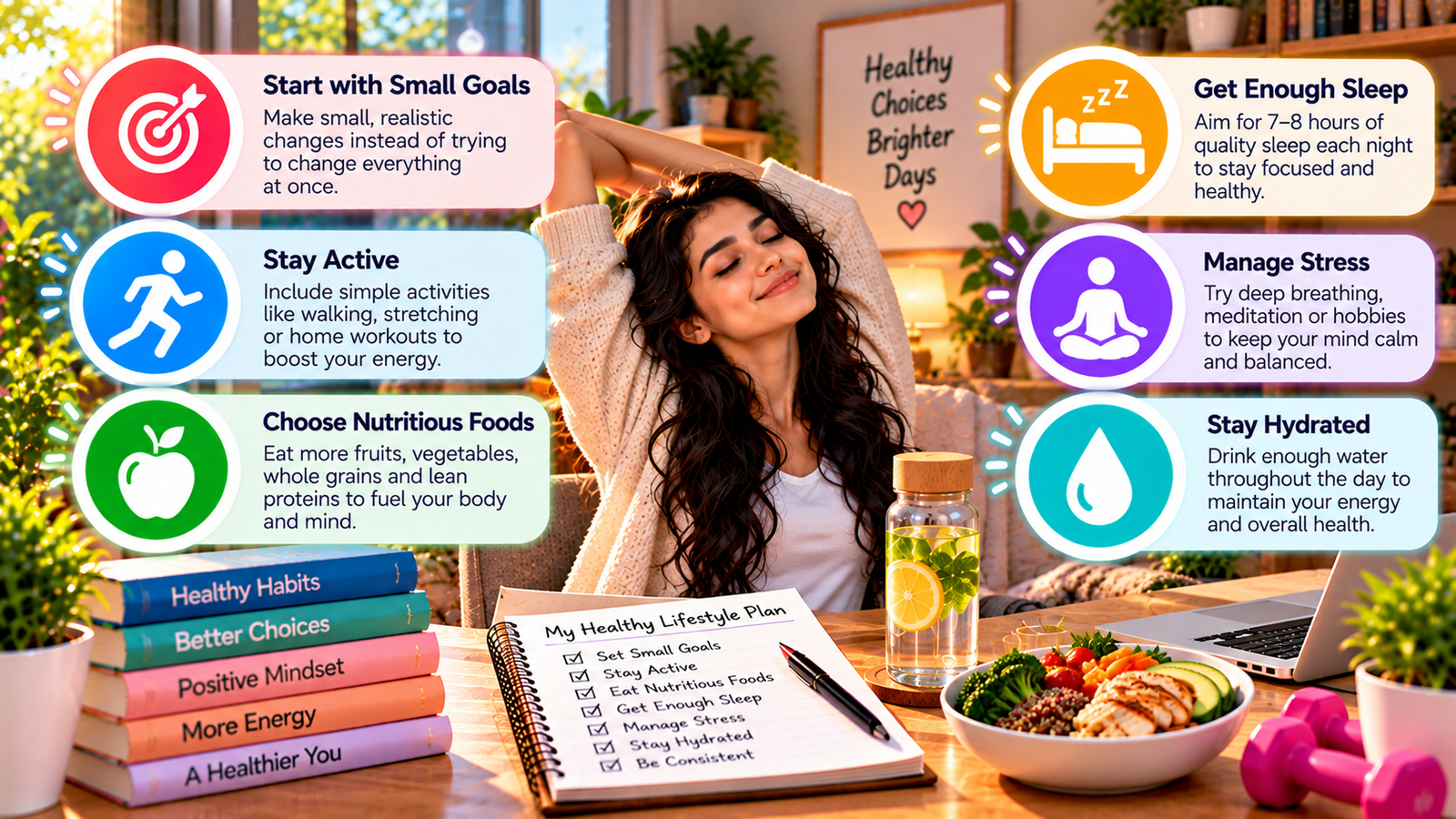
In my opinion, the secret to building a healthier lifestyle is not trying to change everything overnight. It is about developing small habits that fit naturally into your daily routine. A realistic change that you can maintain for months is often more useful than an ambitious plan that becomes too difficult after a few days.
Healthy living does not require a perfect schedule, expensive products, or complicated routines. Simple actions, such as drinking water regularly, walking more often, preparing balanced meals, and getting enough sleep, can help you create a more balanced way of living.
In this article, I will explain how to make healthy lifestyle changes that last, overcome common challenges, and develop habits that support long term well being.
1. Start With Small and Realistic Goals
One of the most common mistakes people make when improving their lifestyle is trying to change too many things at once. They may decide to follow a strict diet, exercise every day, wake up early, and completely avoid unhealthy habits starting on the same day.
Although motivation can make these goals seem achievable at first, maintaining several major changes simultaneously can become overwhelming.
A better approach is to start with one or two realistic goals. For example, if you rarely exercise, begin with a short walk several days a week. If you often skip breakfast, try preparing a simple morning meal in advance.
Small goals are easier to fit into a busy schedule, and completing them can build confidence for future improvements.
I believe consistency matters more than intensity when establishing many everyday habits. You do not need to make dramatic changes immediately. Focus on choosing actions that you can repeat comfortably and gradually improve over time.
2. Understand Why You Want to Change
Before beginning a new habit, take some time to understand why it matters to you. A clear personal reason can help you stay motivated when progress feels slow.
For example, you might want to become more active because you spend most of the day sitting. You may want to improve your eating habits because you rely too frequently on convenience foods. Perhaps you want to establish a regular bedtime because your evenings often feel rushed.
Write down your main reason and keep it somewhere you can review occasionally.
Try to focus on benefits that matter in your everyday life rather than comparing yourself with other people. Your goal might be to feel more organized, have a more consistent routine, enjoy regular walks, or make time for relaxing activities.
When your goals reflect your own needs and priorities, they are more likely to remain meaningful after the initial excitement disappears.
3. Build One Healthy Habit at a Time
Healthy lifestyle changes become easier to maintain when you introduce them gradually. Instead of attempting a complete lifestyle transformation, choose one habit and practice it until it becomes more familiar.
For example, you could begin by drinking water with your meals. After establishing that habit, you might introduce regular walking. Later, you could work on maintaining a consistent sleep schedule.
This approach allows you to concentrate on the behavior itself instead of constantly managing several new responsibilities.
It can also help to connect a new habit with something you already do. Drink water after waking up, stretch after finishing work, or prepare tomorrow’s lunch after dinner.
These connections provide reminders without requiring you to rethink your entire schedule.
Remember that habits develop at different speeds. There is no universal number of days in which every behavior becomes automatic. Give yourself enough time to practice and adjust your routine when necessary.
4. Create a Daily Routine That Supports Your Goals
A healthy habit is easier to maintain when your daily schedule makes room for it. If your routine is already full of responsibilities, you may need to adjust your time rather than simply adding more tasks.
Start by reviewing your usual day. Identify when you work, eat meals, travel, complete household chores, and relax.
Then look for realistic opportunities to include healthy activities.
For example, you might walk for 15 minutes after lunch, prepare breakfast before going to bed, or spend a few minutes stretching after long periods of sitting.
You can also prepare for activities in advance. Keeping walking shoes near the door, storing healthy snacks where they are easy to reach, or filling a water bottle before work can reduce the effort required to follow your plan.
Your routine should support your goals rather than make everyday life unnecessarily complicated.
5. Focus on Balanced Eating Instead of Strict Diets
Healthy eating is an important part of a sustainable lifestyle, but it does not have to involve strict food rules or completely avoiding your favorite meals.
A balanced approach includes a variety of foods that provide essential nutrients. Depending on your preferences and needs, this may include vegetables, fruits, whole grains, beans, lentils, nuts, dairy products or suitable alternatives, eggs, fish, and other sources of protein.
Try to include different food groups across your meals and pay attention to portion sizes that suit your individual needs.
For example, you might add vegetables to lunch, include fruit as a snack, or choose whole grain bread more often. Preparing simple meals at home can also make it easier to understand what goes into your food.
Avoid thinking that one less nutritious meal has ruined your progress. Healthy eating is shaped by your overall pattern of choices, not by a single meal.
The goal is to develop eating habits that are nourishing, practical, enjoyable, and suitable for your budget and culture.
6. Make Physical Activity a Regular Part of Life
Regular physical activity can support general health, mobility, and daily functioning. However, many people struggle to exercise consistently because they believe they need a gym membership or a long workout every day.
In reality, movement can take many forms. Walking, cycling, dancing, gardening, swimming, and beginner friendly home workouts are all possible options.
Choose activities that match your current ability and that you genuinely enjoy. If you dislike a particular exercise, try another form of movement instead of forcing yourself to follow a routine that feels unpleasant.
If you are beginning from a low activity level, start with manageable sessions and gradually increase the duration or intensity as your comfort improves.
Adults are generally advised to work toward at least 150 minutes of moderate intensity aerobic activity per week, along with muscle strengthening activities on two or more days, when appropriate for their health and abilities. However, any movement is a useful starting point if you are currently inactive.
A consistent, realistic exercise routine is more sustainable than repeatedly following an intense plan and abandoning it.
7. Improve Your Sleep Habits
Sleep is an essential part of a healthy lifestyle. When your sleep schedule is inconsistent, it may become harder to maintain energy, concentration, and other daily routines.
Begin by choosing a regular bedtime and waking time that fit your responsibilities. Try to keep them reasonably consistent throughout the week.
Create a relaxing evening routine that helps you transition away from work and entertainment. You might read a book, take a warm shower, prepare your clothes for the next day, or reduce screen use before bedtime.
Make your sleeping environment comfortable by adjusting the temperature, reducing unnecessary light, and choosing suitable bedding.
Adults generally need at least seven hours of sleep each night, although individual requirements vary.
Do not sacrifice sleep simply to fit more activities into your day. A healthy routine should include enough time for recovery rather than treating sleep as an optional activity.
8. Manage Stress in Healthy Ways
Stress is a normal part of life, but regularly feeling overwhelmed can make healthy habits more difficult to maintain.
One useful approach is to identify the main sources of pressure in your daily routine. You may be dealing with a demanding workload, financial responsibilities, family commitments, or too many activities competing for your attention.
Once you understand the problem, look for practical changes. You might divide large tasks into smaller steps, set clearer boundaries around working hours, or ask for help when responsibilities become difficult to manage alone.
Short breaks can also provide opportunities to pause and relax. Consider walking outdoors, practicing gentle breathing, listening to music, or spending time with someone you trust.
You do not need to eliminate every source of stress to improve your lifestyle. The goal is to develop healthier ways to respond to challenges and make enough room for recovery.
If stress becomes persistent or seriously affects your daily functioning, consider seeking support from a qualified professional.
9. Track Your Progress Without Becoming Obsessed
Monitoring your progress can help you understand whether your new habits are working. However, tracking should encourage you rather than create unnecessary pressure.
Choose a simple method that matches your goals. You might mark each day you take a walk, record your bedtime, or make a weekly note of meals prepared at home.
For example, if your goal is to walk more often, focus on how consistently you complete your planned walks rather than expecting immediate physical changes.
You can review your progress at the end of each week and identify what went well. If something did not work, consider whether the goal was too difficult, the timing was unsuitable, or you needed a different approach.
Avoid judging success only through numbers or appearance. Improvements in routine, confidence, consistency, and everyday functioning can also be meaningful signs of progress.
The purpose of tracking is to help you make informed adjustments, not to turn healthy living into another source of stress.
10. Make Healthy Choices Convenient
The environment around you can influence your everyday decisions. When a healthy choice requires too much effort, you may be less likely to follow through, especially when you are tired or busy.
Try to make positive habits easier to perform.
Keep a water bottle within reach, place walking shoes somewhere visible, prepare ingredients before cooking, and keep your bedroom comfortable for sleep.
If you want to reduce screen time, move distracting apps away from your home screen or silence unnecessary notifications. If you want to read more, keep a book near your favorite chair.
You can also prepare for difficult situations in advance. For example, carry a suitable snack when you expect a long day away from home.
These small environmental changes reduce the number of decisions you need to make and help healthy behaviors become a natural part of your routine.
11. Learn to Handle Setbacks
Almost everyone experiences setbacks while developing new habits. You may miss several workouts during a busy week, return to late night phone use, or find it difficult to prepare balanced meals when your schedule changes.
A missed day does not mean your progress has disappeared.
Instead of giving up, look at what happened and decide what you can do differently. Perhaps your exercise plan needs to be shorter, your bedtime routine needs to begin earlier, or your meal preparation needs to be simpler.
Avoid using all or nothing thinking. You do not have to follow your routine perfectly to benefit from it.
For example, if you cannot complete a 30 minute workout, a shorter walk may still fit your circumstances. If you cannot prepare a full homemade meal, choose a practical meal that includes a reasonable variety of foods.
The ability to return to your habits after a disruption is an important part of making lifestyle changes last.
12. Find Support From People Around You
Support from friends, family members, or other trusted people can make healthy lifestyle changes easier to maintain.
You might invite a friend to walk with you, prepare balanced meals with your family, or share your weekly goals with someone who encourages your progress.
Having another person involved can make certain activities more enjoyable and provide a reason to remain consistent.
However, choose support that feels encouraging rather than judgmental. People have different routines, abilities, and priorities, so your progress does not need to match someone else’s.
You can also find motivation by learning practical ideas from reliable books, educational resources, or qualified professionals.
Ultimately, the goal is to build a system of support that helps you make decisions confidently and continue improving at a realistic pace.
13. Review Your Goals as Your Life Changes
A healthy routine should be flexible enough to change with your circumstances. Your work schedule, family responsibilities, interests, and available time may look different from one month to another.
Review your goals occasionally and ask yourself whether they still fit your life.
If you have more responsibilities than usual, you might temporarily reduce the length of your workouts or simplify your meal planning. During a less demanding period, you may have more time to develop another healthy habit.
Adjusting your routine does not mean abandoning your goals. It means finding a practical way to maintain them under changing conditions.
You should also reconsider goals that consistently make you unhappy or require unrealistic effort. A healthy lifestyle should improve your overall routine rather than make every day feel like a test of discipline.
The best habits are those that can adapt as your needs change.
Common Mistakes to Avoid
When making healthy lifestyle changes, it is helpful to recognize a few common mistakes.
First, avoid changing everything at once. Too many new responsibilities can become overwhelming and make consistency difficult.
Second, do not depend entirely on motivation. Motivation naturally changes, so practical routines, reminders, and a supportive environment can be more dependable over time.
Third, avoid comparing your progress with other people. Your starting point, schedule, resources, and personal needs may be completely different.
Finally, do not expect immediate results. Some benefits may become noticeable relatively quickly, while others require continued effort. Focus on building habits that are useful even before you notice major changes.
Conclusion
Learning how to make healthy lifestyle changes that last begins with understanding your needs and choosing realistic goals. You do not need to transform your entire life in a single week or follow a perfect routine every day.
In my view, the most effective approach is to start small, build one habit at a time, and make healthy choices convenient. Focus on balanced eating, regular physical activity, sufficient sleep, stress management, and time for relaxation.
Remember that setbacks are normal. When your routine becomes difficult, adjust your goals instead of giving up completely. Review your progress, learn from your experiences, and keep choosing practical actions that fit your daily life.
A healthier lifestyle is not a temporary challenge with a finish line. It is an ongoing process of making thoughtful decisions and building routines that support your well being. By staying patient and consistent, you can develop healthy habits that become a lasting part of your everyday life.