Introduction
Maintaining healthy habits during a busy week can be challenging when work, family responsibilities, household tasks, and personal commitments compete for your attention. Many people begin the week with good intentions, planning to eat balanced meals, exercise regularly, get enough sleep, and make time for relaxation. However, as responsibilities increase, these habits can easily become less consistent.
In my opinion, the key to maintaining a healthy lifestyle is learning how to make healthy choices even when you have limited time. You do not need to follow a perfect routine every day or spend hours preparing meals and exercising. Small, practical actions can help you look after yourself without adding unnecessary pressure to your schedule.
A busy week does not have to mean abandoning your healthy habits. With some preparation, realistic goals, and flexible routines, you can continue making progress while managing your daily responsibilities.
In this article, I will share simple ways to maintain healthy habits during a busy week, organize your schedule, manage stress, and make time for your physical and mental well being.
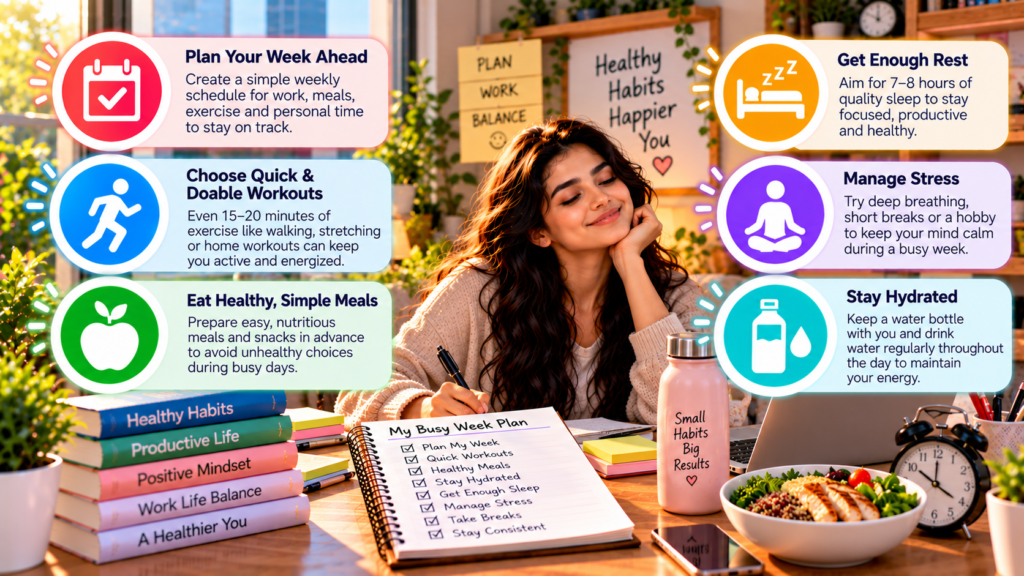
1. Plan Your Week Before It Begins
One of the easiest ways to maintain healthy habits is to spend a little time planning your week in advance. When you know what your schedule looks like, it becomes easier to identify opportunities for meals, exercise, rest, and personal activities.
At the beginning of the week, review your appointments, working hours, family commitments, and important deadlines. Then decide where you can fit in a few healthy activities.
For example, you might plan to walk for 15 minutes after work, prepare lunches for several days, or set a regular bedtime on most nights.
Your plan does not need to include every minute of the day. Leave room for unexpected responsibilities and changes in your schedule.
I believe a simple weekly plan is more useful than an overly detailed schedule that becomes difficult to follow. Focus on the habits that matter most and make sure they fit realistically into your everyday life.
2. Set Small and Achievable Goals
A common mistake during busy periods is expecting yourself to maintain an ideal routine regardless of how much work you have. When your goals are too demanding, it becomes easier to skip them entirely.
Instead, create smaller goals that fit your available time.
If you usually exercise for 45 minutes but have a demanding week ahead, you might take shorter walks or complete brief home workouts. If you normally cook complicated meals, choose simpler dishes that require less preparation.
The same principle applies to other habits. You can read a few pages instead of an entire chapter, spend five minutes organizing your tasks, or practice a short relaxation exercise before bed.
These adjustments do not mean you are failing. They allow you to maintain some consistency when circumstances are less convenient.
The goal is to keep healthy habits manageable enough that you can continue them even during your busiest days.
3. Prepare Simple and Balanced Meals
Healthy eating can become difficult when you have little time to cook. During busy weeks, people often rely on whatever food is quickest to obtain, which may not always provide the variety they need.
Meal preparation can help make balanced eating easier.
Choose a few simple meals before the week begins and prepare ingredients in advance when possible. You might wash vegetables, cook beans or lentils, prepare rice, or portion suitable snacks for later.
Keep convenient foods available, such as fruit, yogurt, eggs, whole grain bread, nuts, or other options that suit your preferences and dietary needs.
A balanced meal can include vegetables or fruit, a source of protein, and whole grains or other suitable carbohydrate sources. You do not need elaborate recipes to create a nourishing meal.
For example, lentils with rice and vegetables, eggs with whole grain toast, or a simple chicken and vegetable sandwich can be practical options.
Planning a few meals ahead reduces last minute decisions and makes it easier to eat regularly when your schedule becomes demanding.
4. Keep Healthy Snacks Available
When you are busy with work, studying, or household responsibilities, you may go several hours without a convenient meal. Keeping suitable snacks nearby can help you avoid becoming excessively hungry and make your daily eating routine easier to manage.
Choose snacks that are practical to store and easy to carry.
Some useful options include:
- Fresh fruit such as apples, bananas, or oranges.
- Unsweetened yogurt.
- A small portion of nuts or seeds.
- Whole grain crackers.
- Boiled eggs, when suitable and stored safely.
- Fresh vegetables with a suitable dip.
You can prepare some snacks in advance and place them where they are easy to reach.
Try to notice your hunger rather than eating automatically whenever you feel bored or distracted. The purpose of keeping snacks available is to make convenient food choices easier when you need them.
You can still enjoy your favorite treats. Healthy eating is about your overall pattern of choices rather than following strict rules at every meal.
5. Find Short Opportunities for Exercise
A busy schedule does not mean you must stop being physically active. Although you may not have time for a long workout, shorter periods of movement can still contribute to your overall activity.
Look for opportunities throughout the day. You could walk during a lunch break, use the stairs when practical, stretch after sitting for a long time, or complete a short workout at home.
For example, a 10 minute walk before work or after dinner may fit your schedule better than trying to find an uninterrupted hour.
You can also combine movement with activities you already perform. Walk to a nearby shop when the route is safe, take a brief walking break during phone calls when appropriate, or spend some time gardening.
Adults are generally advised to work toward at least 150 minutes of moderate intensity aerobic activity each week, along with muscle strengthening activities on two or more days, as appropriate for their abilities and health.
However, you do not need to reach that target immediately. Start from your current activity level and gradually build a routine that suits your circumstances.
6. Protect Your Sleep Schedule
Sleep is often one of the first things people sacrifice when their schedules become busy. They may stay up late finishing work, watching videos, or preparing for the next day.
Unfortunately, repeatedly reducing sleep can make it harder to concentrate, manage responsibilities, and maintain other healthy habits.
Try to establish a reasonably consistent bedtime and waking time, even when your week is demanding. Adults generally need at least seven hours of sleep each night, although individual needs vary.
Prepare for the next morning before your evening becomes too busy. Choose your clothes, organize necessary items, and write down unfinished tasks so you do not have to keep thinking about them in bed.
Limit stimulating activities and unnecessary screen use before bedtime. Reading a book, taking a warm shower, or listening to calm music can help you transition into a more relaxing evening routine.
If you cannot follow your usual schedule perfectly, return to it when possible rather than allowing one late night to disrupt the entire week.
7. Drink Water Throughout the Day
Hydration is another habit that can become neglected during a busy week. When you are focused on meetings, deadlines, or household tasks, you may forget to drink water regularly.
A simple solution is to keep a reusable water bottle near your workspace or carry one in your bag.
You can also connect drinking water with everyday activities. Have some water with meals, drink when you take a break, and refill your bottle whenever convenient.
During hot weather or physical activity, pay additional attention to fluid loss and drink according to your needs.
Water rich foods, including cucumbers, oranges, and watermelon, can also contribute to fluid intake.
There is no single amount of water that suits everyone. Fluid requirements depend on factors such as activity level, climate, diet, and health circumstances.
Avoid forcing yourself to drink excessive amounts. If a healthcare professional has advised you to limit fluids because of a medical condition, follow that guidance.
8. Manage Stress With Short Breaks
Busy weeks can create mental pressure, especially when several responsibilities need attention at the same time. If you continue working without breaks, you may feel increasingly overwhelmed.
Short pauses can provide an opportunity to slow down and reassess what needs to be done.
For example, after completing a demanding task, step away from your desk, stretch gently, take a few comfortable breaths, or walk outside for a few minutes.
You can also write down your concerns and identify the next practical step instead of trying to solve every problem at once.
If your schedule feels overloaded, review your commitments and decide which tasks are essential. Some activities may be postponed, simplified, or delegated when appropriate.
Taking breaks does not mean you are wasting time. It is a way to create a more manageable rhythm between periods of effort and recovery.
If stress becomes persistent or significantly affects your daily life, consider seeking support from a qualified professional.
9. Reduce Unnecessary Screen Time
Digital distractions can consume valuable time during a busy week. A quick check of social media may turn into a long browsing session, leaving less time for sleep, exercise, or relaxation.
Start by identifying the times when your phone distracts you most often.
If you frequently check notifications while working, silence nonessential alerts and keep your phone away from your immediate workspace during important tasks. You can also set specific times to respond to messages instead of checking them continuously.
During the evening, consider replacing some screen time with activities that help you relax, such as reading, preparing meals, or spending time with family.
You do not need to eliminate technology completely. Digital tools can help with work, communication, and organization.
The goal is to use them intentionally so that they support your priorities instead of taking time away from activities that matter to you.
10. Create a Simple Morning Routine
A consistent morning routine can help you begin the day with a clearer sense of direction.
You do not need to wake up extremely early or follow a complicated list of activities. Choose a few simple actions that fit your schedule.
For example, you might wake up at a regular time, drink water, eat breakfast, review your priorities, and spend a few minutes stretching.
Preparing some things the night before can make mornings less stressful. Organize your bag, choose your clothes, or prepare ingredients for breakfast before going to bed.
If you have very little time in the morning, focus on the essentials rather than trying to complete every healthy habit before leaving home.
A practical routine that takes 10 to 15 minutes may be more sustainable than an elaborate plan that requires an hour.
11. Make Time for Personal Relationships
When work becomes demanding, spending time with family and friends can easily move to the bottom of your priority list. However, maintaining meaningful relationships is also an important part of a balanced lifestyle.
You do not need to organize major social events during every busy week. Small moments of connection can be valuable.
You might share a meal with your family, call a friend during a suitable break, or spend a few minutes talking with someone without checking your phone.
If your schedule is especially full, plan a short period for social activities rather than waiting until you have unlimited free time.
Try to be present during these moments. Giving someone your attention can make a brief conversation feel more meaningful.
Healthy habits are not limited to eating and exercise. Making room for relationships and enjoyable experiences can help your life feel more balanced.
12. Keep Your Living and Working Spaces Organized
A cluttered environment can make busy days feel even more complicated. When essential items are difficult to find, simple tasks may take longer than necessary.
You do not need to clean your entire home or office every day. Instead, spend a few minutes maintaining the areas you use most frequently.
For example, clear your desk after work, put away items you no longer need, and prepare the things required for tomorrow.
You can also organize your kitchen so that ingredients and basic cooking equipment are easy to access. This may make preparing simple meals less time consuming.
At home, divide larger cleaning tasks across the week instead of leaving everything for one exhausting day.
The goal is not to maintain a perfect environment. It is to create a space that makes daily responsibilities easier and reduces unnecessary frustration.
13. Use a Simple Weekly Habit Checklist
A checklist can help you remember your priorities without requiring a complicated tracking system.
Choose three to five habits that matter most during your current week. These might include eating regular meals, walking, drinking water, maintaining a bedtime, and taking short breaks.
At the end of each day, briefly review which habits you managed to follow.
For example:
- Did I include balanced foods in my meals?
- Did I move my body during the day?
- Did I drink water regularly?
- Did I make time for rest?
- Did I prepare for tomorrow?
You do not have to complete every item every day. The checklist is simply a reminder of what you want to prioritize.
At the end of the week, notice which habits were easiest to maintain and which ones need adjustment.
If the checklist feels like another source of pressure, simplify it. A few reminders are enough to support consistency.
14. Learn to Adjust Your Expectations
Some weeks are naturally more demanding than others. You may have an important deadline, family commitments, travel, or unexpected responsibilities that change your routine.
During these periods, maintaining healthy habits may require adjusting your expectations.
Instead of abandoning exercise entirely, take a short walk when possible. Instead of preparing several complicated meals, choose a few simple dishes. Instead of trying to complete every household task, focus on the most important ones.
It is also important to recognize when you genuinely need rest. Pushing yourself continuously can make it harder to maintain a healthy routine over time.
I believe flexibility is one of the most important parts of long term habit building. Your routine should adapt to your life rather than require your life to follow an inflexible plan.
When a busy period ends, gradually return to your usual habits without feeling guilty about the adjustments you needed to make.
Common Mistakes to Avoid
One common mistake is trying to follow a perfect routine even when your schedule does not allow it. Unrealistic expectations can lead to frustration and make healthy habits feel like obligations.
Another mistake is skipping meals, sacrificing sleep, or avoiding breaks to finish more work. Although this may seem useful temporarily, it can make the rest of the week harder to manage.
It is also unhelpful to depend entirely on motivation. Planning, preparation, and convenient routines can help you maintain habits even when you feel tired or distracted.
Finally, avoid thinking that a single missed workout or less balanced meal has ruined your progress. Focus on what you can do next rather than judging yourself for what has already happened.
Conclusion
Maintaining healthy habits during a busy week is possible when you focus on realistic goals and practical routines. You do not need to make major lifestyle changes or complete every activity perfectly to look after yourself.
In my view, the most effective approach is to plan ahead, prepare simple meals, find short opportunities for movement, drink water regularly, protect your sleep, and take breaks when needed.
Make healthy choices convenient and adjust your expectations when your schedule becomes demanding. A short walk, a simple homemade meal, or a few minutes of relaxation can help you maintain consistency without adding unnecessary pressure.
Remember that healthy living is not about having a perfect week. It is about making reasonable choices repeatedly and returning to your habits when life becomes unpredictable.
By focusing on small improvements and allowing your routine to remain flexible, you can maintain healthier habits while continuing to meet your everyday responsibilities.