Introduction
In our busy daily lives, it is easy to spend most of our time indoors, looking at screens, working on computers, or completing household responsibilities. Although technology and modern conveniences make life easier, spending too much time inside can leave us feeling disconnected from the natural world. This is one reason I believe spending time in nature is an important part of a balanced and healthy lifestyle.
Nature is all around us. It can be found in public parks, gardens, forests, beaches, walking trails, and even small green spaces near our homes. We do not always need to travel to beautiful mountains or distant locations to enjoy its benefits. Sometimes, sitting under a tree, taking a walk in a nearby park, or caring for a few plants can make a meaningful difference in our daily routine.
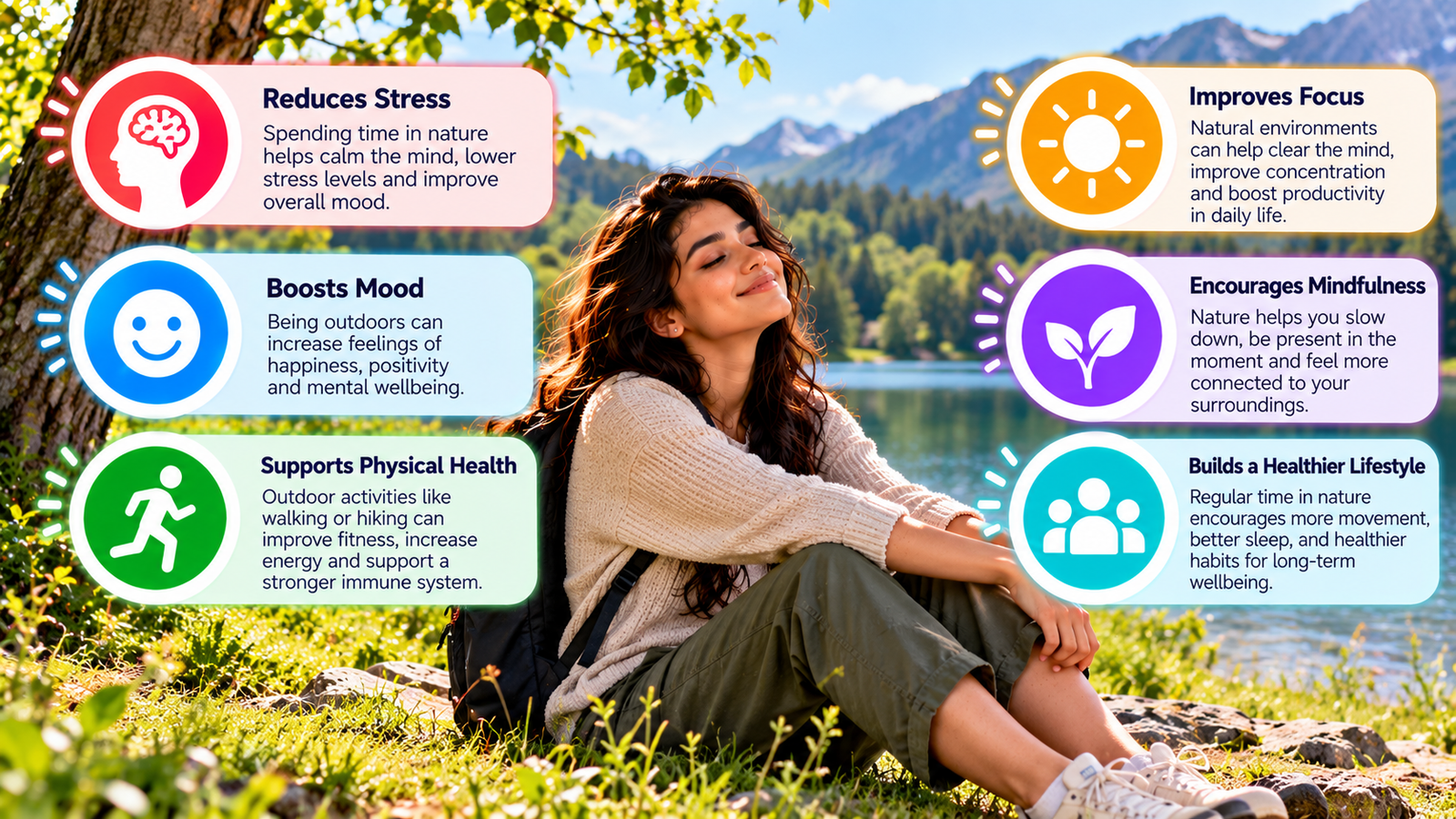
Spending time outdoors can support physical activity, relaxation, emotional wellbeing, and a stronger connection with the environment. In this article, I will explore the main benefits of spending time in nature for general wellbeing and share practical ways to make outdoor activities a regular part of everyday life.
1. Nature Helps Reduce Everyday Stress
One of the most noticeable benefits of spending time in nature is the opportunity to relax away from everyday pressures. Work responsibilities, family commitments, financial concerns, and constant notifications can make our minds feel busy throughout the day.
A quiet outdoor environment can provide a welcome change. The sound of birds, the movement of leaves, fresh air, and natural scenery may help us slow down and pay attention to the present moment. Instead of concentrating on unfinished tasks, we can take a short break and allow ourselves to relax.
For example, after several hours of working at a desk, I might choose to walk through a nearby park rather than continue looking at a screen. Even a short walk can provide a change of surroundings and help me return to my responsibilities with a clearer mind.
Nature does not remove every source of stress, but regular outdoor breaks can become a useful part of a healthy stress management routine.
2. Spending Time Outdoors Supports Physical Activity
Nature provides many opportunities to move our bodies without needing expensive equipment or a gym membership. Walking, cycling, gardening, hiking, and playing outdoor games are all practical ways to become more active.
Regular physical activity supports general health, helps maintain mobility, and contributes to everyday fitness. Outdoor activities can also make exercise feel less repetitive because the surroundings change as we move.
Walking through a green space, for instance, may feel more enjoyable than walking indoors in the same place every day. Gardening also involves several movements, including bending, stretching, carrying light objects, and walking between plants.
People who are new to exercise can begin with manageable activities. A short walk around the neighborhood or a few minutes of light gardening may be a realistic starting point. The important thing is to choose an activity that suits personal ability, available time, and comfort.
Anyone with physical limitations should select suitable activities and increase their activity level gradually.
3. Nature Can Support Emotional Wellbeing
Emotional wellbeing is an important part of a balanced life. It involves recognizing our feelings, managing everyday challenges, and finding healthy ways to relax and recover from demanding experiences.
Natural environments may help some people feel calmer and more comfortable. Green spaces can offer a peaceful setting where there is less pressure to respond immediately to messages, complete tasks, or meet deadlines.
Spending time outdoors can also provide an opportunity to reflect on personal goals and feelings. A quiet walk may allow us to think through a difficult situation without the usual distractions of home or work.
However, everyone responds to nature differently. Some people prefer quiet gardens, while others enjoy beaches, open fields, or lively public parks. The best environment is one where a person feels safe, comfortable, and relaxed.
Nature can be a useful part of an emotional wellbeing routine, although it should not be treated as a replacement for professional support when someone is experiencing ongoing emotional difficulties.

4. It Encourages Mindfulness and Living in the Present
Mindfulness means paying attention to the present moment rather than becoming completely absorbed in past concerns or future worries. Nature provides many simple opportunities to practise this habit.
While walking outside, we can notice the colors of flowers, the shape of clouds, the temperature of the air, or the sounds around us. These small observations encourage us to focus on what is happening now.
We do not need special equipment or advanced meditation skills to enjoy this experience. It can begin with a few quiet minutes in a garden or on a park bench.
For example, instead of checking a phone during an outdoor break, we can put it away and observe the surroundings. We might notice details that we usually overlook when rushing from one responsibility to another.
This simple practice can make an ordinary walk feel more meaningful. Over time, it may also encourage us to take regular breaks from digital distractions and develop a more balanced relationship with technology.
5. Nature Offers a Healthy Break From Screens
Digital devices have become part of education, employment, communication, and entertainment. Although they are useful, spending long periods looking at screens can leave us with little time for other experiences.
Taking outdoor breaks creates an opportunity to step away from phones, laptops, televisions, and other digital devices. This change can be particularly helpful for people who work from home or spend much of the day using computers.
A screen free walk can give our eyes a break from close viewing and provide an opportunity to move around. It also allows us to enjoy our surroundings without constantly switching between applications or responding to notifications.
I believe that small changes are often easier to maintain than strict rules. Rather than trying to stop using technology completely, we can schedule a short outdoor break during lunch, after work, or in the early morning.
The aim is not to avoid technology altogether. It is to create a healthier balance between digital activities and real world experiences.
6. Spending Time in Nature May Improve Focus
Concentration is important for completing tasks, learning new skills, and making everyday decisions. However, constant interruptions and long periods of mental effort can make it difficult to stay focused.
A change of environment may help some people feel mentally refreshed. Spending time outdoors can provide a break from demanding tasks and allow attention to shift toward less complicated surroundings.
For example, a student who has been studying for several hours might take a short walk before returning to their books. Similarly, someone working on a computer could spend a few minutes outside during a break.
The purpose is not to expect nature to solve every concentration problem. Instead, outdoor breaks can become one part of a broader routine that includes adequate rest, sensible work periods, and fewer distractions.
If concentration difficulties are persistent and interfere with daily life, other factors may also need attention.
7. Nature Provides Opportunities for Social Connection
Wellbeing is influenced not only by our personal habits but also by the relationships we maintain. Spending time outdoors can create opportunities to connect with family members, friends, neighbors, and other people in the community.
Families can enjoy walks together, visit local parks, or work on a shared garden. Friends can arrange outdoor activities instead of meeting only in indoor settings. Children can explore their surroundings while adults enjoy an opportunity to talk and spend quality time together.
Outdoor activities can also encourage people to participate in community events, gardening groups, walking clubs, or environmental projects.
These experiences provide a shared purpose and can make social interaction feel more natural. Walking together, for example, gives people something to do while they talk, which some may find more comfortable than sitting face to face.
For people who prefer spending time alone, nature can still provide a valuable personal experience. The goal is to find a balance between social connection and individual relaxation.
8. Gardening Can Build Patience and Responsibility
Gardening is one of the simplest ways to develop a regular connection with nature. It does not require a large garden or a great deal of money. A few pots on a balcony, a small outdoor space, or a container near a sunny window may be enough to begin.
Caring for plants involves watering them, checking their condition, removing damaged leaves, and understanding their growing needs. These activities encourage patience because plants develop gradually rather than producing immediate results.
Gardening can also provide a sense of achievement. Watching a seed grow into a healthy plant offers a visible reminder that consistent care can produce positive results over time.
Growing herbs, flowers, or vegetables can make this experience even more rewarding. Home gardeners may learn about soil, sunlight, water, and seasonal changes while developing practical skills.
It is important to choose plants suited to the local climate and available space. Starting with a few easy to care for plants can make gardening enjoyable rather than overwhelming.
9. Natural Light and Fresh Air Can Support Daily Comfort
Spending time outdoors allows us to experience natural daylight and move beyond enclosed indoor spaces. This can be especially valuable for people who spend most of their working hours inside buildings.
Daylight is one of the environmental signals involved in regulating the body’s sleep and wake cycle. Getting regular exposure to outdoor light during the day, especially in the morning, can support a consistent daily rhythm for many people.
Fresh air and an outdoor change of surroundings may also make a break feel more refreshing. However, air quality varies by location, and outdoor conditions are not always better than indoor conditions. People should consider pollution, dust, smoke, and local weather before choosing where to spend time.
Sun protection is also important. During periods of strong sunlight, shade, suitable clothing, sunscreen, and adequate hydration can help reduce the risks associated with excessive sun exposure.
The goal is to enjoy outdoor time safely and comfortably rather than assuming that every outdoor environment is beneficial in every condition.
10. Nature Encourages Better Daily Habits
Healthy routines are easier to maintain when they fit naturally into everyday life. Spending time in nature can encourage habits that support general wellbeing, including walking regularly, taking breaks, reducing unnecessary screen time, and making room for relaxation.
For example, someone who takes a short walk every morning may gradually become more consistent with physical activity. A person who waters plants after breakfast may develop a simple routine that provides a calm start to the day.
Outdoor activities can also create structure. A planned evening walk gives us a reason to finish work at a reasonable time, while weekend gardening can provide a regular opportunity to step away from household screens and other distractions.
These habits do not need to be complicated. Small activities repeated regularly can be more practical than ambitious plans that are difficult to follow.
It is useful to begin with one manageable change, observe how it fits into daily life, and adjust the routine when necessary.
11. How to Spend More Time in Nature Every Day
People sometimes assume that enjoying nature requires a long trip or a large amount of free time. In reality, simple activities can help us spend more time outdoors without changing our entire schedule.
Here are some practical ideas:
Take a short daily walk. Choose a safe route near your home, workplace, or school. Start with a few minutes and increase the duration when comfortable.
Visit a local park. A nearby public park can provide space for walking, sitting quietly, reading, or spending time with family.
Create a small garden. Grow herbs, flowers, or vegetables in containers if you do not have access to a large outdoor area.
Spend breaks outside. If the weather and surroundings are suitable, take part of your lunch or work break outdoors.
Enjoy outdoor meals occasionally. Have breakfast in a garden or enjoy a snack in a shaded outdoor seating area.
Explore natural surroundings safely. Visit walking trails, beaches, or green spaces when time and transportation allow.
Leave your phone aside. During some outdoor activities, reduce unnecessary screen use so that you can pay attention to your surroundings.
Make nature a family activity. Plan a weekend walk, plant flowers together, or help children learn about local plants and wildlife.
Consistency matters more than the size of the activity. Even short periods spent outdoors can become a meaningful part of a balanced routine.
12. Practical Safety Tips for Outdoor Activities
Enjoying nature also means taking care of personal safety. Weather conditions, insects, uneven ground, traffic, and environmental hazards can affect outdoor experiences.
Before going outside, check the weather and choose clothing suitable for the conditions. Carry drinking water when needed, especially during warm weather or longer walks. In hot climates, consider early morning or evening activities when temperatures may be more comfortable, while avoiding periods of extreme heat.
Use sunscreen and protective clothing when spending time in strong sunlight. Choose familiar, well maintained walking routes and remain aware of your surroundings. If visiting remote areas, tell someone about your plans and carry appropriate supplies.
People with allergies should consider pollen levels and other possible triggers. During periods of poor air quality, smoke, or heavy pollution, it may be better to stay indoors or choose a safer location.
Taking these precautions makes outdoor activities more comfortable and helps people enjoy nature responsibly.
Conclusion
Spending time in nature can be a valuable part of a healthy lifestyle. It provides opportunities for physical activity, relaxation, mindfulness, social connection, and a break from digital distractions. Activities such as walking in a park, caring for plants, or sitting outdoors for a few quiet minutes can help create a more balanced daily routine.
In my view, the most important point is that enjoying nature does not need to be expensive or complicated. We can begin with the outdoor spaces already available to us and gradually develop habits that fit our schedules and personal preferences.
It is also important to remember that nature is not a complete solution to every health or emotional challenge. Its benefits depend on individual needs, environmental conditions, and how safely we spend our time outdoors.
By making small and consistent choices, we can build a stronger connection with the natural world while creating more opportunities for movement, relaxation, and everyday enjoyment. Spending time in nature is a simple habit that can make daily life feel more balanced and rewarding.