Introduction
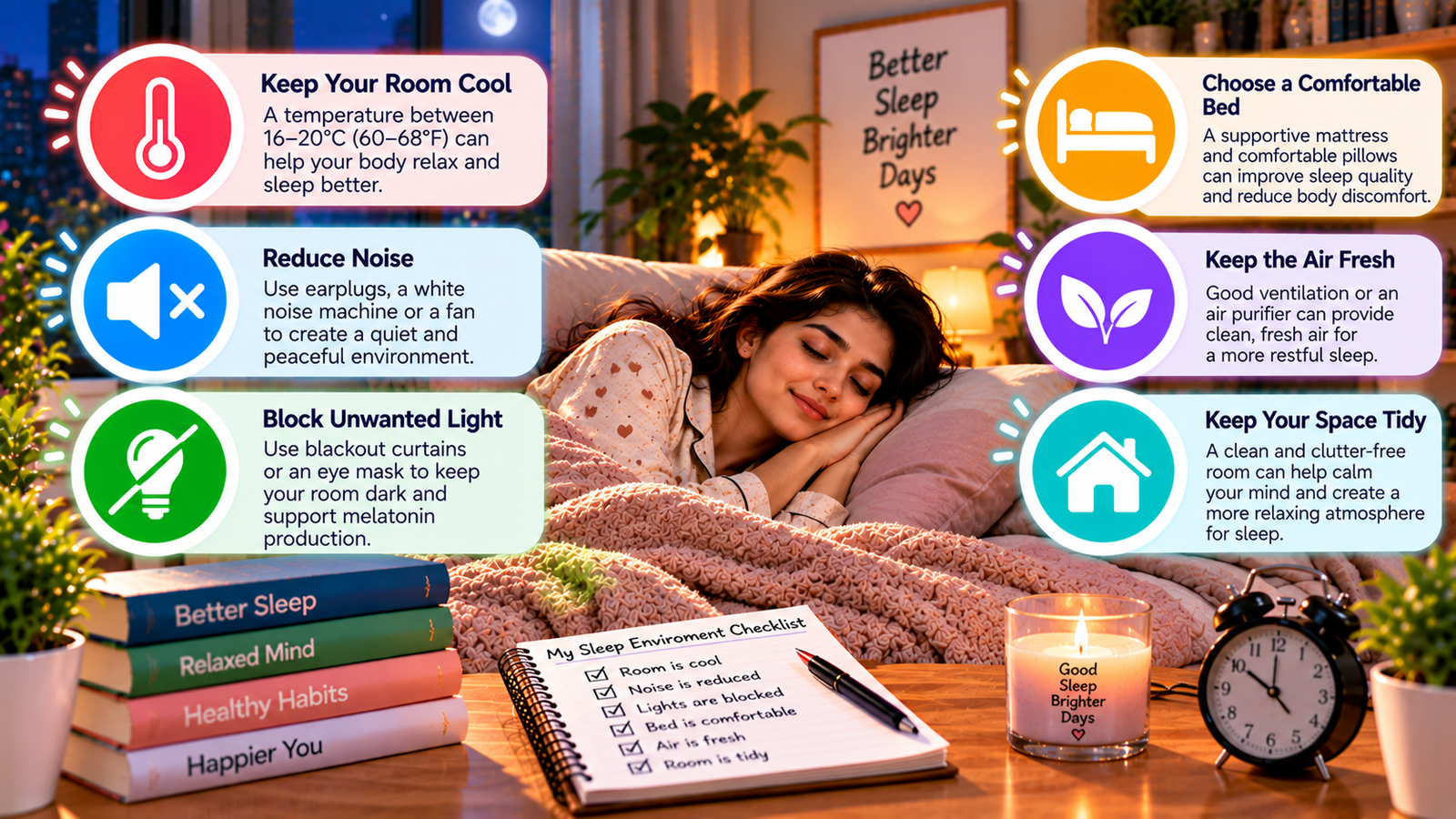
A comfortable sleep environment is an important part of a healthy daily routine. After a busy day, everyone needs a peaceful place where they can relax, rest, and prepare for the next morning. However, factors such as room temperature, lighting, noise, bedding, and clutter can sometimes make it difficult to feel comfortable at bedtime.
In my opinion, creating a better sleep environment does not always require expensive furniture or a complete bedroom makeover. Small changes, such as choosing comfortable pillows, keeping the room clean, reducing unnecessary noise, and adjusting the lighting, can make the bedroom feel more relaxing.
The good news is that most of these improvements are simple and affordable. By understanding what makes a bedroom comfortable, you can create a space that supports your nighttime routine and makes it easier to settle down at the end of the day.
In this article, I will share practical tips for creating a comfortable sleep environment, maintaining a relaxing bedroom, and developing habits that support better rest.
1. Choose a Comfortable Mattress
A mattress plays an important role in how comfortable you feel while sleeping. If your mattress is too firm, too soft, uneven, or worn out, you may find it difficult to settle into a comfortable position.
The right mattress depends on your sleeping position, body shape, and personal preferences. Some people prefer a softer surface, while others feel more comfortable with a firmer mattress. There is no single option that works equally well for everyone.
When choosing a mattress, consider how it supports your body and whether you wake up feeling comfortable. If your mattress has visible damage, sagging areas, or persistent discomfort associated with it, it may be time to evaluate whether it needs replacing.
You do not necessarily need to purchase an expensive mattress. The most important thing is finding a suitable surface that feels comfortable and provides appropriate support.
2. Select the Right Pillow
Pillows help support the head and neck during sleep. An unsuitable pillow may make it difficult to find a comfortable sleeping position, particularly if it is too high, too flat, or no longer provides enough support.
When selecting a pillow, consider your usual sleeping position. Side sleepers often prefer a pillow that fills the space between the head and shoulder. Back sleepers may find a medium height pillow comfortable, while stomach sleepers often prefer a thinner pillow.
These are general guidelines rather than strict rules. Personal comfort, body shape, and mattress firmness can also influence which pillow works best.
It is also helpful to keep pillows clean and replace them when they become lumpy, damaged, or uncomfortable. Using a washable pillow cover can help protect the pillow from dust and everyday dirt.
3. Maintain a Comfortable Room Temperature
Room temperature can influence how easily you settle down at night. A bedroom that feels excessively hot or cold may interrupt your comfort and make it harder to remain asleep.
Try to keep your bedroom at a temperature that feels comfortable for you. If the room becomes warm during summer, use a fan, ventilation, or air conditioning when available. During colder weather, choose suitable bedding and clothing to stay comfortably warm without overheating.
In warm climates, lightweight cotton bedding may be a practical choice because it is generally breathable and comfortable. You can also use lighter blankets and avoid unnecessary layers when the weather is hot.
If you share your bedroom with someone who prefers a different temperature, consider individual blankets or other arrangements that allow both people to feel comfortable.
The aim is not to achieve one perfect temperature for everyone. Instead, adjust the room according to your needs and the conditions around you.
4. Reduce Unnecessary Light
Light is another important factor when preparing a bedroom for sleep. Bright lighting can make it harder to create a relaxing atmosphere, especially when you are trying to wind down in the evening.
Start by switching off unnecessary lights before bedtime. Choose softer lighting during the final part of the evening rather than keeping bright overhead lights on until you are ready to sleep.
Blackout curtains can help reduce outdoor light from streetlights, signs, and passing vehicles. If installing curtains is not practical, a comfortable sleep mask may provide another option.
You should also consider light from electronic devices. Keep televisions, computer screens, and smartphones away from your immediate sleeping area when possible. If you need to use your phone as an alarm, place it somewhere that does not encourage constant checking.
A darker bedroom can support the body’s natural sleep and wake cycle, while morning daylight can help signal that it is time to wake up.
5. Keep the Bedroom Quiet
Noise can make it difficult to relax, particularly when your surroundings include traffic, loud conversations, television sounds, or other interruptions.
If noise is a problem, begin by identifying its main source. Close windows when outdoor noise is excessive, adjust door positions, or use curtains and rugs that may help soften some sounds inside the room.
Earplugs can be useful for some people, provided they are comfortable and suitable for their circumstances. Another option is a fan or a sound machine that produces steady background noise to make sudden sounds less noticeable.
However, you do not need to purchase special equipment immediately. Sometimes, moving a noisy electronic device, closing a door, or agreeing on quieter household hours can make a noticeable difference.
If you live in a busy household, communicating your bedtime routine with other family members may help everyone create a more peaceful environment.
6. Choose Comfortable and Breathable Bedding
Bedsheets, blankets, and pillowcases affect how your bed feels throughout the night. Bedding that traps too much heat, feels rough, or irritates your skin can reduce comfort.
Cotton is a popular bedding material because it is breathable and available in different weights and textures. Other materials may also work well, depending on the climate and your preferences.
Choose bedsheets that feel comfortable against your skin and are suitable for the weather. Lightweight sheets can be useful in warmer conditions, while thicker blankets may be more suitable for colder nights.
It is also important to wash your bedding regularly. Clean sheets can make the bedroom feel fresher and help remove accumulated sweat, dust, and everyday dirt.
When shopping for bedding, focus on comfort, durability, and ease of cleaning rather than assuming that a higher price always means better quality.
7. Keep Your Bedroom Clean and Organized
A clean bedroom can create a more peaceful atmosphere. Clutter around the bed, piles of clothes, dusty surfaces, and unnecessary objects may make the room feel crowded and less relaxing.
You do not need to spend hours cleaning every evening. Simple habits can help maintain an organized space without creating extra work.
For example, put away clothes after changing, keep bedside items in one place, and remove cups or plates before going to bed. Make your bed in the morning if that helps you maintain a tidy room.
Regularly dust surfaces and clean the floor according to your needs. If you have pets, consider how their hair or bedding affects the cleanliness of your sleeping area.
An organized bedroom can also reduce the number of unfinished tasks that catch your attention when you are trying to relax. Keeping the space simple may help you associate it more strongly with rest.
8. Improve Airflow and Ventilation
Fresh air and suitable ventilation can contribute to a comfortable bedroom. A room that feels stuffy or has unpleasant odors may be less inviting, especially during warm weather.
When outdoor conditions allow, opening a window for a short period can help refresh the room. If outdoor air quality is poor, the weather is unsuitable, or noise is excessive, keep windows closed and use other available ventilation methods.
Avoid blocking air vents with furniture or heavy curtains. If you use a fan or air conditioner, keep the equipment clean and follow its maintenance instructions.
People who experience allergies may also benefit from regularly washing bedding, reducing dust collecting items, and keeping the sleeping area clean.
If your room has persistent dampness, condensation, or a musty smell, investigate the source rather than simply covering the odor with air fresheners. Addressing moisture problems can improve the condition of the bedroom.
9. Limit Electronic Distractions
Smartphones, televisions, tablets, and laptops can make a bedroom feel more like an entertainment or work area than a place for rest.
One simple improvement is to stop using electronic devices shortly before bedtime. Constant notifications, social media updates, and work messages can keep your attention active when you want to relax.
Consider creating a screen free period before bed. You might use that time to read a printed book, prepare your clothes for the next day, or enjoy a quiet conversation with family.
If you need your phone nearby for important calls, activate Do Not Disturb settings and allow notifications from essential contacts. You can also charge the device away from your pillow to reduce the temptation to browse.
These changes do not require avoiding technology throughout the day. They simply create a clearer boundary between daytime activities and nighttime rest.
10. Use Relaxing Colors and Simple Decorations
The appearance of a bedroom can influence how welcoming it feels. While color preferences differ, many people enjoy soft, neutral, or muted shades because they create a calm visual atmosphere.
You might choose light beige, gentle blue, soft green, or other colors that make the room feel comfortable to you. There is no need to follow a particular decorating trend if it does not match your preferences.
Keep decorations simple enough that the room does not feel overcrowded. A favorite picture, a small plant, or a neatly arranged bedside table may be enough to make the space feel personal.
If you enjoy plants, choose varieties that suit your room’s lighting and maintenance requirements. Avoid adding so many objects that cleaning becomes difficult.
The goal is to create a bedroom that feels peaceful and welcoming rather than perfectly styled for photographs.
11. Establish a Consistent Bedtime Routine
Even a comfortable bedroom may not fully support rest if your evening habits change significantly from one day to another. A consistent bedtime routine can help you transition from daily responsibilities to relaxation.
Try to go to bed and wake up at roughly the same time each day, including weekends when practical. This can help maintain a more regular sleep schedule.
During the hour before bed, choose activities that help you slow down. You might take a warm shower, read a book, prepare for tomorrow, or practice gentle breathing exercises.
Avoid leaving demanding tasks until the moment you want to sleep. If you often worry about unfinished work, write down the tasks you need to complete the next day before beginning your bedtime routine.
Adults generally need at least seven hours of sleep per night, although individual needs can vary. A consistent schedule and a comfortable environment can help you make enough time for rest.
12. Personalize Your Sleep Environment
Everyone has different preferences, so the most comfortable bedroom is not necessarily the one that looks best in a magazine.
Some people prefer complete darkness, while others feel more comfortable with a small nightlight. Some enjoy complete silence, while others prefer a fan or gentle background sound.
Pay attention to what helps you feel comfortable and what regularly interrupts your rest. You can make small adjustments over several nights rather than changing everything at once.
For example, if you wake up feeling too warm, try lighter bedding. If outdoor light bothers you, consider better curtains. If your pillow feels uncomfortable, experiment with a different height or material.
Making one change at a time can help you understand which adjustments are genuinely useful.
Common Mistakes to Avoid
When creating a comfortable sleep environment, avoid assuming that expensive products are always necessary. A costly mattress, decorative lighting, or advanced sleep gadget will not automatically improve your experience.
Another common mistake is overlooking basic maintenance. Even good bedding can become uncomfortable when it is not cleaned regularly, and a well decorated room may still feel unpleasant if it is too noisy or hot.
It is also important not to fill the bedroom with too many electronic devices. Unnecessary screens can create distractions and encourage you to stay awake longer than planned.
Finally, avoid making so many changes at once that the process becomes stressful. Begin with the issues that affect your comfort most and gradually improve the room according to your needs.
Conclusion
Creating a comfortable sleep environment is a practical way to support a healthier daily routine. Small improvements in mattress comfort, pillow support, room temperature, lighting, noise control, bedding, and cleanliness can make your bedroom feel more relaxing.
In my view, the best approach is to focus on comfort and consistency rather than spending money on every product advertised for better sleep. Start by identifying what makes your current bedroom uncomfortable, then make a few simple changes that suit your budget and lifestyle.
Keep the room organized, reduce unnecessary electronic distractions, and follow a regular bedtime routine. Over time, these habits can help make your bedroom a more inviting place to rest.
If you continue to experience significant sleep difficulties despite improving your sleep environment and habits, consider speaking with a qualified healthcare professional. Your sleep concerns may require additional assessment beyond changes to the bedroom.
A comfortable bedroom cannot solve every sleep problem, but it is a useful starting point for building healthier nighttime habits and creating a more peaceful end to each day.