Introduction
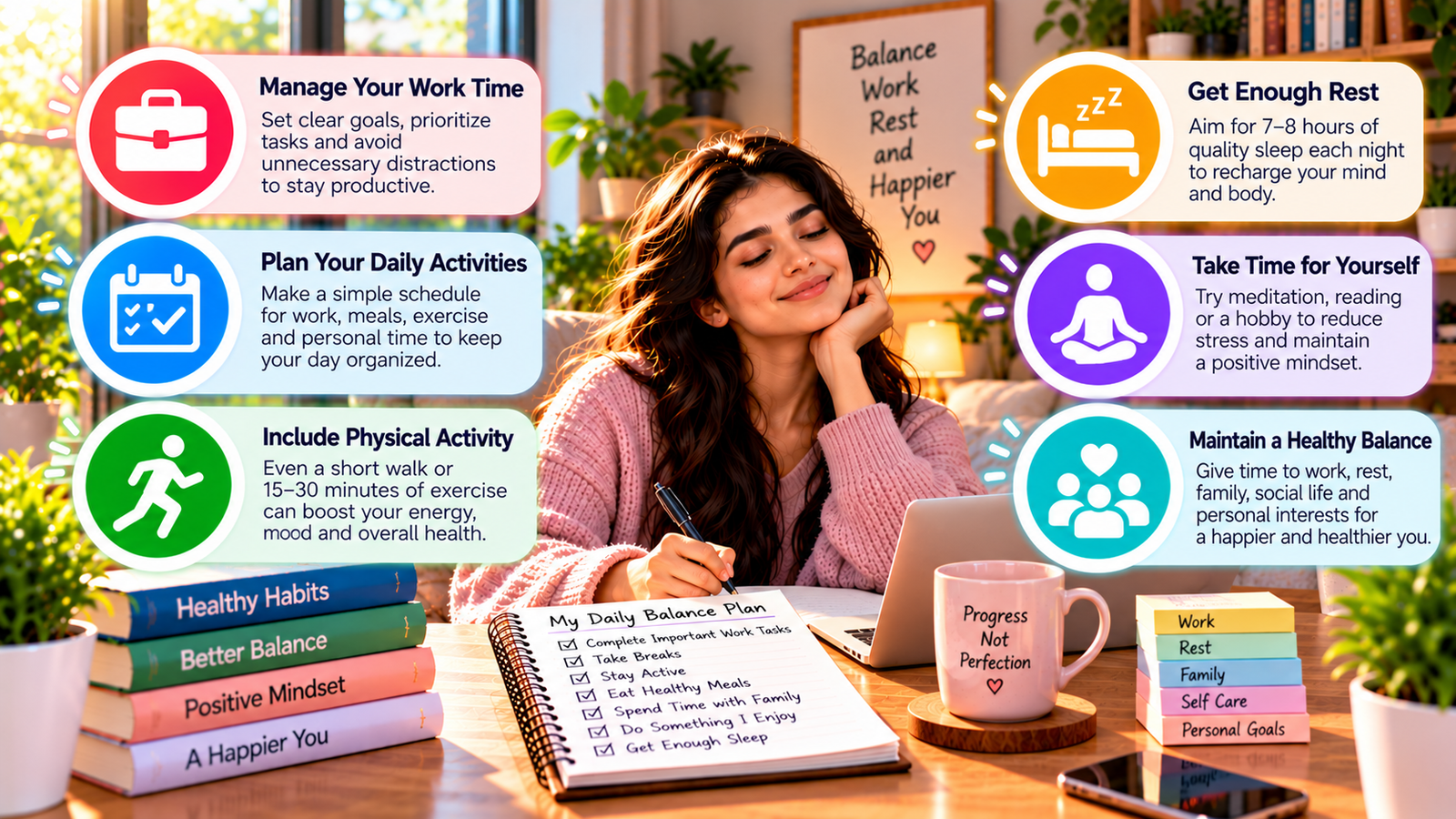
Balancing work, rest, and daily activities is an important part of maintaining a healthy and organized lifestyle. Many people spend most of their day completing professional responsibilities, managing household tasks, studying, or taking care of family members. By the end of the day, they may feel exhausted and realize they have had very little time for themselves.
In my opinion, a balanced daily routine does not mean giving equal time to every activity. Instead, it means understanding your priorities, managing your energy, and making enough room for responsibilities, relaxation, and personal interests. A productive day should not be measured only by how much work you complete. It should also include time to recover, connect with others, and enjoy life.
The good news is that creating a better balance does not always require major lifestyle changes. Small adjustments to your schedule, realistic goals, and healthier boundaries can make everyday life more manageable.
In this article, I will explain practical ways to balance work, rest, and daily activities, reduce unnecessary stress, and develop a routine that supports long term well being.
1. Understand Your Daily Priorities
The first step toward a balanced lifestyle is understanding what matters most in your daily life. Without clear priorities, it is easy to spend too much time on less important tasks while postponing responsibilities that genuinely need attention.
Start by identifying your main commitments. These might include work, education, family responsibilities, exercise, household activities, and personal relaxation.
I recommend dividing your tasks into three simple groups: essential tasks, important but flexible tasks, and optional activities. Essential tasks have deadlines or immediate consequences, while flexible tasks can be completed when time allows. Optional activities are those you can postpone or reduce when your schedule becomes busy.
For example, completing an important work assignment may take priority over spending an hour browsing social media. However, that does not mean you should ignore your need for rest.
Clear priorities help you make better decisions about how to use your time. They also reduce the pressure to complete everything at once.
2. Create a Realistic Daily Schedule
A daily schedule can help you organize responsibilities while protecting time for relaxation. However, the schedule should reflect your actual lifestyle rather than an ideal routine that is difficult to follow.
Begin by writing down your usual waking time, working hours, meals, household responsibilities, and bedtime. Then identify the periods when you can fit in exercise, personal projects, family time, and rest.
Try not to fill every available minute with an activity. Leave some flexible time for unexpected tasks, delays, or simply taking a break.
For example, if you finish work at 5 PM, you might spend a short period relaxing before preparing dinner. After dinner, you could complete one household task, spend time with family, and then enjoy a quiet activity before bed.
Your routine does not need to look like someone else’s schedule. The best daily plan is one that fits your responsibilities, energy levels, and personal circumstances.
3. Separate Work Time From Personal Time
One of the biggest challenges in modern life is allowing work to continue long after the working day should have ended. Emails, messages, deadlines, and unfinished tasks can make it difficult to mentally disconnect.
Whenever possible, establish a clear finishing time for work. At the end of your working day, review what you have completed and write down the tasks that need attention tomorrow.
This simple habit can help you avoid repeatedly thinking about unfinished work throughout the evening.
If you work from home, try to create a specific work area. When your working hours end, close unnecessary tabs, put away work materials, and move to another part of your home for personal activities.
Of course, some jobs require flexible hours or occasional evening work. In those situations, focus on setting reasonable limits wherever possible.
Protecting personal time is not a sign of laziness. It is a practical way to create space for recovery, relationships, and other important parts of life.
4. Make Rest a Regular Part of Your Routine
Rest is often treated as something we can enjoy only after every task has been completed. Unfortunately, there is almost always another task waiting to be done.
I believe rest should be planned just like work and other responsibilities. Taking time to relax can help you feel more comfortable and make your routine easier to maintain.
Rest does not always mean sleeping. It can include sitting quietly, reading a book, listening to music, enjoying a cup of tea, or spending time outdoors.
You can also take short breaks during the working day. Even a few minutes away from a demanding task may help you reset your attention and return with a clearer mind.
Try to notice when you are becoming tired or overwhelmed rather than waiting until you have no energy left.
Regular rest allows you to approach responsibilities more sustainably instead of constantly pushing yourself to do more.
5. Break Large Tasks Into Smaller Steps
Large tasks can make a busy day feel overwhelming. When several responsibilities seem equally urgent, you may struggle to decide where to begin.
A useful solution is to divide larger tasks into smaller, manageable steps.
For example, instead of writing down “organize the house,” create specific tasks such as arranging the bedroom, washing the dishes, sorting clothes, and cleaning one surface.
The same method works for professional and educational responsibilities. A large project can be divided into research, planning, drafting, reviewing, and final preparation.
Once you have smaller steps, choose a reasonable number to complete each day. This helps you make steady progress without feeling that everything must be finished immediately.
It is also important to recognize when a task can wait. Not every responsibility deserves the same level of urgency.
Small steps make it easier to balance productivity with rest because you can see what needs to be done and when it is reasonable to stop.
6. Avoid Multitasking When Possible
Trying to complete several activities at the same time may seem productive, but it can make certain tasks more difficult and increase the feeling of being constantly busy.
For example, answering work messages while preparing a report may divide your attention. Similarly, checking your phone during family conversations can make it harder to focus on the people around you.
Whenever possible, concentrate on one important task at a time. Complete a manageable portion before moving to the next activity.
You do not need to eliminate every form of multitasking. Some simple activities can be combined safely, such as listening to suitable audio while doing light household chores. The key is to avoid combining tasks that both require significant attention.
Working with greater focus may help you finish important responsibilities more efficiently, leaving more time for relaxation and personal activities.
7. Include Physical Activity in Your Day
Physical activity is another useful part of a balanced lifestyle. However, a busy schedule can make exercise feel like an additional responsibility rather than something enjoyable.
The solution is to begin with realistic activities that fit your existing routine.
You might take a short walk during a break, stretch after sitting for a long time, use the stairs when practical, or follow a beginner friendly workout at home.
If you spend most of your day sitting, try to stand up and move around periodically. Small movement breaks can be easier to maintain than relying entirely on a long workout at the end of an exhausting day.
Choose activities that match your current fitness level and preferences. You do not have to follow a complicated exercise plan to become more active.
For most adults, regular physical activity is an important part of general health. The amount and type of activity that suits you will depend on your circumstances, abilities, and any relevant medical advice.
8. Maintain a Consistent Sleep Schedule
Sleep supports normal physical and mental functioning, making it an essential part of balancing daily activities.
When you regularly stay up late to finish work, watch videos, or browse social media, you may have less time available for rest. This can make the following day feel more difficult to manage.
Try to establish a consistent bedtime and waking time. Adults generally need at least seven hours of sleep per night, although individual needs vary.
Create a relaxing evening routine that allows you to move away from demanding activities. You might prepare your clothes for the next day, read a book, take a warm shower, or reduce screen use before bed.
Avoid scheduling so many evening activities that sleep becomes the first thing you sacrifice.
A well rested routine can make it easier to manage responsibilities, pay attention to important tasks, and enjoy personal time.
9. Learn to Say No When Necessary
Sometimes, an unbalanced schedule results from accepting too many commitments. You may agree to additional work, household responsibilities, social invitations, or favors even when your time is already limited.
Being helpful is valuable, but it is also important to recognize your limits.
Before accepting a new responsibility, consider how much time and energy it will require. Ask yourself whether it fits your current priorities and whether something else will need to be postponed.
When you cannot take on another task, communicate politely and clearly. You might explain that you already have commitments or offer to help at a more suitable time.
You do not need to reject every request. Instead, make thoughtful decisions about what you can realistically manage.
Setting reasonable boundaries can help prevent unnecessary pressure and protect time for the responsibilities and relationships that matter most to you.
10. Make Time for Family, Friends, and Personal Interests
A balanced life should include more than work and household responsibilities. Relationships, hobbies, and enjoyable experiences also contribute to a satisfying daily routine.
You do not need to plan elaborate activities every day. A short conversation with a family member, sharing a meal, calling a friend, or spending a few minutes on a favorite hobby can make your day feel more meaningful.
Try to give these activities your attention rather than treating them as tasks to complete quickly.
If your schedule is especially busy, choose a few regular periods for social connections or personal interests. For example, you might reserve part of the evening for family time or spend some time on a hobby during the weekend.
The important thing is to avoid postponing everything enjoyable until you have achieved every professional or personal goal.
Work is one part of life, but meaningful relationships and personal interests deserve attention too.
11. Reduce Unnecessary Digital Distractions
Digital distractions can take up more time than we realize. Social media, short videos, notifications, and repeated phone checking can interrupt work and reduce the time available for rest.
Start by noticing when and why you use your devices. You might discover that you frequently check your phone whenever a task becomes difficult or when you have a few spare minutes.
Try keeping your phone away from your immediate workspace during important tasks. Turn off unnecessary notifications and choose specific times to check messages.
You can also set limits on apps that regularly take up more time than intended.
During personal time, make a conscious effort to step away from screens when they prevent you from relaxing or connecting with others.
Technology can be useful for work, communication, and entertainment. The goal is not to avoid it completely but to make sure it supports your routine rather than controlling it.
12. Use Weekends to Recover and Prepare
Weekends can provide an opportunity to recover from a demanding week, enjoy personal interests, and prepare for upcoming responsibilities.
However, filling the entire weekend with chores and unfinished work may leave you feeling just as exhausted on Monday as you did on Friday.
Try to balance necessary preparation with activities you genuinely enjoy.
You might use a short period to plan meals, organize your workspace, review upcoming deadlines, or prepare clothes for the next few days. Once these tasks are complete, leave room for rest, exercise, family activities, and hobbies.
Avoid turning every weekend into a strict productivity challenge. You do not have to use every free hour to improve yourself or complete another project.
A balanced weekend should help you feel prepared for the coming week while giving you time to recharge.
13. Review Your Routine and Make Adjustments
A daily routine should be flexible enough to change when your circumstances change.
Your responsibilities may increase during certain weeks, or you may need more rest after a demanding period. A schedule that worked previously may not remain suitable forever.
Take a few minutes at the end of the week to review your routine. Consider which activities went well, which tasks created unnecessary stress, and whether you had enough time for rest.
Ask yourself a few practical questions:
- Did I complete my most important responsibilities?
- Did I make enough time for sleep and relaxation?
- Which activities consumed more time than expected?
- What small change could make next week easier?
You do not need to make major adjustments after every review. Sometimes, moving one task to another day or reducing an unnecessary commitment can improve your routine.
Regular reflection helps you develop a schedule that works in real life rather than one that looks good only on paper.
Common Mistakes to Avoid
One common mistake is trying to create a perfect schedule with no flexibility. Unexpected responsibilities are a normal part of life, so your plan should allow room for change.
Another mistake is measuring productivity by the number of hours you spend working. Long hours do not always mean better results, especially when fatigue affects your concentration.
It is also important to avoid treating rest as a reward that must be earned. Rest is a basic part of maintaining a sustainable routine.
Finally, do not compare your daily schedule too closely with someone else’s lifestyle. People have different jobs, family responsibilities, energy levels, and personal circumstances.
Focus on creating a balance that suits your own needs rather than following a routine simply because it works for another person.
Conclusion
Learning how to balance work, rest, and daily activities can help you create a more organized and satisfying lifestyle. The process begins with understanding your priorities, creating a realistic schedule, protecting personal time, and making rest a regular part of your day.
In my view, the most effective approach is to focus on small, sustainable improvements rather than trying to change everything at once. Break large tasks into smaller steps, reduce unnecessary distractions, include physical activity, and make time for sleep, family, and personal interests.
Remember that balance does not mean every day will be perfectly organized. Some days will be busier than others, and unexpected responsibilities may change your plans. What matters is your ability to adjust and return to habits that support your well being.
By managing your time thoughtfully and respecting your need for rest, you can build a daily routine that supports productivity without allowing work to take over every part of your life.