Introduction
Balance and flexibility are important parts of a healthy and active lifestyle. They help us move comfortably, maintain better body control, and perform everyday activities with greater confidence. Whether you are walking, climbing stairs, bending to pick something up, or reaching for an item on a shelf, balance and flexibility play a useful role in daily movement.
However, many adults do not pay much attention to these abilities until they begin to notice stiffness, difficulty moving comfortably, or problems maintaining stability. Spending long hours sitting, following an inactive lifestyle, and neglecting regular movement can make it harder to maintain comfortable mobility over time.
In my opinion, improving balance and flexibility does not require an expensive gym membership or complicated workout plan. Simple activities such as walking, gentle stretching, standing on one foot with support, and practicing controlled movements can help you develop these skills gradually.
The most important thing is to start at your current fitness level and practice consistently. In this article, I will explain simple ways to improve balance and flexibility, exercises suitable for beginners, and practical habits that can help you stay active throughout the day.
1. Start With Gentle Daily Stretching
Stretching is one of the easiest ways to work on flexibility. It involves moving your muscles and joints through a comfortable range of motion and can help you maintain mobility.
Many people experience stiffness after sitting for long periods. Gentle stretching can provide an opportunity to move areas such as the neck, shoulders, hips, and legs.
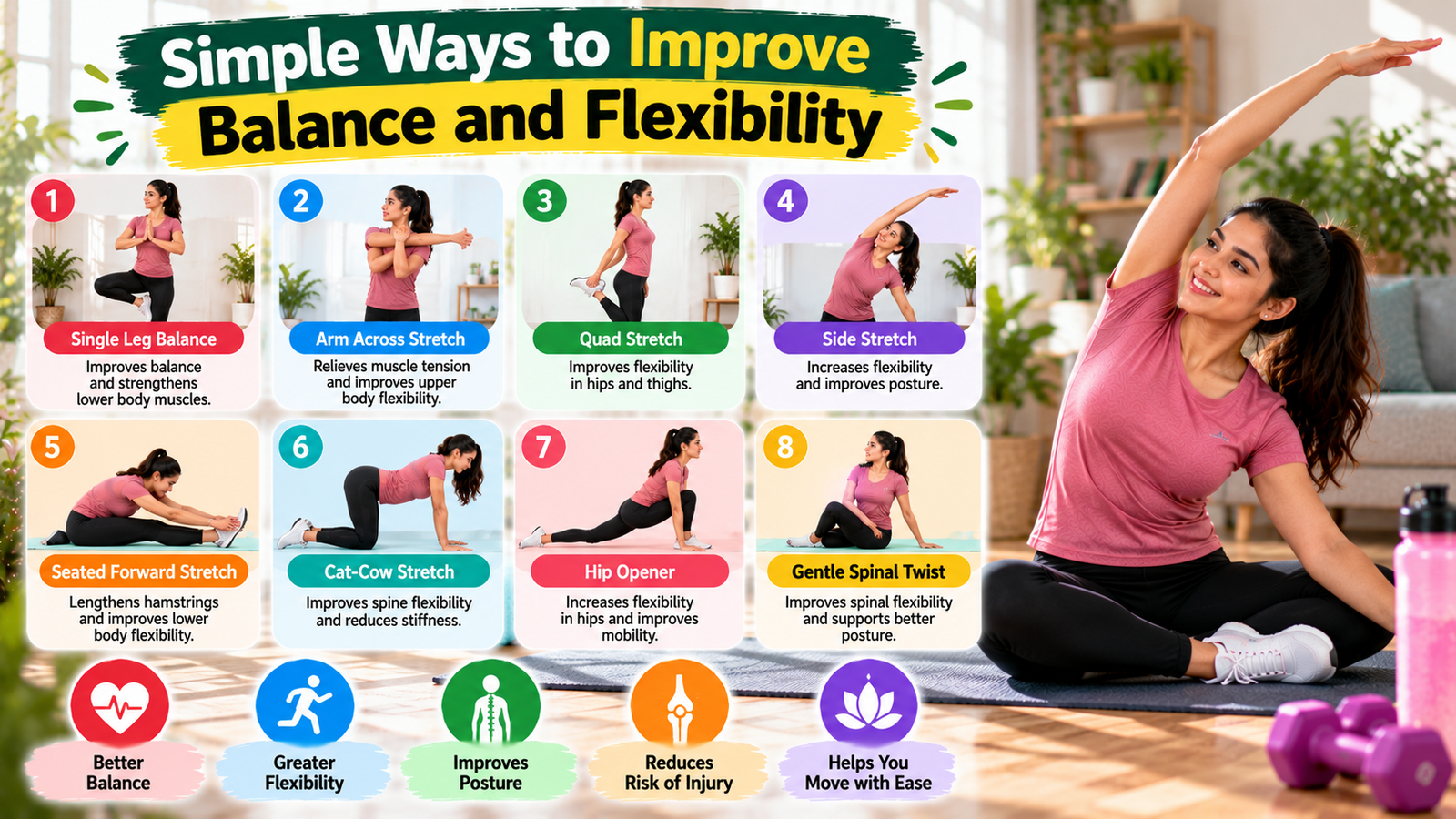
You can begin with a few simple exercises, including shoulder rolls, standing side stretches, calf stretches, and gentle hamstring stretches.
For a hamstring stretch, place one heel slightly in front of you, keep your back comfortable, and gently lean forward from your hips until you feel a mild stretch along the back of your thigh.
Hold a comfortable stretch for around 15 to 30 seconds while breathing normally. Avoid bouncing or forcing your body into a position that causes pain.
Try adding five minutes of stretching to your morning routine or after a short walk. Regular practice is generally more useful than stretching intensely only once in a while.
2. Practice Standing on One Foot
Standing on one foot is a simple exercise that challenges your balance and body control. It can be performed at home without equipment, although beginners should always prioritize safety.
Start by standing near a sturdy chair, countertop, or wall. Keep your feet comfortably apart and your body upright.
Slowly lift one foot a short distance from the floor while keeping your standing knee slightly relaxed. Hold the position for a few seconds, then return your foot to the floor and switch sides.
As your balance improves, you may gradually increase the holding time if the exercise remains comfortable.
Do not close your eyes or stand on an unstable surface to make the exercise more difficult. Keep a stable support within reach, especially if you are older or have experienced falls.
Practicing this movement regularly can help you become more aware of your body position and develop confidence during simple standing activities.
3. Include Walking in Your Daily Routine
Walking is an accessible activity that supports general fitness and provides opportunities to practice natural balance and coordination.
During walking, your body continuously adjusts to changes in position. Regular walks also help maintain leg strength and endurance, which contribute to everyday mobility.
If you are a beginner, start with a comfortable five to ten minute walk and increase the duration gradually. You can walk around your neighborhood, in a nearby park, or inside your home when outdoor conditions are unsuitable.
Pay attention to your surroundings and choose a clear, even walking surface. Wear comfortable footwear and avoid looking at your phone while walking.
For an additional challenge, you can gradually increase your walking duration or include gentle changes in direction in a safe environment.
Walking alone does not address every aspect of balance and flexibility, so combine it with appropriate stretching and balance exercises for a more complete routine.
4. Try Gentle Yoga Exercises
Yoga combines controlled movement, stretching, breathing, and balance practice. Some beginner friendly yoga positions can help improve flexibility and body awareness.
For example, a gentle mountain pose encourages you to stand upright with your feet grounded and shoulders relaxed. A supported tree pose introduces a simple balance challenge, while a gentle cat cow movement encourages controlled motion through the back.
Start with basic positions and use a wall or sturdy chair for support when necessary. You do not need to perform difficult poses to benefit from a regular practice.
Focus on comfortable movement and natural breathing rather than trying to copy advanced positions.
Yoga can be adapted to different abilities, but not every pose is suitable for everyone. If you have joint pain, an injury, or difficulty getting down to or up from the floor, choose modified movements or seek guidance from a qualified instructor.
5. Strengthen Your Legs and Hips
Balance depends partly on the strength of the muscles that help stabilize your body. Strengthening your legs and hips can support walking, standing, and other daily movements.
Simple bodyweight exercises are a practical starting point for many adults.
Chair Sit to Stands
Sit on a sturdy chair with your feet flat on the floor. Lean forward slightly from your hips and push through your feet to stand up. Then lower yourself back into the chair slowly.
Begin with five to eight repetitions, using your hands for assistance if necessary.
Supported Calf Raises
Stand near a wall or sturdy chair. Slowly raise your heels, pause briefly, and lower them back to the floor.
Start with eight to twelve repetitions while maintaining your balance.
Supported Side Leg Raises
Hold a sturdy support and slowly move one leg out to the side without leaning your torso. Return to the starting position and repeat on the other side.
Use a comfortable range of motion and keep the movement controlled.
These exercises can help develop the strength needed for everyday movement. Begin with a manageable number of repetitions and increase gradually as your fitness improves.
6. Improve Your Hip Flexibility
Hip mobility is useful for walking, climbing stairs, getting out of a chair, and performing other daily activities. Spending long periods sitting may leave some people feeling tight around the front of their hips.
A gentle standing hip flexor stretch can be a practical option.
Stand with one foot slightly behind the other and hold a sturdy surface for balance. Bend your front knee slightly and gently shift your weight forward while keeping your torso upright.
You should feel a mild stretch at the front of the hip on the side of the back leg. Hold the position for around 15 to 30 seconds if comfortable, then switch sides.
Avoid arching your lower back or forcing your hips forward.
You can also improve hip movement through comfortable walking, gentle leg movements, and suitable mobility exercises.
If a movement causes pain or aggravates an existing condition, stop and consider asking a healthcare professional for advice.
7. Practice Heel to Toe Walking Safely
Heel to toe walking is a balance exercise in which you place one foot directly in front of the other, with the heel of the front foot close to the toes of the back foot.
This movement challenges your ability to maintain stability while walking along a narrow line.
For beginners, stand beside a kitchen counter or another stable support. Take a small step forward and place your feet closer together than you normally would. If you feel steady, gradually practice placing the heel of one foot near the toes of the other.
Take only a few steps at first, and hold the support when needed.
Do not attempt this exercise on slippery flooring or near stairs. If you have significant balance difficulties, a history of falls, or dizziness, consult a healthcare professional or physical therapist before practicing more challenging balance exercises.
8. Take Breaks From Sitting
Sitting for long periods can reduce the amount of movement you perform during the day. Regular movement breaks are a simple way to include more activity and avoid remaining in one position for too long.
If you work at a desk, consider standing up and walking briefly between tasks. You can also perform gentle shoulder rolls, ankle circles, or comfortable standing stretches.
Set a reminder if you often become focused on work and forget to move.
For example, after completing an email or finishing a meeting, take a short break to stand and move around your workspace.
These breaks do not need to be long. Their purpose is to make movement a regular part of your day.
Although movement breaks can support general mobility, they should complement rather than replace dedicated flexibility and balance exercises.
9. Try Tai Chi or Other Controlled Movement Activities
Tai chi is a gentle movement practice that combines slow, controlled movements with posture and balance awareness. It may be particularly useful for adults who prefer low impact activities.
Practicing suitable tai chi movements can help develop coordination and balance. Some programs have also been studied for their potential to reduce falls among older adults.
You can look for beginner classes or guided sessions led by a qualified instructor. Start with basic movements and use support if needed.
Other controlled movement activities, including certain forms of dance, can also encourage coordination and body awareness.
Choose an activity that feels enjoyable and manageable. If you have mobility limitations or a medical condition affecting balance, seek guidance about suitable modifications.
10. Wear Suitable Footwear and Keep Your Environment Safe
Improving balance is not only about exercising. Your surroundings and footwear can also affect how safely you move.
Choose shoes that fit comfortably and provide suitable support for the activity. Avoid walking in loose footwear that slips off easily, especially when practicing balance exercises.
At home, remove loose rugs, cables, and other objects that may cause trips. Keep frequently used items within easy reach and ensure that walking areas are well lit.
If you practice standing exercises, use a stable chair or countertop rather than furniture that can move unexpectedly.
These small changes are particularly important for older adults and anyone who has difficulty maintaining balance.
Creating a safe environment allows you to practice movements with greater confidence and reduces avoidable hazards.
11. Maintain Healthy Daily Habits
Your daily habits can influence how comfortably you move and how consistently you practice exercise.
A balanced diet provides nutrients that support normal muscle and bone function. Include a variety of vegetables, fruits, whole grains, protein rich foods, and other nutritious choices according to your needs.
Getting sufficient sleep is also important because fatigue can affect coordination, concentration, and exercise performance.
Drink enough water for your individual needs, especially in warm weather or during physical activity.
It is also helpful to avoid increasing exercise intensity too quickly. Give yourself time to adjust to new movements and allow recovery when your body needs it.
Healthy habits work together. You do not need to change everything at once, but small improvements can help you build a routine that supports long term mobility.
12. Follow a Simple Weekly Routine
A basic schedule can make it easier to include balance and flexibility exercises in your life.
Here is an example for beginners who can safely perform these movements.
| Day | Suggested activity | Time |
|---|---|---|
| Monday | Gentle stretching and supported one leg stands | 10 minutes |
| Tuesday | Walking and chair sit to stands | 15 to 20 minutes |
| Wednesday | Gentle yoga or mobility exercises | 10 to 15 minutes |
| Thursday | Walking and supported calf raises | 15 to 20 minutes |
| Friday | Stretching and supported balance practice | 10 minutes |
| Saturday | An enjoyable activity such as walking or beginner tai chi | 15 to 25 minutes |
| Sunday | Rest or gentle movement | As comfortable |
This is only an example. You can shorten the sessions, choose alternative exercises, or adjust the schedule to suit your current abilities.
If you are new to exercise, start with a few minutes and gradually increase the time. If an exercise feels unsafe or causes pain, do not force yourself to complete it.
The goal is to practice regularly while allowing enough time for recovery.
13. Track Your Progress Without Rushing
Tracking your progress can help you understand which exercises are becoming easier and whether your routine is manageable.
You might record how long you can comfortably stand on one foot while holding nearby support, how many chair sit to stands you can perform with good control, or how regularly you complete your stretching sessions.
Focus on gradual improvements rather than trying to achieve a particular result quickly.
For example, you may initially hold a supported balance position for a few seconds and later find that you can maintain it comfortably for longer.
Progress will vary from person to person. Some days you may feel more flexible or stable than others, and that is normal.
If your balance suddenly worsens or you experience repeated falls, unexplained dizziness, or new weakness, seek medical advice rather than attempting to solve the problem through exercise alone.
Common Mistakes to Avoid
When working on balance and flexibility, avoid these common mistakes.
Stretching too forcefully: Pushing beyond your comfortable range can cause pain or injury. Move gently and gradually.
Ignoring safety: Practice balance exercises near a stable support and keep your surroundings clear.
Expecting immediate results: Flexibility and balance develop through regular practice over time.
Skipping strength exercises: Strong legs and hips contribute to everyday stability, so include suitable strengthening activities.
Holding your breath: Breathe naturally while stretching and performing controlled movements.
Comparing yourself with others: Your progress depends on your starting point, health, and individual abilities.
Ignoring warning signs: Stop if you experience sharp pain, unusual dizziness, or other concerning symptoms.
Avoiding these mistakes can make your exercise routine safer and easier to maintain.
Conclusion
Improving balance and flexibility does not have to involve complicated exercises or expensive fitness equipment. Simple habits such as gentle stretching, regular walking, supported one leg stands, chair sit to stands, and controlled movement activities can help you work toward better mobility and body control.
In my opinion, the best approach is to begin with exercises that feel comfortable and gradually build a consistent routine. You can practice stretching in the morning, take movement breaks during work, or include a few balance exercises after a walk.
Remember that safety is more important than difficulty. Use support when needed, avoid painful movements, and adjust exercises to match your abilities. With regular practice and patience, you can develop habits that support comfortable movement and help you remain active in everyday life.