Introduction
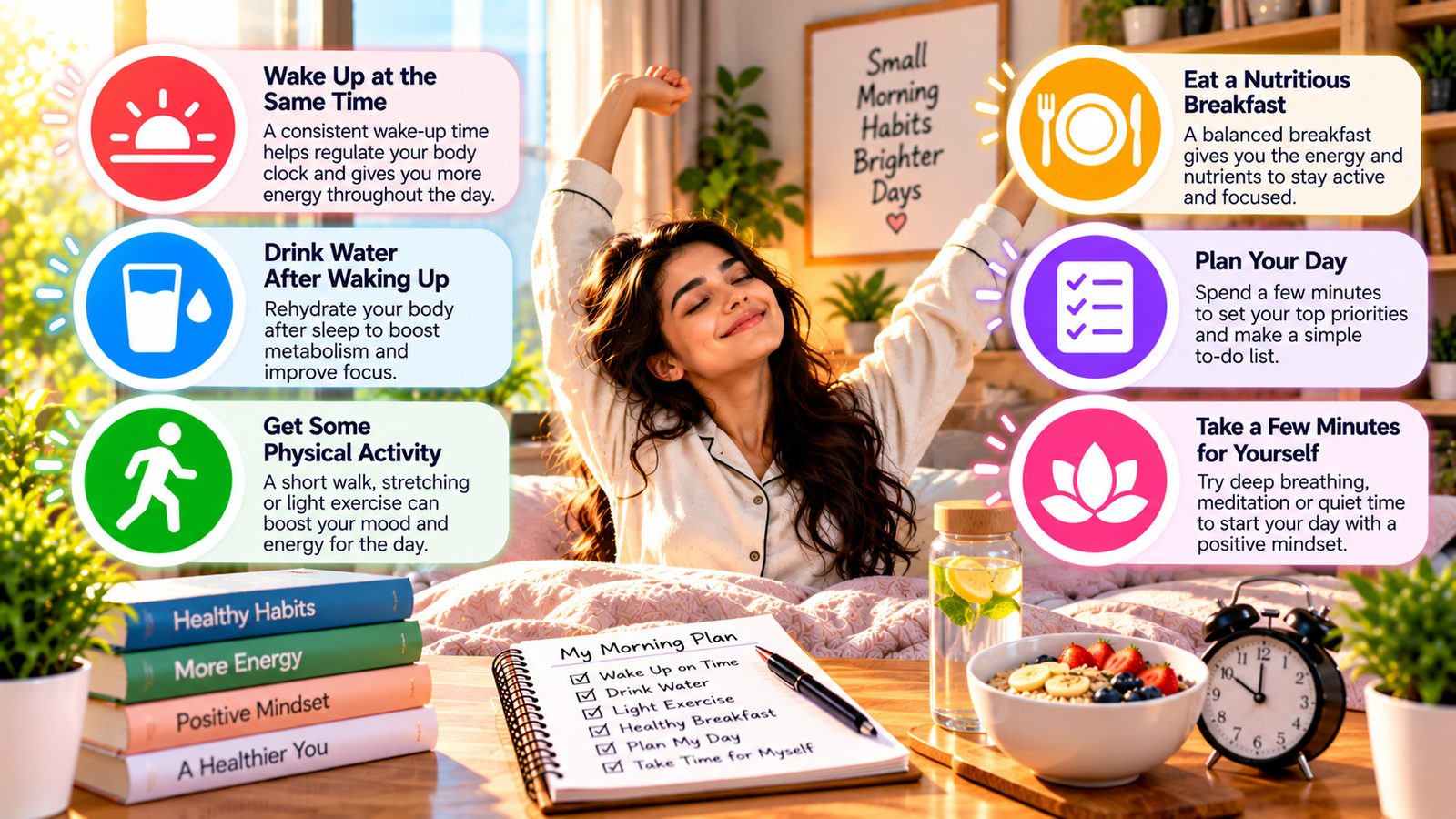
A healthy lifestyle does not always require major changes or complicated daily plans. In my opinion, the small habits I follow every morning can make a meaningful difference in how I feel, manage my time, and approach the rest of the day. Starting the morning with a few positive activities can help me feel more organized, improve my energy levels, and build a routine that supports my overall well being.
Many people begin their day by checking their phones, rushing through breakfast, or worrying about unfinished tasks. Although these habits may seem normal, they can sometimes make mornings feel stressful and unproductive. A simple morning routine gives me an opportunity to slow down, focus on my needs, and prepare for the day ahead.
The good news is that I do not need to wake up extremely early or spend hours following a strict schedule. Drinking water, getting natural light, eating a balanced breakfast, and moving my body are practical habits that can fit into many lifestyles.
In this article, I will discuss simple morning habits for a healthier lifestyle, explain why they matter, and share practical ways to make them part of an everyday routine.
1. Wake Up at a Consistent Time
One of the most useful morning habits is waking up at approximately the same time every day. A regular wake up time helps support the body’s natural sleep and wake cycle and can make my daily routine more predictable.
When I wake up at a different time every morning, it may become difficult to maintain consistent sleeping hours. I might feel rushed on weekdays and sleep much later on weekends, making it harder to return to my usual schedule.
To avoid this problem, I can choose a wake up time that suits my work, studies, and family responsibilities. I should also make sure my bedtime allows enough sleep. Most adults need around seven to nine hours of sleep each night.
I do not need to become an early riser simply because other people prefer waking up before sunrise. The best wake up time is one that allows me to get sufficient rest and begin my day without unnecessary pressure.
If my current schedule is irregular, I can gradually adjust it by moving my wake up time earlier or later in small steps.
2. Drink Water After Waking Up
After several hours of sleep, drinking water in the morning is a simple way to begin meeting my daily fluid needs. Water supports normal body functions, including temperature regulation, digestion, and circulation.
I can keep a glass or bottle of water near the kitchen or another convenient place so that drinking water becomes an easy part of my routine.
I do not need to drink an excessive amount immediately after waking up. A comfortable glass of water is a reasonable starting point, and I can continue drinking throughout the day according to my needs.
The amount of water I need may depend on the weather, physical activity, diet, and individual health circumstances. On hot days, especially when spending time outdoors, I may need to pay closer attention to hydration.
Plain water is usually a practical choice because it does not contain added sugar. If I prefer a different taste, I can add a slice of lemon or cucumber.
The important point is to stay adequately hydrated throughout the day rather than expecting one morning glass of water to provide every hydration benefit.
3. Get Natural Morning Light
Getting natural light after waking up is another helpful habit. Daylight helps regulate the body’s internal clock, which influences when I feel alert and when I become sleepy.
I can begin by opening the curtains, sitting near a bright window, or spending a few minutes outside. If my schedule allows, a short morning walk can help me combine daylight exposure with physical activity.
Natural outdoor light is generally brighter than typical indoor lighting. Getting daylight earlier in the day may help reinforce a regular sleep and wake pattern, especially when combined with consistent sleeping hours.
I do not need to spend a long time outdoors to begin building this habit. Even a brief period outside can be a practical starting point, although the amount of light available varies with weather, season, and location.
I should also protect my skin and eyes appropriately when outdoors. Looking directly at the sun is never necessary to benefit from daylight.
4. Eat a Balanced Breakfast
Breakfast can be a useful part of a healthy morning routine, particularly when it helps me feel satisfied and provides energy for my daily activities. However, individual eating patterns differ, so I should choose a routine that suits my appetite, schedule, and nutritional needs.
A balanced breakfast can include a source of protein, whole grains, fruit, or other nutritious foods. Combining different food groups can help me obtain a variety of nutrients.
Some practical breakfast options include:
- Oatmeal with fruit and nuts.
- Eggs with whole grain bread.
- Plain yogurt with fruit.
- Whole wheat roti with eggs or lentils.
- A vegetable omelet with whole grain toast.
- Unsweetened yogurt with oats and seeds.
I do not need to prepare an elaborate meal every morning. Simple foods that are easy to prepare can make healthy eating more realistic on busy days.
If I do not feel hungry immediately after waking, I can plan a nutritious meal or snack for later when my appetite develops. The overall quality of my diet matters more than following a rigid breakfast rule.
5. Make Time for Morning Movement
Physical activity is an important part of a healthy lifestyle, and morning movement can be an easy way to include it in my day.
I do not need to complete a demanding workout as soon as I wake up. A short walk, gentle stretching, or a few simple bodyweight movements can help me begin moving without making the morning feel overwhelming.
For example, I can spend five to ten minutes stretching my shoulders, moving my legs, and walking around my home or outdoor area.
If I enjoy exercise, I can gradually build a longer morning workout into my schedule. Activities such as brisk walking, cycling, and strength training can contribute to overall fitness when performed regularly.
The best type of morning movement is one that suits my ability and preferences. If I am new to exercise, starting gently and increasing activity over time is usually more manageable than attempting an intense routine immediately.
Consistency is more important than the length of a single session. Small periods of movement can be a useful starting point for a more active lifestyle.
6. Avoid Checking Your Phone Immediately
Many people reach for their smartphones as soon as they wake up. Notifications, news updates, social media posts, and messages can quickly fill the mind with information before the day has properly begun.
I can make my mornings calmer by avoiding unnecessary phone use during the first 15 to 30 minutes after waking up. Instead of immediately checking messages, I can drink water, open the curtains, wash my face, or prepare breakfast.
This habit can also reduce the chance of getting distracted by social media when I should be getting ready for work or other responsibilities.
I do not need to avoid technology completely. If I use my phone for an alarm, calendar, or essential communication, I can still use it when necessary.
The goal is to make deliberate choices about when and why I use digital devices rather than allowing notifications to control the beginning of my day.
7. Practice a Few Minutes of Mindfulness
A busy morning can sometimes create stress before I even leave the house. Thinking about deadlines, appointments, household tasks, or financial responsibilities may make it difficult to feel calm.
Mindfulness is a simple practice that involves paying attention to the present moment. I can spend a few minutes breathing comfortably, noticing my surroundings, or sitting quietly without trying to solve every problem immediately.
For example, I can sit in a comfortable position and pay attention to my natural breathing for three to five minutes. When my thoughts wander, I can gently bring my attention back to my breath.
Another option is to notice a few things I appreciate about my life or identify one positive intention for the day.
Mindfulness does not require special equipment or a particular location. I can practice it at home, in a quiet outdoor space, or during a short break before starting work.
The purpose is not to eliminate every stressful thought. It is to give myself a little space to respond to the day more thoughtfully.
8. Plan Your Most Important Tasks
A few minutes of planning can make my morning more organized and reduce the feeling that I need to handle everything at once.
I can begin by reviewing my schedule and identifying two or three important tasks for the day. These might include completing a work assignment, attending an appointment, studying a particular topic, or finishing a household responsibility.
Writing these priorities in a notebook or planner helps me see what deserves attention first.
I should keep the list realistic. If I write down fifteen major tasks, I may feel overwhelmed before starting. A short list of meaningful priorities is often more practical.
I can also identify which task needs to be completed first and what resources I need to begin it.
If I prepare my clothes, work bag, or breakfast ingredients the night before, I can make the morning even easier.
A simple planning habit helps me begin the day with direction without turning every minute into a strict schedule.
9. Maintain Good Personal Hygiene
Personal hygiene is another essential part of a healthy morning routine. Basic activities such as brushing my teeth, washing my face, bathing when appropriate, and wearing clean clothes help me feel fresh and ready for the day.
I can make these habits easier by keeping the items I need in convenient places. For example, storing my toothbrush, toothpaste, face cleanser, and other personal care products together can reduce unnecessary searching.
Brushing my teeth with fluoride toothpaste twice daily is a widely recommended way to help maintain oral health. I can make sure that morning brushing is part of my routine rather than something I skip when I am in a hurry.
I should also choose personal care products that suit my skin and individual needs instead of assuming that expensive products are always better.
Maintaining hygiene does not need to take a long time. A simple and consistent routine can help me feel comfortable and prepared for my daily activities.
10. Spend a Few Minutes Outdoors
Spending time outdoors in the morning can combine several healthy habits. I can get natural light, move my body, and take a break from indoor distractions at the same time.
A short walk around my neighborhood, a visit to a nearby park, or simply sitting in a safe outdoor area can be enough to begin.
If I have a busy schedule, I can use this time to walk while thinking about my plans for the day rather than trying to fit another activity into my routine later.
Outdoor time can also provide a welcome change of environment. Instead of beginning the day immediately in front of a computer, I can give myself a few minutes to notice the weather, plants, and surroundings.
I should choose a safe and comfortable location and adjust my activity according to the weather. During very hot conditions, walking earlier in the morning may be more comfortable.
If going outside is not practical, opening the curtains and getting daylight near a window can still be a useful alternative.
11. Reduce Morning Stress by Preparing the Night Before
A healthy morning often begins the previous evening. If I leave every preparation task until the moment I wake up, I may feel rushed and start the day with unnecessary stress.
I can make my mornings easier by preparing a few essential things before going to bed.
For example, I can choose my clothes, pack my bag, prepare breakfast ingredients, fill a water bottle, and review the next day’s schedule.
I can also keep important items, such as keys and documents, in a consistent place so that I do not have to search for them in the morning.
These small steps may save time and make it easier to follow other healthy habits.
Preparing everything is not always possible, especially when family responsibilities or unexpected events arise. However, even completing one or two preparations can make the next morning feel more manageable.
12. Limit Added Sugar in Morning Drinks
Morning beverages are an opportunity to make simple improvements to my daily eating habits. Tea, coffee, packaged juices, and other drinks can sometimes contain more added sugar than I realize.
I can begin by reviewing how much sugar I usually add to my drinks. If I regularly use several spoonfuls, I can reduce the amount gradually until I become comfortable with a less sweet taste.
Plain water, unsweetened tea, or coffee with little or no added sugar can be practical options, depending on my preferences.
Whole fruit can also be a nutritious choice because it provides fiber along with naturally occurring sugars. Fruit juice, particularly when consumed in large amounts, may provide less fiber and can make it easier to consume a lot of sugar quickly.
I do not need to eliminate every sweet food from my diet. The goal is to make everyday choices that support a balanced eating pattern without creating unnecessary restrictions.
13. Build a Morning Routine You Can Maintain
One of the biggest mistakes I can make is trying to change every morning habit at once. I might plan to wake up very early, exercise for an hour, meditate, prepare a complicated breakfast, and finish several tasks before work.
Although this plan may sound productive, it can become difficult to maintain when life gets busy.
Instead, I can begin with two or three manageable habits. For example, I might wake up at a consistent time, drink water, and spend five minutes walking or stretching.
After these habits become familiar, I can add another activity if I find it helpful.
I should also allow flexibility. Some mornings may be busier than others, and I may not have time to complete my full routine. On those days, I can focus on the most important habits and return to my usual schedule the next day.
A routine that fits my actual lifestyle is more valuable than an ideal routine that I cannot follow consistently.
Example of a Simple Healthy Morning Routine
Here is an example of a morning routine that can be adjusted according to individual needs and responsibilities.
| Time | Activity |
|---|---|
| 7:00 AM | Wake up at a consistent time |
| 7:05 AM | Drink a glass of water |
| 7:10 AM | Open the curtains and get natural light |
| 7:15 AM | Walk or stretch for 5 to 10 minutes |
| 7:30 AM | Wash up and complete personal hygiene |
| 7:45 AM | Eat a balanced breakfast if hungry |
| 8:00 AM | Review the day’s main priorities |
| 8:10 AM | Begin work, study, or other responsibilities |
This is only an example, not a strict schedule that everyone must follow. I can move the times earlier or later depending on my work hours, family commitments, and sleep needs.
The goal is to make the beginning of the day calmer, healthier, and more organized.
Common Morning Habits to Avoid
Some common habits can make it harder to start the day well. Repeatedly pressing the snooze button may shorten the time available for getting ready and make the morning feel rushed. If I regularly struggle to wake up, I should consider whether I am getting enough sleep at night.
Checking social media immediately after waking may also distract me from important activities. I can reduce this problem by keeping notifications quiet until I have completed my essential morning tasks.
Skipping meals is not automatically unhealthy for everyone, but I should pay attention to my energy levels and nutritional needs. If I become hungry during the morning, planning a suitable breakfast or snack may help.
Another habit to avoid is comparing my routine with someone else’s. A person who starts work at noon may have very different needs from someone who must leave home early.
I should choose habits based on my circumstances instead of following routines simply because they are popular online.
Conclusion
Simple morning habits can support a healthier lifestyle by helping me feel more organized, active, and prepared for everyday responsibilities. Waking up at a consistent time, drinking water, getting natural light, eating balanced meals, and including regular movement are practical places to begin.
I can also reduce early morning screen time, practice mindfulness, plan important tasks, and prepare for the next day in advance. These habits do not require expensive equipment or a complicated schedule.
In my opinion, the key to a successful morning routine is consistency rather than perfection. I do not need to change everything overnight or wake up earlier than my body and schedule allow. I can start with a few small habits, repeat them regularly, and adjust them when necessary.
By making realistic improvements to my mornings, I can create a daily routine that supports my well being and helps me approach each new day with greater confidence and balance.