Introduction
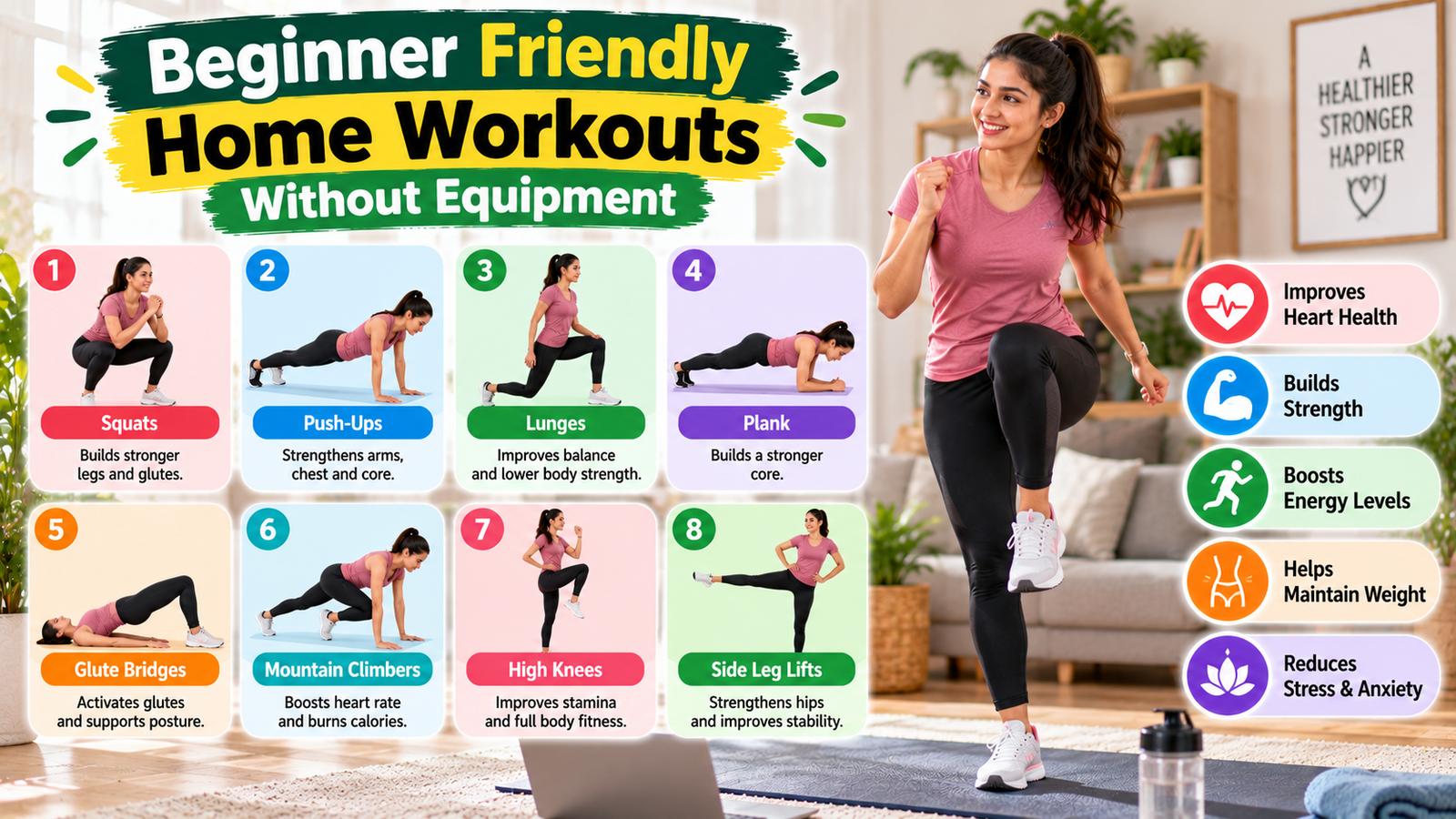
Starting a fitness routine can feel challenging when you are a beginner. You may think you need a gym membership, expensive exercise machines, or special equipment to improve your fitness. However, this is not always true. Many effective exercises can be performed at home using only your body weight and a little space.
Beginner friendly home workouts without equipment are a practical option for people who want to become more active without spending extra money. Whether you work at a desk, study for long hours, manage household responsibilities, or simply prefer exercising at home, you can create a routine that fits your daily schedule.
In my opinion, the best workout plan is one that you can follow consistently. You do not need to exercise for hours or perform difficult movements when you are just starting. Simple exercises such as walking in place, squats, wall push ups, glute bridges, and gentle stretching can help you build a foundation for better fitness.
In this article, I will explain some of the best home workouts for beginners, how to perform them safely, and how to build a simple exercise routine without equipment.
Benefits of Home Workouts Without Equipment
Home workouts offer several advantages, especially for people who are new to exercise.
1. Save Money
One of the biggest advantages of exercising at home is that you do not need to purchase expensive equipment or pay for a gym membership. Your body weight provides resistance for many basic exercises.
You can begin with simple movements and gradually increase the difficulty as your fitness improves. A comfortable floor space and suitable clothing are often enough to get started.
2. Exercise at Your Convenience
A busy schedule can make it difficult to visit a gym regularly. Home workouts allow you to exercise before work, during a break, or in the evening.
You can choose a time that suits your daily routine without worrying about travel or gym opening hours.
3. Build Strength and Stamina
Bodyweight exercises can help improve muscular strength, endurance, balance, and coordination. Activities such as squats, lunges, and push ups work several muscle groups.
When combined with aerobic activities such as marching in place or dancing, home workouts can also support cardiovascular fitness.
4. Develop Consistent Habits
Exercising at home can make it easier to develop a regular fitness habit. You can begin with short sessions and gradually increase the duration as you become more comfortable.
Consistency is more important than trying to complete a difficult workout on your first day.
1. Marching in Place
Marching in place is one of the easiest exercises for beginners. It raises your activity level without requiring much space and can serve as a gentle warm up.
How to do it:
- Stand upright with your feet comfortably apart.
- Lift your right knee slightly.
- Lower your right foot and lift your left knee.
- Continue alternating your legs at a comfortable pace.
- Swing your arms naturally if it feels comfortable.
Start with 30 to 60 seconds and rest when needed. As your fitness improves, you can gradually increase the duration.
Marching in place is particularly useful for people who have not exercised for a long time. Keep your movements controlled and avoid lifting your knees higher than feels comfortable.
2. Bodyweight Squats
Squats are a useful exercise for strengthening the muscles of your legs and hips. They also help practice a movement used in everyday activities, such as sitting down and standing up.
How to do it:
- Stand with your feet about shoulder width apart.
- Keep your chest comfortably upright.
- Bend your knees and move your hips backward as if sitting on a chair.
- Lower yourself only as far as you can comfortably manage.
- Push through your feet to return to standing.
Beginners can start with five to ten repetitions. If a regular squat feels difficult, practice sitting down on a sturdy chair and standing up again.
Keep your movements slow and controlled. Your knees should move in line with your feet, and you should avoid forcing yourself into a deep squat.
3. Wall Push Ups
Wall push ups are an easier alternative to traditional floor push ups. They help beginners develop strength in the chest, shoulders, and arms.
How to do it:
- Stand facing a wall and place your palms against it at about shoulder height.
- Move your feet slightly backward.
- Bend your elbows and bring your chest gently toward the wall.
- Keep your body in a straight, comfortable line.
- Push through your hands to return to the starting position.
Try five to ten repetitions at first. If the exercise feels too easy after regular practice, you can gradually move your feet farther from the wall or try push ups against a stable countertop.
Avoid locking your elbows forcefully or allowing your lower back to sag.
4. Glute Bridges
Glute bridges target the muscles around your hips and buttocks. They are performed on the floor and do not require equipment.
How to do it:
- Lie on your back with your knees bent and feet flat on the floor.
- Keep your arms relaxed beside your body.
- Tighten your abdominal muscles gently.
- Lift your hips until your body forms a comfortable line from your shoulders toward your knees.
- Pause briefly and lower your hips slowly.
Begin with eight to ten repetitions. Focus on lifting through your hips rather than arching your lower back.
If lying on the floor is uncomfortable or you have a condition that affects this movement, choose a suitable alternative with professional guidance.
5. Standing Calf Raises
Calf raises are simple exercises that strengthen the muscles at the back of your lower legs.
How to do it:
- Stand upright with your feet about hip width apart.
- Hold a wall or sturdy chair for balance if needed.
- Slowly lift your heels and rise onto the balls of your feet.
- Pause briefly at the top.
- Lower your heels back to the floor.
Start with eight to twelve repetitions. Keep your movements controlled instead of bouncing up and down.
This exercise is easy to add to a beginner home workout because it requires little space and can be adjusted according to your ability.
6. Bird Dog Exercise
The bird dog exercise encourages controlled movement and helps train the muscles that support your trunk and back.
How to do it:
- Begin on your hands and knees.
- Position your hands under your shoulders and knees under your hips.
- Extend your right arm forward and your left leg backward, if you can maintain your balance.
- Keep your back relatively steady.
- Return to the starting position and switch sides.
Begin with four to six repetitions on each side. You can make the exercise easier by moving only one arm or one leg at a time.
Avoid twisting your hips or lifting your leg higher than you can comfortably control. If kneeling is difficult, consider a different beginner exercise.
7. Standing Knee Raises
Standing knee raises help develop coordination and add movement to a home workout.
How to do it:
- Stand upright with your feet comfortably apart.
- Lift your right knee toward your waist as far as comfortable.
- Lower your foot slowly.
- Repeat with your left knee.
- Continue alternating sides.
Perform the exercise for 30 to 60 seconds or begin with five to eight repetitions per leg.
Hold a sturdy chair or wall if you need help with balance. Move slowly at first, then increase your pace if you feel comfortable.
Standing knee raises can be a good option for beginners who prefer exercises that do not require getting down onto the floor.
8. Modified Reverse Lunges
Reverse lunges work the legs and hips while encouraging balance and coordination. However, they can be challenging for some beginners, so it is important to use a comfortable range of movement.
How to do it:
- Stand upright with your feet about hip width apart.
- Step one foot backward.
- Bend both knees slightly, lowering your body only as far as comfortable.
- Push through your front foot to return to standing.
- Repeat with the other leg.
Start with four to six repetitions per side. Hold a stable chair or wall if you need extra support.
If you have knee pain, balance difficulties, or trouble stepping backward, practice supported sit to stand movements or another comfortable leg exercise instead.
9. Wall Sit
A wall sit is an optional exercise that challenges the muscles of the thighs and hips.
How to do it:
- Stand with your back against a wall.
- Move your feet slightly forward.
- Slide your back down the wall a small distance.
- Hold the position briefly while breathing normally.
- Push through your feet to return to standing.
Beginners can start with a hold of five to ten seconds. There is no need to lower your body until your thighs are parallel to the floor.
Stop if you experience knee pain, dizziness, or unusual discomfort. You can skip this exercise if it does not suit your current fitness level.
10. Gentle Stretching
Stretching can help you finish a workout with controlled, comfortable movements. It is also useful on days when you want to focus on mobility rather than a full strength session.
Some beginner friendly stretches include:
Shoulder rolls: Slowly roll your shoulders backward and forward.
Calf stretch: Place your hands against a wall, step one foot backward, and gently move your weight forward while keeping the back heel down.
Standing side stretch: Raise one arm overhead and gently lean to the opposite side.
Hamstring stretch: Place one heel slightly forward, keep your back comfortable, and gently lean from your hips.
Hold each stretch for about 15 to 30 seconds if comfortable. Do not bounce or force your body into a painful position.
A Simple 20 Minute Home Workout for Beginners
Once you are familiar with the exercises, you can combine them into a short routine.
The following plan is an example. You can reduce the repetitions or take longer breaks according to your fitness level.
| Exercise | Suggested duration or repetitions |
|---|---|
| Marching in place | 2 minutes |
| Bodyweight squats or chair sit to stands | 8 repetitions |
| Wall push ups | 8 repetitions |
| Glute bridges | 10 repetitions |
| Standing calf raises | 10 repetitions |
| Bird dog | 5 repetitions per side |
| Standing knee raises | 1 minute |
| Gentle stretching | 3 minutes |
Rest between exercises whenever necessary. Depending on your pace and rest periods, the routine may take more or less than 20 minutes.
If you are completely new to exercise, begin with one round. You can gradually add repetitions or a second round when the workout becomes easier. You do not need to complete every exercise during your first session.
How Often Should Beginners Work Out at Home?
Beginners should focus on building a routine that allows enough time for recovery.
You could start with two or three short strength workouts each week, with rest or light activity between sessions. On other days, consider walking, gentle cycling, or another activity you enjoy.
For general health, widely used adult activity guidelines recommend at least 150 minutes of moderate intensity aerobic activity per week, or 75 minutes of vigorous activity, or an equivalent combination. Adults are also generally advised to perform muscle strengthening activities involving the major muscle groups on at least two days per week.
These are longer term targets rather than requirements for your first week. If you have been inactive, start with a manageable amount and increase gradually.
Remember that a short workout is still a useful starting point. Building a consistent habit can help you progress toward your goals.
Important Safety Tips for Home Workouts
Exercising at home is convenient, but safe movement should always be a priority.
Warm up first. Spend three to five minutes marching gently or moving your arms and legs before more demanding exercises.
Wear suitable clothing. Choose comfortable clothing and footwear appropriate for the surface and activity.
Clear your space. Move furniture, cables, and other objects that could cause you to trip.
Use controlled movements. Focus on technique instead of speed or the number of repetitions.
Rest when needed. Beginners may need more recovery time between exercises.
Stay hydrated. Drink water according to your needs, particularly when exercising in a warm environment.
Listen to your body. Stop if you experience chest pain, faintness, severe shortness of breath, or other concerning symptoms and seek appropriate medical attention.
If you have a chronic health condition, a recent injury, significant joint pain, or concerns about exercising safely, speak with a qualified healthcare professional before beginning a new workout routine.
Common Mistakes Beginners Should Avoid
One common mistake is trying to do too much on the first day. Performing many repetitions or choosing difficult exercises immediately can lead to excessive soreness and make it harder to continue.
Another mistake is comparing your progress with people who have been exercising for years. Everyone starts from a different fitness level, and your progress should reflect your own abilities.
Some beginners also believe that they must feel exhausted after every workout to receive benefits. This is not necessary. A suitable workout should challenge you without leaving you unable to perform your normal activities.
Finally, avoid changing your entire routine every day. Repeating basic exercises allows you to learn proper technique and notice gradual improvements.
Conclusion
Beginner friendly home workouts without equipment offer a convenient way to become more active, build strength, and improve overall fitness. Exercises such as marching in place, bodyweight squats, wall push ups, glute bridges, calf raises, and gentle stretching can help you develop a strong foundation without purchasing gym equipment.
In my opinion, the most effective approach is to begin with simple movements that fit your current fitness level. Start with short sessions, take breaks when needed, and increase the difficulty gradually as your confidence improves.
You do not need a perfect schedule or an expensive fitness setup to get started. A small amount of space, a realistic plan, and consistent effort can help you build a healthier routine at home. Focus on safe technique, enjoy the process, and remember that steady progress is more valuable than trying to achieve everything in one day.