Introduction
Modern life can become busy before we even realize it. Between work, family responsibilities, household chores, personal goals, and daily commitments, many people find themselves moving from one task to another without taking enough time to rest. Even after finishing their responsibilities, they may continue thinking about unfinished work or checking their phones instead of allowing themselves to relax.
In my opinion, relaxation is an important part of a healthy and balanced lifestyle. It is not a waste of time, and it should not be something we only enjoy during holidays or weekends. Taking regular breaks can give us an opportunity to step away from daily pressure, enjoy our personal time, and pay attention to our wellbeing.
The good news is that making time for relaxation does not require a completely free schedule. Small activities, such as taking a short walk, listening to music, reading a book, or enjoying a quiet cup of tea, can fit naturally into an ordinary day.
In this article, I will explain how to make time for relaxation in everyday life, develop simple habits, and create a daily routine that balances responsibilities with personal wellbeing.
1. Understand Why Relaxation Matters
Before making time for relaxation, it helps to understand why it deserves a place in your daily schedule. Many people prioritize work and other responsibilities because they believe these activities are more important than taking a break.
However, constantly staying busy without allowing enough time for rest can make everyday life feel exhausting. You may find it harder to concentrate, enjoy your free time, or approach ordinary challenges with patience.
Relaxation gives you an opportunity to pause and shift your attention away from demanding activities. Depending on the activity, it may help you feel calmer, more comfortable, and better prepared to continue with your responsibilities.
Relaxation does not look the same for everyone. Some people enjoy quiet activities, while others feel refreshed after walking outdoors, talking with friends, or participating in a favorite hobby.
The important thing is to discover what helps you unwind and make space for it regularly.
2. Schedule Relaxation Like Other Important Tasks
One practical way to make time for relaxation is to include it in your daily schedule. If you wait until all your responsibilities are finished, you may find that there is never enough time left.
Start by reviewing your usual day. Identify small periods when you could take a break without creating problems for your work or personal responsibilities.
For example, you might spend ten minutes relaxing after lunch, take a short break in the afternoon, or reserve part of the evening for an enjoyable activity.
Write these periods in your planner if that helps you remember them. You do not need to create a strict timetable. A simple reminder can be enough to make relaxation a regular part of your routine.
Treat this time as something valuable rather than an activity you should skip whenever another task appears.
Your schedule may change from day to day, so remain flexible. If you cannot take a break at your preferred time, look for another suitable opportunity.
3. Start With Short Breaks During the Day
Many people assume that relaxation requires a long period of free time. This belief can make it difficult to get started, especially when work and family responsibilities take up most of the day.
In reality, you can begin with short breaks lasting five to ten minutes.
During a break, stand up, stretch gently, drink water, or sit somewhere comfortable. You might look out of a window, listen to a favorite song, or step outside for some fresh air.
If you spend most of your day working at a computer, moving away from your screen for a few minutes can also provide a welcome change.
Try taking these breaks between tasks instead of waiting until you feel completely exhausted.
Short breaks may not replace longer periods of rest, but they can help you create regular pauses in an otherwise busy schedule.
The best approach is to choose activities that are easy to start and do not require extensive preparation.
4. Create a Relaxing Morning Routine
A peaceful morning can help you begin the day with a little more space for yourself. You do not need to wake up extremely early or follow a complicated routine to enjoy this benefit.
Start by choosing one simple activity that makes your morning feel more comfortable.
You might drink a cup of tea without checking your phone, sit quietly for a few minutes, stretch gently, or spend time near a window.
If your mornings are busy, prepare a few things the night before. Organizing your clothes, preparing breakfast ingredients, or writing a short task list can reduce the pressure of making decisions when you wake up.
Avoid filling every available minute with chores or digital activities. Giving yourself a little time to wake up naturally may help your morning feel less rushed.
Even five minutes of personal time can become a meaningful habit when practiced regularly.
Remember that the goal is not to make your morning perfect. It is to begin the day with an activity that supports your comfort and wellbeing.
5. Reduce Unnecessary Digital Distractions
Smartphones and other digital devices can make relaxation more difficult when they constantly demand our attention. A person may sit down intending to rest but spend the entire break checking messages, browsing social media, or watching short videos.
Although digital entertainment can be enjoyable, it does not always provide the kind of rest we are looking for.
Try creating short periods when you put your phone aside. You might keep it away during meals, while reading, or during the final part of your evening.
Turn off unnecessary notifications and consider setting limits for applications that encourage you to scroll longer than intended.
You can also choose relaxing activities that do not involve screens, such as listening to music, gardening, drawing, or walking outside.
There is no need to avoid technology completely. The aim is to use it intentionally and make sure it does not take over all your free time.
By reducing unnecessary interruptions, you can create more opportunities to enjoy genuine breaks throughout the day.
6. Enjoy Walking as a Simple Form of Relaxation
Walking is an accessible activity that can fit into many daily routines. You do not need special equipment or a complicated plan to enjoy a short walk.
You might walk around your neighborhood, spend time in a nearby park, or take a brief walk during a work break.
Instead of treating every walk as an exercise target, allow yourself to enjoy the experience. Notice the surroundings, listen to the sounds around you, and pay attention to the movement of your body.
If you have been sitting for several hours, a short walk can also provide an opportunity to change positions and move your body.
Choose a safe route and a comfortable pace that suits your abilities.
Even a ten minute walk may be a useful way to step away from daily tasks and create a little personal space.
If outdoor walking is not practical, you can move around your home or choose another activity that feels comfortable.
7. Make Time for Hobbies You Enjoy
Hobbies provide an opportunity to do something enjoyable without focusing on work, deadlines, or household responsibilities.
Unfortunately, many people stop making time for hobbies when their schedules become busy. They may believe that personal interests can wait until they have completed every other task.
However, there will almost always be another responsibility waiting to be handled. This is why it helps to reserve some time for activities that make your life enjoyable.
Think about what you genuinely like doing. You might enjoy reading, cooking, gardening, photography, painting, listening to music, or learning a new skill.
Choose an activity that fits your available time. You do not need to spend an entire afternoon on a hobby. Even fifteen minutes can provide an enjoyable change from your usual routine.
Keep your expectations simple. You do not need to become highly skilled or produce something impressive.
The purpose is to enjoy the activity itself and create a healthier balance between responsibilities and personal interests.
8. Learn to Say No to Unnecessary Commitments
Sometimes, the main reason people struggle to relax is that they accept more responsibilities than they can comfortably manage.
They may agree to additional tasks, attend every social event, or help others even when their schedules are already full.
Being helpful is valuable, but constantly saying yes can leave very little time for your own needs.
Before accepting a new commitment, consider whether you have enough time and energy to manage it. If your schedule is full, explain your situation politely and discuss another time if appropriate.
For example, you might tell someone that you cannot help immediately but could assist later in the week.
You can also review your existing commitments and identify activities that are no longer necessary or meaningful.
Setting boundaries does not mean becoming selfish or avoiding responsibilities. It means recognizing your limits and making realistic decisions about how you use your time.
Protecting some personal time can help you maintain a more sustainable routine.
9. Use Simple Breathing and Mindfulness Exercises
Mindfulness is a practical way to bring your attention to the present moment. It can be useful when your mind feels occupied by unfinished tasks, future plans, or everyday concerns.
Find a comfortable position and take a few natural breaths. Notice the feeling of breathing without trying to force yourself to become completely calm.
When your mind wanders, gently return your attention to your breathing or the sounds around you.
You can also practice mindfulness during ordinary activities. For example, pay attention to the taste of your food, the warmth of your tea, or the feeling of your feet touching the ground while walking.
Start with two or three minutes and increase the duration only if it feels helpful.
Mindfulness does not require you to eliminate every thought or emotion. The purpose is to notice what is happening without immediately becoming caught up in it.
If focusing inward feels uncomfortable, choose a simple external focus, such as observing nearby objects or listening to familiar sounds.
10. Make Your Evening More Relaxing
The evening is often an ideal time to step away from work and prepare for rest. However, many people continue checking emails, completing unnecessary tasks, or using their phones until they are ready to sleep.
A simple evening routine can help create a clearer distinction between daily responsibilities and personal time.
Start by deciding when you would like to finish work whenever your schedule allows. Put away your work materials and make a short list of tasks that can wait until the following day.
Next, choose one or two activities that help you unwind. You might read, listen to music, prepare a simple meal, talk with family, or enjoy a warm shower.
Try to avoid filling the entire evening with chores. If possible, leave some time for activities that are enjoyable rather than productive.
Reducing stimulating screen use before bedtime may also help if your phone tends to keep you awake longer than intended.
A relaxing evening does not have to follow a perfect routine. Even one small change can make your personal time feel more intentional.
11. Keep Your Living Space Comfortable
Your surroundings can influence how easily you relax. A cluttered or noisy environment may make it harder to enjoy a quiet moment, while a comfortable space can encourage you to slow down.
You do not need to clean your entire home or spend money on new decorations. Start with one small area that you use frequently.
For example, clear your bedside table, organize your favorite chair, or tidy your workspace at the end of the day.
You might also create a simple relaxation corner with a comfortable seat, a book, or anything else that helps you enjoy your free time.
If your home is shared with other people, look for practical ways to create quiet moments when possible.
The goal is not to achieve a perfectly organized home. It is to make your surroundings more comfortable and supportive of your daily routine.
12. Protect Your Sleep and Rest Time
Sleep is an important part of relaxation and everyday wellbeing. When people repeatedly sacrifice sleep to finish tasks or spend time online, they may find it more difficult to manage daily responsibilities.
Try to maintain a regular bedtime and waking time that allow enough sleep for your needs.
Create a simple routine before bed, such as preparing for the next day, reading, or listening to quiet music.
If you often work late, review your schedule and identify tasks that can be completed earlier or divided into smaller steps.
It is also helpful to recognize that relaxation and sleep are related but different. A quiet activity may help you unwind, while sufficient sleep provides essential rest for your body and mind.
Avoid treating sleep as time that should be sacrificed whenever your schedule becomes busy.
Making room for rest can help you create a more sustainable lifestyle and approach your daily responsibilities with greater consistency.
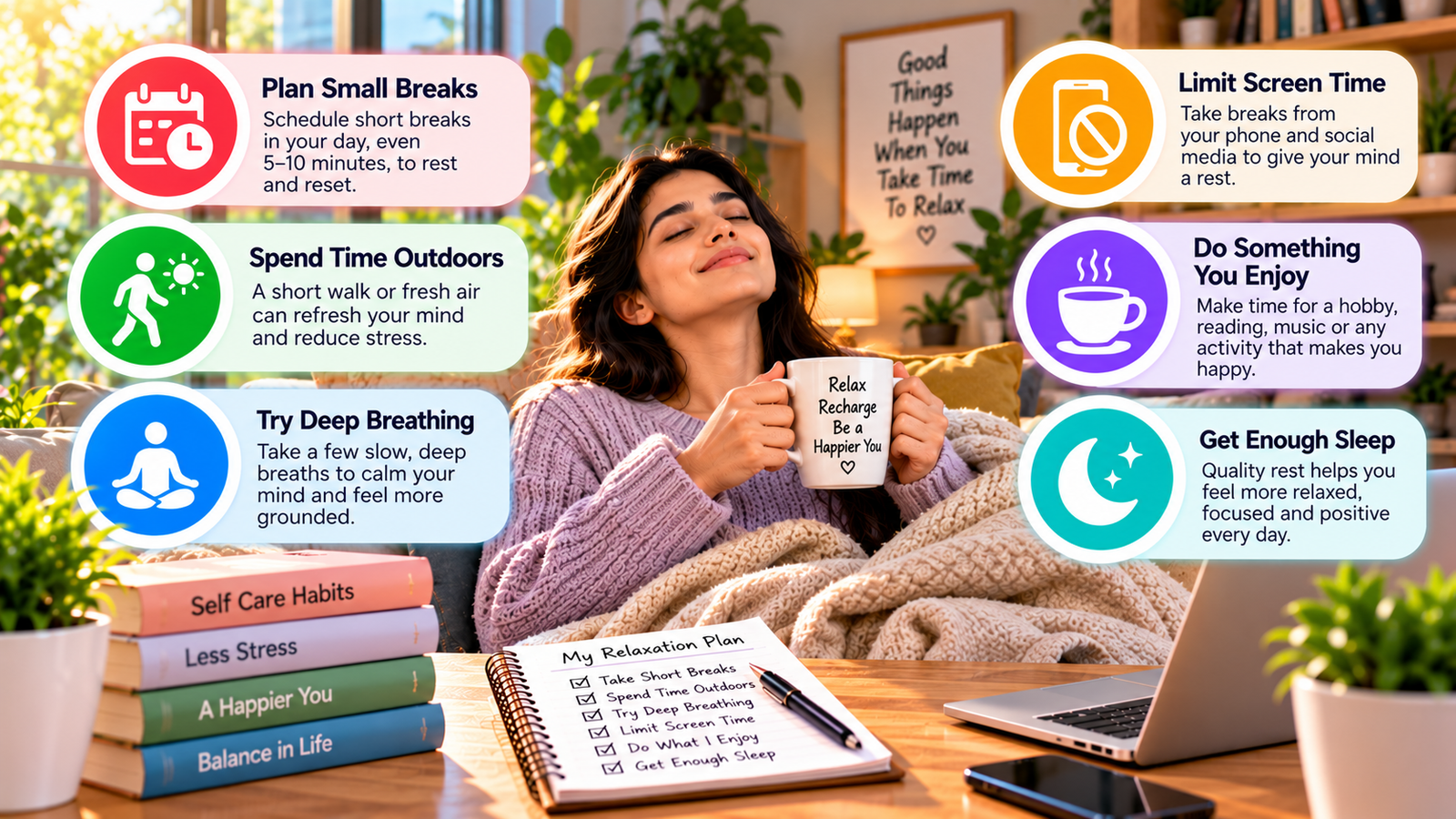
13. Build a Realistic Weekly Relaxation Plan
Planning relaxation for the entire week can help you avoid leaving it until the last minute.
Start by identifying a few opportunities for personal time. These might include short daily breaks, a walk after work, a hobby during the weekend, or an evening without work related notifications.
Choose activities that match your current schedule rather than creating an ambitious plan that is difficult to follow.
For example, you could take a five minute break during the morning, enjoy a short walk in the afternoon, and spend twenty minutes reading in the evening.
At the weekend, you might make time for a favorite hobby or a relaxed conversation with family or friends.
Review your plan at the end of the week. Consider which activities helped you unwind and which ones were difficult to fit in.
Make adjustments as needed and remember that your routine can change when your responsibilities change.
The purpose of planning is to create opportunities for relaxation, not to turn relaxation into another source of pressure.
Common Mistakes to Avoid
One common mistake is waiting until every responsibility is complete before taking a break. Because new tasks continue to appear, this approach can leave little time for rest.
Another mistake is assuming that relaxation must involve expensive activities or long periods away from home. Many simple activities can be enjoyable without requiring extra money or extensive preparation.
Some people also feel guilty when they take time for themselves. It is important to remember that rest is a normal part of a healthy routine, not something that must always be earned through hard work.
Finally, avoid comparing your relaxation habits with other people’s lifestyles. Your schedule, responsibilities, and preferences may be different.
Start with a realistic approach and allow yourself to discover what works best for you.
Conclusion
Learning how to make time for relaxation in everyday life begins with recognizing that personal wellbeing deserves a place in your schedule. You do not need an empty calendar or a long vacation to enjoy moments of rest. Short breaks, mindful breathing, walking, hobbies, comfortable surroundings, and a relaxing evening routine can all help you create more balance.
In my opinion, the most effective approach is to start small and remain consistent. Choose one activity that helps you unwind and include it in your daily routine. Once it becomes familiar, look for other simple opportunities to relax.
Remember that being productive does not mean staying busy every minute of the day. Taking time to rest can be a valuable part of managing your responsibilities and maintaining a satisfying lifestyle.
With realistic expectations and a flexible routine, you can make relaxation a regular part of everyday life and create more room for comfort, enjoyment, and personal wellbeing.