Introduction
Building a positive daily routine is one of the simplest ways to make everyday life more organized, productive, and enjoyable. Our daily habits influence how we use our time, manage responsibilities, care for our health, and respond to challenges. When our days lack structure, it can become difficult to stay focused, complete important tasks, and make time for personal wellbeing.
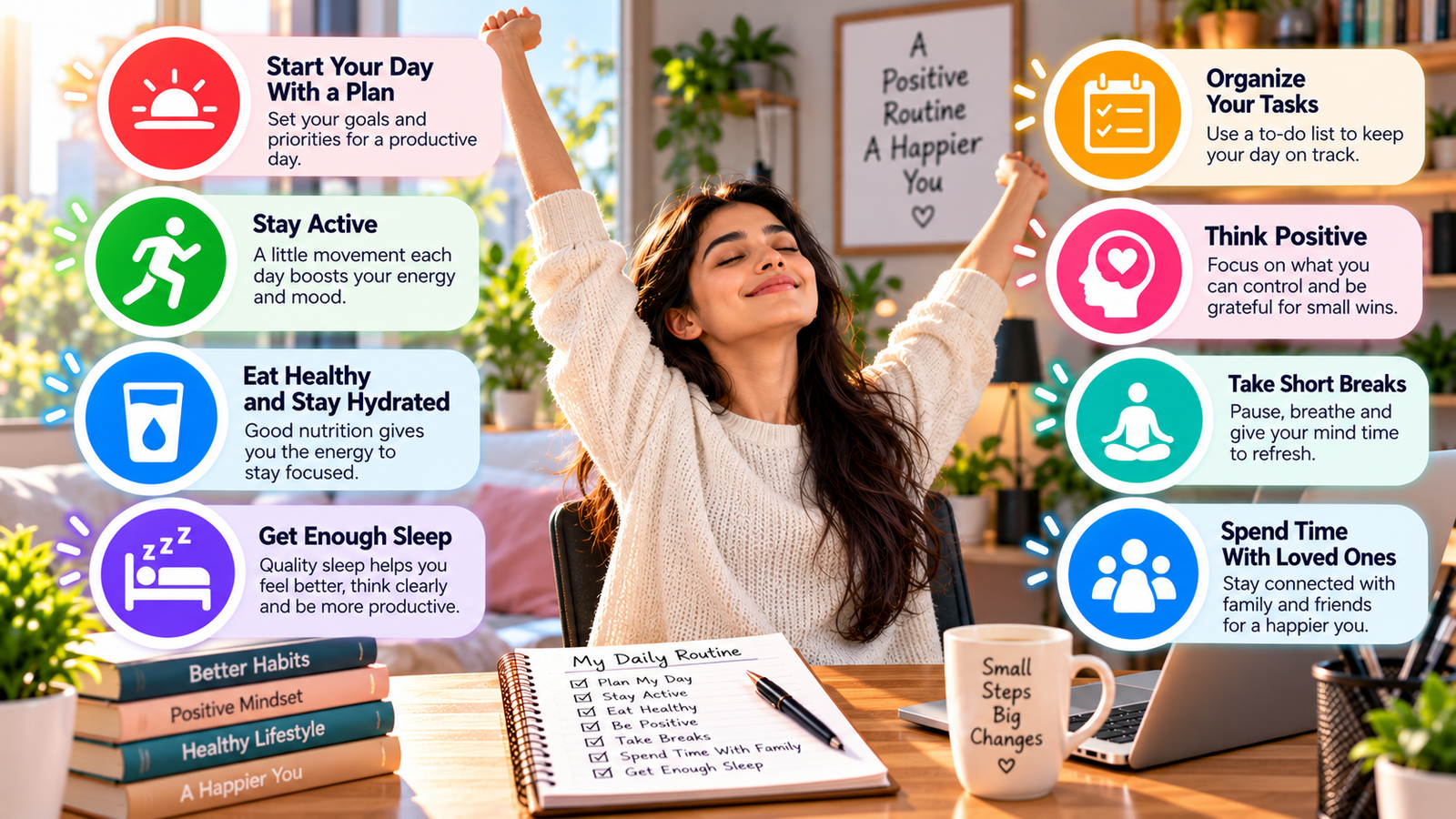
A positive daily routine does not mean planning every minute or following a strict schedule without flexibility. Instead, it means creating helpful habits that support your goals and fit naturally into your lifestyle. These habits can include waking up at a consistent time, eating balanced meals, exercising regularly, organizing tasks, taking breaks, and getting enough sleep.
In my opinion, the best daily routine is one that feels realistic and easy to maintain. You do not need to change your entire lifestyle in a single day. Small improvements, repeated consistently, can gradually help you develop a more balanced approach to everyday responsibilities.
In this article, I will explain how to build a positive daily routine, choose useful habits, manage your time effectively, and maintain your progress over the long term.
1. Understand Your Current Daily Habits
Before creating a new routine, take some time to understand how you currently spend your day. This helps you identify habits that are useful and areas that may need improvement.
For example, you might notice that you spend too much time on your phone in the morning, delay important tasks, skip breakfast, or stay awake later than planned. You may also discover positive habits that already work well for you.
Write down your usual activities from the time you wake up until you go to bed. You do not need to record every minute. A general overview of your morning, afternoon, and evening is enough to get started.
Next, consider which activities help you feel organized and which ones make your day more stressful.
Try to identify one or two changes that could improve your routine without making your schedule unnecessarily complicated.
Understanding your existing habits gives you a practical starting point and helps you create a routine that suits your actual lifestyle rather than an unrealistic ideal.
2. Start Your Morning With Simple Habits
The way you begin your morning can influence how you approach the rest of your day. A calm and organized start can help you feel more prepared for your responsibilities.
You do not need to wake up extremely early or follow a complicated morning routine. Begin with a few simple activities that make sense for your schedule.
For example, you can wake up at a consistent time, drink some water, wash up, open the curtains, and spend a few minutes preparing for the day.
Avoid immediately checking social media if doing so usually distracts you or makes you feel rushed. Instead, give yourself a little time to wake up and decide what deserves your attention.
You might also spend two minutes reviewing your priorities or writing down an important goal for the day.
The purpose of a positive morning routine is to help you begin the day with intention. Choose activities that make you feel comfortable and prepared rather than copying someone else’s schedule.
3. Set Realistic Goals for Each Day
A positive daily routine becomes more effective when it includes clear and achievable goals. Without priorities, it is easy to spend hours on minor activities while postponing important responsibilities.
At the beginning of each day, identify two or three tasks that deserve your attention. These might include completing a work assignment, studying a particular subject, organizing your home, or making time for exercise.
Write your goals in a notebook or digital planner so you can review them throughout the day.
Try to make each goal specific. Instead of writing “be productive,” decide to complete one report, study for 30 minutes, or organize a particular area of your workspace.
It is also important to keep your expectations realistic. A long list of tasks may look motivating, but it can quickly become overwhelming if you have limited time.
Allow room for unexpected responsibilities and remember that not every task must be completed immediately.
When you focus on a few meaningful goals, your daily routine becomes easier to manage and your progress becomes more visible.
4. Create a Balanced Daily Schedule
A well planned schedule helps you organize different areas of your life without allowing one responsibility to dominate your entire day.
Start by identifying the activities that have fixed times, such as work, classes, appointments, or family responsibilities. Then arrange other activities around these commitments.
Include time for meals, exercise, household tasks, relaxation, and sleep. These activities are important parts of a balanced routine, not optional extras that should always be postponed.
For example, you might dedicate the morning to your most important work, take a break around lunchtime, complete smaller tasks in the afternoon, and reserve the evening for personal activities.
Your schedule does not have to be identical every day. Some responsibilities will change, and unexpected events may require adjustments.
The key is to create a general structure that helps you understand where your time is going.
A flexible schedule can provide direction while allowing you to respond to changing needs without feeling that your entire plan has failed.
5. Include Physical Activity in Your Routine
Physical activity is an important part of a positive daily routine. Regular movement can support general health and may help improve mood, energy, and sleep.
You do not need to join a gym or follow a demanding exercise program to get started. Choose an activity that fits your fitness level and daily schedule.
Walking, cycling, stretching, dancing, and beginner friendly home workouts are all practical options.
If you spend most of your day sitting, try taking short movement breaks. Stand up, stretch gently, or walk around for a few minutes between tasks.
You can also schedule a short walk in the morning or evening if that suits your lifestyle.
The most useful activity is one you can perform safely and continue regularly. Start with a manageable amount of movement and increase it gradually as your fitness and comfort allow.
If you have a health condition or concerns about exercise safety, seek appropriate professional guidance before making significant changes to your activity level.
Making movement part of your everyday schedule can help you build a more active lifestyle without adding unnecessary pressure.
6. Develop Healthier Eating Habits
Food choices can influence how you feel throughout the day. A routine that includes regular, balanced meals can make it easier to meet your nutritional needs and manage daily responsibilities.
Start by planning simple meals that include a variety of foods, such as vegetables, fruits, whole grains, protein sources, and healthy fats.
You do not need to prepare complicated recipes or spend hours in the kitchen. Basic meals made with available ingredients can be practical and nutritious.
Try to make time for meals instead of working continuously and eating only when you remember. Keeping suitable snacks available may also help when your schedule is busy.
Drinking water regularly is another useful habit. Keep water nearby if you often forget to drink during work or study sessions.
Avoid making your routine unnecessarily restrictive. A positive approach to eating focuses on consistency, variety, and flexibility rather than demanding that every meal be perfect.
Choose small changes you can maintain, such as preparing breakfast in advance or including a serving of vegetables with lunch.
7. Reduce Digital Distractions
Digital distractions can make it harder to follow a daily routine. Frequent notifications, social media browsing, and unnecessary phone checks can interrupt important tasks and take time away from other activities.
Begin by identifying which digital habits affect your schedule most often. You might spend too much time scrolling in the morning or checking messages whenever you begin a difficult task.
Turn off unnecessary notifications and consider setting specific periods for checking personal messages.
During focused work or study sessions, keep unrelated applications closed and place your phone away from your immediate workspace when possible.
You can also use built in focus modes or application limits to support your efforts.
However, the goal is not to avoid technology completely. Digital tools can help you organize tasks, learn new skills, and stay connected with others.
Use them intentionally and make sure they support your priorities rather than repeatedly interrupting them.
Reducing unnecessary distractions can make your daily schedule easier to follow and give you more time for activities that matter.
8. Break Large Tasks Into Smaller Steps
Large tasks can feel difficult to begin, especially when they require considerable time or effort. As a result, you may postpone them and feel stressed when deadlines approach.
Breaking a task into smaller steps can make it easier to manage.
For example, if you need to write an article, divide the process into choosing a topic, researching information, preparing an outline, writing the first draft, and reviewing the final version.
Instead of trying to complete everything in one session, focus on one step at a time.
You can also set a short starting period. Decide to work on a task for ten minutes rather than waiting until you feel completely motivated.
Once you begin, you may find it easier to continue.
Include these smaller steps in your daily schedule and celebrate progress when you complete them.
This approach can help you maintain momentum and reduce the pressure associated with demanding responsibilities.
9. Make Time for Mental Wellbeing
A positive daily routine should support your emotional wellbeing as well as your productivity. If every part of your day is focused on completing tasks, you may have little opportunity to relax and reflect.
Set aside a few minutes for activities that help you feel calm and connected to the present moment.
You might practice slow, comfortable breathing, write in a journal, read a book, listen to music, or spend time outdoors.
Mindfulness is another option. It involves paying attention to the present moment without immediately judging your thoughts or feelings.
For example, you can take a short break and notice your breathing, the sounds around you, or the feeling of your feet on the ground.
You do not need to practice for a long time. A few minutes can provide a useful pause in a busy day.
Remember that relaxation looks different for everyone. Choose activities that feel supportive rather than treating mental wellbeing as another task you must complete perfectly.
If stress or emotional difficulties persist and interfere with everyday life, consider seeking help from a qualified professional.
10. Maintain Healthy Sleep Habits
Sleep is an essential part of a sustainable daily routine. When you regularly stay awake too late or get insufficient rest, it can become more difficult to concentrate, manage emotions, and maintain consistent habits.
Try to establish a regular bedtime and waking time that allow enough sleep for your needs.
Create a relaxing evening routine to help you transition away from daily responsibilities. You might prepare clothes for the next day, organize your workspace, read, or listen to calming music.
If using your phone at night keeps you awake longer than planned, consider putting it aside before bedtime.
Avoid scheduling demanding tasks so late that they repeatedly interfere with your rest. When possible, complete important work earlier in the day or break it into smaller sessions.
Your sleep schedule may need to change according to work, family responsibilities, or other circumstances. Focus on maintaining a pattern that is realistic and provides sufficient rest.
A well rested routine is generally easier to maintain than one built around constant tiredness.
11. Make Time for Family, Friends, and Hobbies
A positive routine should include activities that make life enjoyable and meaningful. Personal relationships, hobbies, and relaxation deserve attention alongside work and other responsibilities.
Schedule time to connect with family members, call friends, share a meal, or take part in an activity you enjoy.
You might also choose a hobby such as gardening, cooking, reading, photography, or learning a new skill.
These activities do not need to occupy several hours every day. Even a short period of meaningful personal time can help you create a more balanced schedule.
Try to be present during these moments rather than constantly checking work messages or thinking about unfinished tasks.
If your schedule is particularly busy, begin with one activity you can reasonably protect each day or week.
Remember that a positive routine is not only about becoming more productive. It should also create space for relationships, enjoyment, and personal growth.
12. Review Your Progress Every Week
Creating a routine is only the beginning. Reviewing your progress helps you understand what works and which habits need adjustment.
At the end of each week, spend a few minutes reflecting on your daily schedule.
Ask yourself whether you completed your important tasks, made time for movement, ate regular meals, and got enough rest.
Consider which habits felt easy to maintain and which ones created unnecessary pressure.
For example, you might discover that your morning routine is helpful but that your evening schedule contains too many activities. You can then simplify the evening rather than abandoning the entire routine.
It may also help to track a few habits using a notebook or checklist. Keep the list short so that tracking does not become another demanding responsibility.
Avoid judging your progress based on a single difficult day. Instead, look at your overall pattern and make gradual improvements.
A routine should evolve as your responsibilities, priorities, and circumstances change.
Common Mistakes to Avoid When Building a Daily Routine
One common mistake is trying to change too many habits at once. Starting a strict exercise plan, waking up much earlier, changing your diet, and organizing every task simultaneously can feel overwhelming.
Instead, choose one or two habits and build on them gradually.
Another mistake is creating a schedule that leaves no room for unexpected events. Real life rarely follows a perfect timetable, so allow flexibility wherever possible.
Some people also believe that missing one habit means they have failed. In reality, consistency does not require perfection. If you miss a morning walk or spend too much time on your phone one day, return to your routine when you can.
Finally, avoid comparing your schedule with someone else’s. Your responsibilities, energy levels, and available time may be different.
The best routine is the one that supports your needs and can be maintained over the long term.
Conclusion
Learning how to build a positive daily routine starts with understanding your current habits, identifying your priorities, and making small improvements that fit your lifestyle. A useful routine can include a consistent morning schedule, realistic daily goals, balanced meals, physical activity, focused work periods, relaxation, and sufficient sleep.
In my opinion, the most important factor is consistency rather than perfection. You do not need to follow a complicated timetable or change your entire life overnight. Begin with a few simple habits and give yourself time to adjust.
As you become more comfortable, introduce additional changes that support your health, productivity, and personal goals. Review your progress regularly and make adjustments whenever your circumstances change.
A positive daily routine should make life easier to manage, not more stressful. By choosing realistic habits and practicing them regularly, you can develop a more organized, balanced, and fulfilling everyday life.