Introduction
Modern life can become busy very quickly. Between work, family responsibilities, household chores, personal goals, and everyday commitments, it is easy to spend most of the day taking care of other things while forgetting about yourself. Many people believe that self care requires expensive products, long vacations, spa visits, or several hours of free time. However, taking care of yourself does not have to be complicated or time consuming.
In my opinion, self care is about making small choices that support your physical health, mental wellbeing, and overall quality of life. It can be as simple as drinking enough water, taking a short walk, enjoying a quiet cup of tea, getting enough sleep, or spending a few minutes away from your phone.
Even when your schedule is full, you can find practical ways to look after yourself without adding unnecessary pressure to your day. The key is to choose habits that fit naturally into your existing routine and make them a regular part of your lifestyle.
In this article, I will share simple self care ideas for busy people, explain how to include them in everyday life, and provide practical tips for maintaining a healthy balance between responsibilities and personal wellbeing.
What Is Self Care?
Self care means taking deliberate steps to support your physical, emotional, and social wellbeing. It includes looking after your basic needs, managing everyday stress, maintaining relationships, and making time for activities that help you feel refreshed.
Self care is different for everyone. One person may enjoy walking outdoors, while another may prefer reading, cooking, listening to music, or spending quiet time alone.
It does not mean avoiding responsibilities or putting your needs above everyone else’s all the time. Instead, it means recognizing that your own wellbeing also deserves attention.
Busy people can benefit from keeping self care simple. Rather than waiting for a completely free day, you can build small moments of care into activities you already perform.
1. Start Your Morning With a Few Quiet Minutes
The beginning of the day can influence how you approach your responsibilities. If you immediately check emails, scroll through social media, or rush into household tasks, your morning may feel stressful before it has properly started.
One simple self care idea is to give yourself a few quiet minutes after waking up.
You might sit comfortably, stretch gently, open a window, or take a few natural breaths before beginning your routine. You can also think about what you want to accomplish during the day.
There is no need to wake up extremely early to practice this habit. Even three to five minutes can create a small pause before your daily responsibilities begin.
If your mornings are particularly busy, prepare a few things the night before. Organizing your clothes, bag, or breakfast can reduce unnecessary decisions and help your morning feel more manageable.
The goal is not to create a perfect morning routine. It is to start your day in a way that supports your needs.
2. Stay Hydrated Throughout the Day
Drinking enough water is a simple way to support your everyday health. However, when work becomes demanding, it is easy to forget to drink regularly.
Try keeping a reusable water bottle near your workspace or carrying one when you leave home. Having water readily available can make it easier to remember.
You can also connect drinking water with an existing habit. For example, drink some water after waking up, during a work break, or before sitting down for lunch.
Your fluid needs depend on factors such as activity level, climate, and individual health. Pay attention to your body’s needs rather than forcing yourself to follow an arbitrary target.
If you find plain water unappealing, you may enjoy drinking it chilled or adding a slice of lemon for flavor.
This small habit does not require much time, but it can help you pay attention to an important part of your daily wellbeing.
3. Take Short Breaks During Busy Workdays
Working continuously for hours can leave you feeling tired and mentally overloaded. Short breaks provide an opportunity to move, rest your eyes, and step away from demanding tasks.
You do not need to take a long break to benefit from a pause. Stand up, stretch gently, walk around your room, or look away from your computer screen for a few minutes.
If you work from home, you might use a break to refill your water bottle or get some fresh air. At an office, a short walk through the building may be a practical option.
Try scheduling breaks between tasks instead of waiting until you feel completely exhausted.
You can also use a simple reminder on your phone or computer if you regularly lose track of time while working.
Remember that self care is not another task you must perform perfectly. If you miss a break, take the next suitable opportunity to pause and continue with your day.
4. Make Time for Simple Physical Activity
Physical activity is an important part of self care, but a busy schedule can make exercise feel difficult to fit in.
The good news is that you do not always need a gym membership or a long workout session. Small amounts of movement can be incorporated into ordinary activities.
For example, you could take a ten minute walk, stretch while waiting for food to cook, use the stairs when appropriate, or do a short beginner friendly workout at home.
If you spend much of the day sitting, try changing positions regularly and moving around during breaks.
Choose activities that feel comfortable and match your current fitness level. Walking outdoors may help you feel refreshed, while gentle stretching can be a convenient option when you have limited space.
Start with a manageable goal and increase your activity gradually if you wish.
The purpose is to make movement a natural part of your lifestyle rather than treating exercise as a demanding responsibility that you must complete every day.
5. Prepare Easy and Balanced Meals
When your schedule is full, cooking may become another source of stress. You might skip meals, rely heavily on convenience foods, or wait until you are extremely hungry before deciding what to eat.
Planning a few simple meals in advance can make daily eating easier.
For example, prepare ingredients for breakfast the night before, keep washed fruit available, or cook an extra portion of a meal that you can eat the following day.
Try including a variety of foods, such as vegetables, fruits, whole grains, protein sources, and healthy fats. The exact choices will depend on your preferences, budget, and available ingredients.
You do not need to prepare elaborate dishes to eat well. A simple meal made with accessible ingredients can be practical and satisfying.
If you have very little time, keep a short list of easy meals that you enjoy. This reduces the effort required to decide what to prepare when you are busy.
Planning ahead can help you care for your nutritional needs without spending your entire evening in the kitchen.
6. Reduce Unnecessary Screen Time
Digital devices are useful for work, communication, and entertainment, but constant notifications and scrolling can take time away from rest and personal activities.
One helpful self care habit is to become more intentional about how you use your phone.
Start by reviewing your screen time and identifying applications that consume more time than you would like. Turn off unnecessary notifications and consider setting limits for distracting applications.
You can also create phone free periods during meals, family conversations, or the time before bed.
If you often reach for your phone whenever you feel bored, try replacing that habit with something simple, such as reading a few pages, stretching, or taking a short walk.
You do not need to stop using social media entirely. The aim is to make sure that your digital habits support your lifestyle rather than constantly interrupting it.
Even small changes can help you create more space for activities that make you feel refreshed and connected.
7. Practice Mindfulness for a Few Minutes
Mindfulness is the practice of paying attention to the present moment without immediately judging your thoughts or feelings. It can be a useful self care activity for people who have limited free time.
You can begin by sitting comfortably and noticing your natural breathing for two or three minutes.
When your mind wanders toward unfinished tasks or future worries, acknowledge the thought and gently return your attention to your breathing.
You can also practice mindfulness while walking, drinking tea, washing dishes, or eating a meal. Simply notice the activity and your surroundings instead of doing everything automatically.
There is no need to force yourself to feel calm. Some days your mind may feel busy, and that is normal.
If focusing on your breathing feels uncomfortable, try paying attention to neutral sounds around you or the feeling of your feet touching the floor.
The goal is to create a brief moment of awareness during an otherwise busy day.
8. Learn to Set Healthy Boundaries
Many busy people struggle to make time for themselves because they feel responsible for every request that comes their way.
They may accept additional work, agree to social plans they do not have time for, or continue helping others even when they need rest.
Setting healthy boundaries can help you manage your responsibilities more realistically.
Before accepting a new commitment, consider your current workload and available time. If your schedule is already full, explain politely that you cannot take on the additional task immediately.
You can also establish boundaries around your working hours, personal time, and digital availability.
For example, if your role allows it, avoid responding to nonurgent work messages during your planned personal time.
Boundaries do not mean being unkind or refusing to help people. They mean understanding your limits and communicating them respectfully.
Learning this skill can help you protect time for rest, relationships, and other important parts of your life.
9. Get Enough Rest and Sleep
Sleep is one of the most important parts of a sustainable self care routine. When you regularly sacrifice sleep to finish tasks or browse your phone, you may find it harder to concentrate and manage your daily responsibilities.
Try to maintain a reasonably consistent bedtime and waking time. Choose a sleep schedule that allows enough rest for your individual needs.
Create a simple evening routine that helps you prepare for sleep. You might dim the lights, put away work materials, read a book, or listen to quiet music.
If your phone frequently keeps you awake, consider placing it away from your bed when practical.
It may also help to prepare for the next day before bedtime. Organizing your bag, writing a short task list, or choosing your clothes can reduce the number of things you need to think about later.
Some nights will be less restful than others, so avoid expecting perfection. Focus on building habits that support regular and sufficient sleep over time.
10. Make Time for Activities You Enjoy
Self care should include activities that bring enjoyment, curiosity, or personal meaning into your life.
When you are busy, hobbies may seem less important than work and household responsibilities. However, setting aside time for enjoyable activities can help you create a more balanced lifestyle.
Think about activities that you genuinely like. You might enjoy gardening, reading, photography, cooking, drawing, listening to music, or learning a new skill.
You do not need to spend hours on a hobby. Even fifteen minutes can be a useful starting point.
Try keeping your chosen activity simple enough that you can fit it into your schedule without creating extra pressure.
For example, read a few pages during a break, care for your plants in the evening, or listen to your favorite music while preparing dinner.
You do not need to turn every hobby into a productive project. Sometimes, an activity is valuable simply because you enjoy doing it.
11. Stay Connected With People Who Support You
Personal relationships are an important part of wellbeing. When life becomes busy, it can be easy to postpone conversations with friends and family until you have more free time.
However, maintaining meaningful connections does not always require long visits or complicated plans.
You might send a thoughtful message, make a short phone call, share a meal, or spend a few minutes talking with someone you care about.
Try to give these interactions your attention rather than checking your phone throughout the conversation.
If your schedule is unpredictable, arrange regular times to connect with important people whenever possible.
It is also helpful to recognize when you need support yourself. Talking with someone you trust about everyday challenges can help you feel less alone.
Healthy relationships involve mutual care, respect, and understanding. Making time for them can be an important part of taking care of yourself.
12. Keep Your Living Space Comfortable
Your surroundings can influence how comfortable and organized your daily life feels. A cluttered space may make it harder to find things, while an organized environment can simplify everyday activities.
You do not need to clean your entire home every day. Instead, choose small tasks that are easy to complete.
For example, spend five minutes putting away items, clear your desk before starting work, or prepare your kitchen for the next morning.
You can also create a comfortable corner for reading, relaxing, or enjoying a quiet drink.
Focus on the areas that affect your everyday routine most. If an organized workspace helps you concentrate, give it priority. If a tidy bedroom helps you relax, make that area your starting point.
Small improvements can make your surroundings more pleasant without requiring a major cleaning project.
13. Create a Simple Self Care Routine
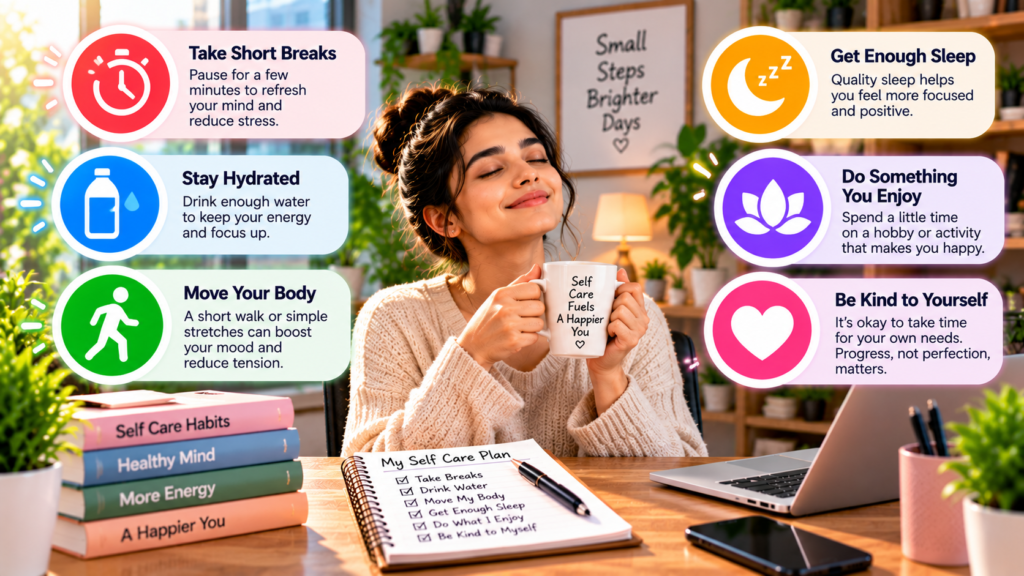
A self care routine works best when it fits naturally into your day. Rather than trying to practice every idea at once, choose a few activities that address your most important needs.
Here is an example of a simple routine for busy people.
Morning: Drink water, stretch gently, and spend two minutes preparing for the day.
During work: Take short breaks, eat a balanced meal, and move around regularly.
Afternoon: Step away from your screen for a few minutes or take a short walk if possible.
Evening: Spend time on an enjoyable activity, connect with someone you care about, and prepare for the next day.
Before bed: Reduce screen use and follow a relaxing routine that supports sleep.
You can change this schedule according to your responsibilities and preferences. The purpose is to create a realistic pattern that helps you care for yourself without making your day more complicated.
Common Self Care Mistakes to Avoid
One common mistake is believing that self care must be expensive. You do not need costly products, special equipment, or regular spa visits to look after yourself. Simple daily habits can be meaningful and accessible.
Another mistake is trying to change everything at once. Starting too many new habits can make self care feel like another source of pressure. Begin with one or two activities and gradually add more when you are ready.
It is also important not to treat rest as something you must earn through hard work. Rest is a normal human need, not a reward that should only happen after every task is complete.
Finally, avoid comparing your routine with other people’s lifestyles. Your responsibilities, resources, and personal needs may be different.
Choose habits that support your own circumstances and allow yourself to adjust them over time.
Conclusion
Simple self care ideas for busy people can help make everyday life more balanced without requiring large amounts of time or money. Drinking enough water, taking short breaks, eating balanced meals, reducing unnecessary screen time, getting sufficient sleep, and making time for enjoyable activities are practical ways to begin.
In my opinion, the most important part of self care is consistency rather than perfection. You do not need to follow an elaborate routine or spend hours focusing on yourself. Small actions performed regularly can help you pay greater attention to your needs.
Start by choosing one habit that feels easy to introduce into your existing schedule. Once it becomes more familiar, add another activity that supports your wellbeing.
Remember that taking care of yourself does not mean neglecting your responsibilities or the people around you. It means recognizing that your own health and wellbeing deserve attention too.
With realistic expectations and a flexible approach, you can develop a self care routine that fits your lifestyle and helps you create a healthier, more satisfying daily life.