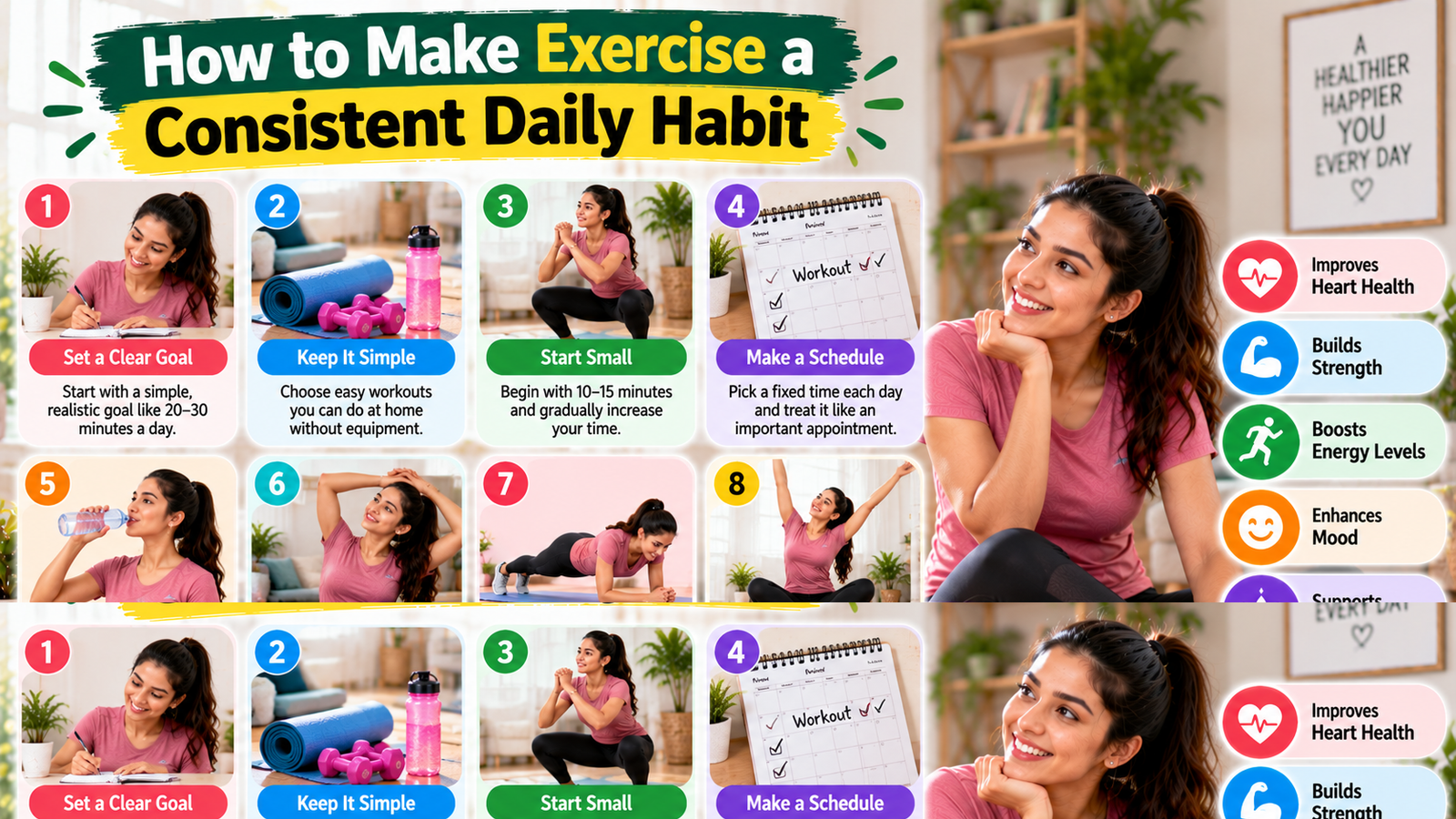
Starting an exercise routine at home is one of the simplest ways to become more active and build healthier daily habits. Many people want to exercise regularly but find it difficult to visit a gym because of busy schedules, transportation problems, or membership costs. The good news is that you can begin improving your fitness with simple exercises that require little space and no expensive equipment.
In my opinion, the best exercise routine for beginners is one that feels manageable and can be repeated consistently. You do not need to perform difficult workouts or spend hours exercising every day. Simple movements such as walking in place, squats, wall push ups, and gentle stretching can help you develop a regular fitness habit.
Daily exercise can support physical fitness, mobility, balance, and overall well being. It can also provide an opportunity to take a break from sitting and make movement a natural part of your routine.
In this article, I will explain easy daily exercises for beginners at home, how to create a simple workout schedule, and how to exercise safely while gradually improving your fitness.
Why Exercise at Home Is a Good Choice
Home workouts are convenient because you can exercise according to your own schedule. You do not need to travel to a gym or purchase expensive fitness equipment before getting started.
You can exercise in your living room, bedroom, or another safe area with enough space to move comfortably. A supportive pair of shoes, comfortable clothing, and a stable chair may be all you need for many beginner exercises.
Another benefit of exercising at home is flexibility. If you have only ten minutes available, you can complete a short session. When you have more time, you can add a few extra movements or take a longer walk.
Home exercise can also help beginners build confidence. You can learn movements at your own pace without feeling pressured to match another person’s performance.
The important thing is to start with exercises that suit your current fitness level and gradually increase your activity as your strength and endurance improve.
1. Start With Walking in Place
Walking in place is one of the easiest exercises for beginners. It raises your activity level without requiring much space, making it a useful choice for people who want to begin moving more at home.
To perform this exercise, stand upright with your feet about hip width apart. Begin lifting one foot and then the other as if you are walking. Swing your arms naturally and keep your movements comfortable.
Start slowly for one to three minutes. As your fitness improves, you can gradually extend the duration.
You can make walking in place more interesting by listening to music or doing it during a break from work. If comfortable, you can lift your knees slightly higher or increase your pace.
Try to maintain a natural breathing pattern. You should be able to speak while exercising at a comfortable beginner intensity.
Walking in place is a useful warm up before other exercises and can help reduce long periods of sitting.
2. Practice Bodyweight Squats
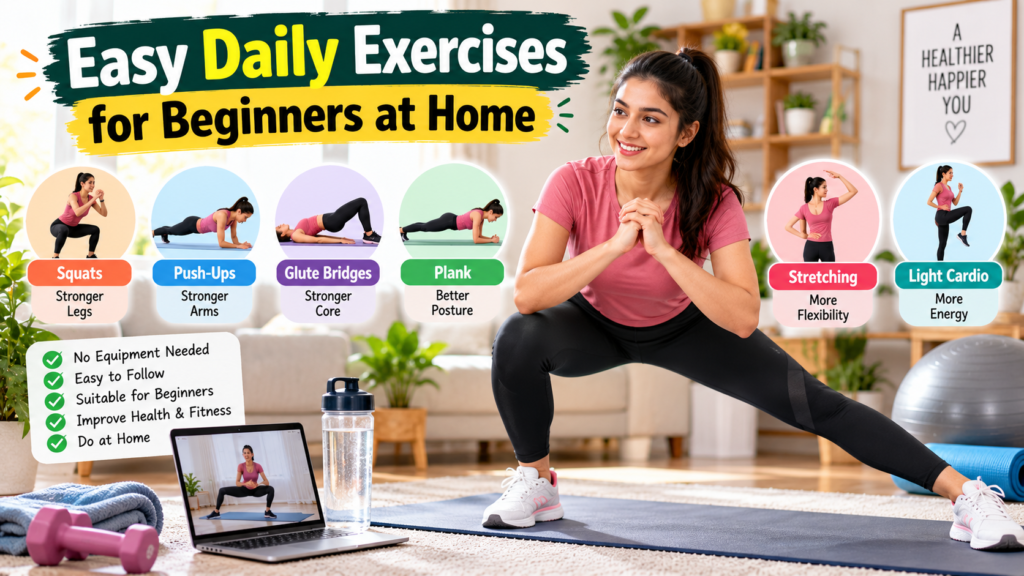
Squats are a common bodyweight exercise that works the muscles of the legs and hips. They also involve the muscles that help stabilize the body.
To begin, stand with your feet approximately shoulder width apart. Keep your chest comfortable and your back in a natural position. Slowly bend your knees and move your hips backward as though you are sitting on a chair.
Lower yourself only as far as you can comfortably manage. Then press through your feet and return to the standing position.
Beginners can start with five to eight repetitions. If a regular squat feels difficult, practice sitting down on a sturdy chair and standing back up with control.
Avoid rushing through the movement or allowing discomfort to build in your knees. Use a comfortable range of motion and focus on steady movement.
As your strength improves, you can gradually increase the number of repetitions or add another set.
Squats can be useful for developing lower body strength needed for everyday activities such as standing up, sitting down, and climbing stairs.
3. Try Wall Push Ups
Wall push ups are a beginner friendly alternative to traditional push ups. They work the chest, shoulders, and arms while allowing you to control how much effort the movement requires.
Stand facing a wall and place your palms against it at approximately shoulder height. Keep your hands a little wider than your shoulders.
Take a small step backward so that your body leans toward the wall. Bend your elbows and slowly bring your chest closer to the wall. Then push gently through your hands until your arms return to the starting position.
Begin with five to ten repetitions, depending on your comfort level.
Keep your body aligned and avoid arching your lower back. Move slowly rather than dropping toward the wall.
If the exercise feels too easy after several sessions, you can step slightly farther away from the wall, provided you can maintain good control.
Wall push ups are a practical way to introduce upper body strengthening without needing gym equipment.
4. Perform Standing Knee Raises
Standing knee raises can help you practice balance and strengthen muscles involved in lifting your legs.
Stand upright with your feet hip width apart. If needed, place one hand on a stable chair or countertop for support.
Slowly lift one knee toward your waist or to a comfortable height. Lower your foot gently, then repeat with the other leg.
Try five to ten repetitions on each side. Keep your upper body upright and avoid leaning backward to lift your knee higher.
You can perform this movement at a slow pace or use it as part of a gentle warm up.
If balance is difficult, keep a hand on a stable support throughout the exercise. Do not use a chair that can slide or tip.
Standing knee raises are simple enough for many beginners and can be adjusted to suit different ability levels.
5. Add Gentle Stretching
Stretching can help you move through a comfortable range of motion and may be useful for improving flexibility over time.
For beginners, gentle stretching is often a good way to start or finish a workout. It should feel controlled rather than painful.
You can begin with shoulder rolls, gentle arm stretches, calf stretches, and comfortable movements for the hips and legs.
For a calf stretch, stand facing a wall and place your hands against it. Step one foot backward while keeping that heel near the floor. Bend your front knee slightly and lean forward until you feel a gentle stretch in the back calf.
Hold the position for around 15 to 30 seconds without bouncing, then change sides.
For a shoulder stretch, gently bring one arm across your chest and use the other arm to support it. Keep your shoulders relaxed and avoid pulling forcefully.
Stretching should not cause sharp pain, tingling, or numbness. If it does, stop the movement.
Gentle stretching can be a useful addition to a home fitness routine, particularly when you spend long periods sitting.
6. Try Glute Bridges
Glute bridges are a floor exercise that works the muscles of the hips and buttocks. They also involve the muscles around the trunk.
Lie on your back on a comfortable exercise mat or other suitable surface. Bend your knees and place your feet flat on the floor, approximately hip width apart.
Keep your arms beside your body. Gently tighten your abdominal muscles and lift your hips until your shoulders, hips, and knees form a comfortable line.
Pause briefly, then lower your hips slowly to the floor.
Begin with five to ten repetitions. Move within a comfortable range and avoid lifting your hips so high that you arch your lower back excessively.
If getting down to or up from the floor is difficult, choose a standing exercise instead.
Glute bridges can be useful for beginners who want to include a simple hip strengthening movement in their home workout.
7. Practice Calf Raises
Calf raises are a simple exercise that strengthens the muscles at the back of the lower legs.
Stand with your feet hip width apart. Hold a sturdy chair or countertop for balance if necessary.
Slowly raise your heels so that you stand on the balls of your feet. Pause briefly at the top, then lower your heels in a controlled manner.
Start with eight to twelve repetitions if comfortable.
Avoid bouncing or rushing the movement. Keep your weight balanced across your feet and use support if you feel unsteady.
As your strength and balance improve, you may be able to perform the movement with less support. There is no need to progress quickly.
Calf raises can support everyday movements such as walking and climbing stairs. They are also easy to fit into a short home exercise session.
8. Include Seated Marching
Seated marching is a useful alternative for people who find standing exercises difficult or want a gentle movement during a break.
Sit upright in a sturdy chair with both feet on the floor. Hold the sides of the chair if needed.
Lift one knee a short distance, lower it gently, and repeat with the other leg. Continue alternating sides at a comfortable pace.
Start with 30 to 60 seconds and gradually increase the duration if it feels manageable.
Keep your back supported or upright according to your comfort, and avoid lifting your knees higher than you can control.
This exercise can be helpful for introducing movement into a sedentary day. However, if you have difficulty sitting safely or experience pain during the movement, stop and consider a suitable alternative.
9. Try Modified Planks
Planks involve the abdominal and other trunk muscles that help support posture and movement. A full floor plank can be challenging for beginners, so starting with a wall or countertop variation may be more comfortable.
Stand facing a wall and place your forearms or hands against it. Step back slightly and lean forward while keeping your body in a straight, comfortable line.
Gently engage your abdominal muscles and hold the position for about 10 to 15 seconds while breathing normally.
Repeat two or three times if comfortable.
As your strength improves, you may try a plank against a stable countertop or another suitable elevated surface. Make sure the surface cannot move or tip.
Do not hold your breath or force your body into a position that causes pain. A shorter, controlled hold is more useful than an extended hold with poor form.
Modified planks offer a gradual way to introduce trunk strengthening into a beginner routine.
10. Make Walking a Daily Habit
Although indoor exercises are useful, regular walking is another practical way to increase physical activity. You can walk outdoors, around your home, in a corridor, or on a treadmill if one is available.
Start with a duration that fits your current ability. For some beginners, five or ten minutes may be a reasonable starting point. Others may be comfortable walking longer.
Try walking at a pace that increases your breathing slightly while still allowing you to talk. If you are just beginning, short walks spread throughout the day can be easier to maintain than one long session.
You can also add walking to everyday activities by taking movement breaks, walking while speaking on the phone, or choosing stairs when appropriate and safe.
The World Health Organization recommends that adults work toward at least 150 to 300 minutes of moderate intensity aerobic activity per week, along with muscle strengthening activities on at least two days. Beginners do not need to reach this target immediately. Starting with small amounts and building gradually is a sensible approach.
A Simple Daily Exercise Routine for Beginners
A beginner routine does not need to include every exercise at once. Choose a few movements and allow enough time to learn them comfortably.
Here is an example of a short home workout:
| Exercise | Starting duration or repetitions |
|---|---|
| Walking in place | 2 minutes |
| Chair sit to stands or squats | 5 to 8 repetitions |
| Wall push ups | 5 to 10 repetitions |
| Standing knee raises | 5 to 10 per leg |
| Calf raises | 8 to 12 repetitions |
| Gentle stretching | 2 to 3 minutes |
Start with one round and rest between movements whenever needed. This routine may take around 10 to 15 minutes, depending on your pace and rest periods.
You can adjust the routine according to your fitness level. If a movement is uncomfortable or difficult, reduce the repetitions or choose an easier alternative.
You do not have to perform the same routine every day. Alternating strengthening exercises with gentle walking or mobility work can help make the week more varied.
How to Create a Weekly Home Exercise Plan
Planning exercise ahead of time can help you turn occasional movement into a consistent habit.
Monday: Walking in place, chair squats, and wall push ups.
Tuesday: Gentle walking and stretching.
Wednesday: Walking in place, calf raises, and glute bridges if comfortable.
Thursday: A short walk and gentle mobility exercises.
Friday: Repeat your preferred strengthening exercises.
Saturday: Enjoy a longer walk or another comfortable activity.
Sunday: Choose gentle movement or rest according to how you feel.
This schedule is only an example. You can adjust it to your available time, energy, and ability. If you experience unusual fatigue or persistent soreness, allow more recovery time.
Consistency matters more than following a perfect schedule. Even a few minutes of movement can be a useful starting point.
Tips for Exercising Safely at Home
Safety is important, particularly when you are learning new exercises.
First, make sure you have enough space to move without hitting furniture or slipping on loose rugs. Wear comfortable clothing and suitable footwear when needed.
Begin each session with a few minutes of gentle movement to warm up. Start with easier versions of exercises and increase the duration or repetitions gradually.
Pay attention to your breathing. Avoid holding your breath during strengthening movements, and take breaks whenever necessary.
You should expect some effort during exercise, but sharp pain, chest discomfort, severe shortness of breath, or dizziness are not signs to push through. Stop exercising and seek appropriate medical care for concerning symptoms. Severe or sudden symptoms may require emergency assistance.
If you have a chronic health condition, recent injury, balance problems, or have been inactive for a long time and are unsure what is suitable, consult a qualified healthcare professional before beginning a new routine.
Common Exercise Mistakes Beginners Should Avoid
Starting too intensely: Doing too much on the first day can lead to excessive soreness or discourage you from continuing. Begin with manageable sessions.
Ignoring proper technique: Controlled movements are more useful than rushing through repetitions. Use a chair, wall, or countertop for support when appropriate.
Skipping rest: Recovery is part of a sustainable exercise routine. Allow yourself time to rest between harder sessions.
Expecting immediate results: Improvements in fitness take time. Focus on gradually building a consistent habit.
Comparing yourself with others: Every person starts from a different level. Measure progress by your own comfort, strength, and consistency.
Forgetting hydration: Drink water regularly, particularly when exercising in warm conditions.
Avoiding these mistakes can make home workouts more comfortable and easier to maintain.
Conclusion
Easy daily exercises for beginners at home can be a practical way to improve physical activity without requiring a gym membership or expensive equipment. Simple movements such as walking in place, chair squats, wall push ups, calf raises, and gentle stretching can help you begin building a regular fitness routine.
I believe the best approach is to start small, focus on comfortable movement, and increase your activity gradually. Choose exercises that fit your abilities, make time for recovery, and adjust your routine when necessary.
You do not need to complete a long workout every day to get started. Begin with 10 minutes of manageable activity, and build from there as your confidence and fitness improve.
With patience and consistency, home exercise can become a valuable part of your everyday lifestyle and help you work toward better strength, mobility, and general well being.