Emotional wellbeing is an important part of living a healthy and balanced life. It influences how I respond to everyday challenges, manage my feelings, maintain relationships, and make decisions. When I take care of my emotional wellbeing, I may find it easier to handle stress, understand my needs, and enjoy ordinary moments in daily life.
However, emotional wellbeing does not mean feeling happy all the time. Everyone experiences sadness, frustration, worry, disappointment, and uncertainty at different points in life. These feelings are a natural part of being human. The goal is to develop healthy habits that help me understand my emotions and respond to difficult situations in constructive ways.
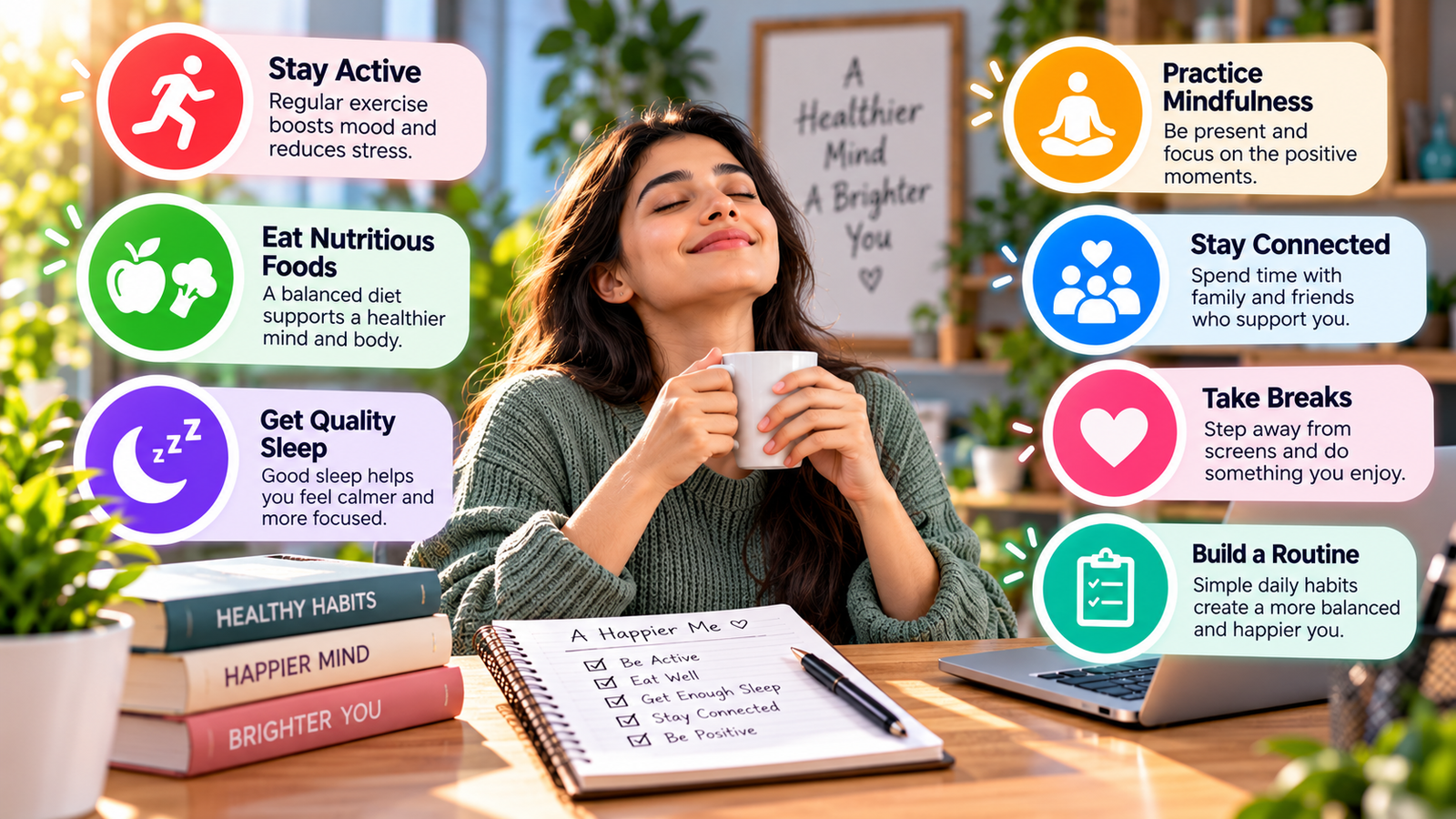
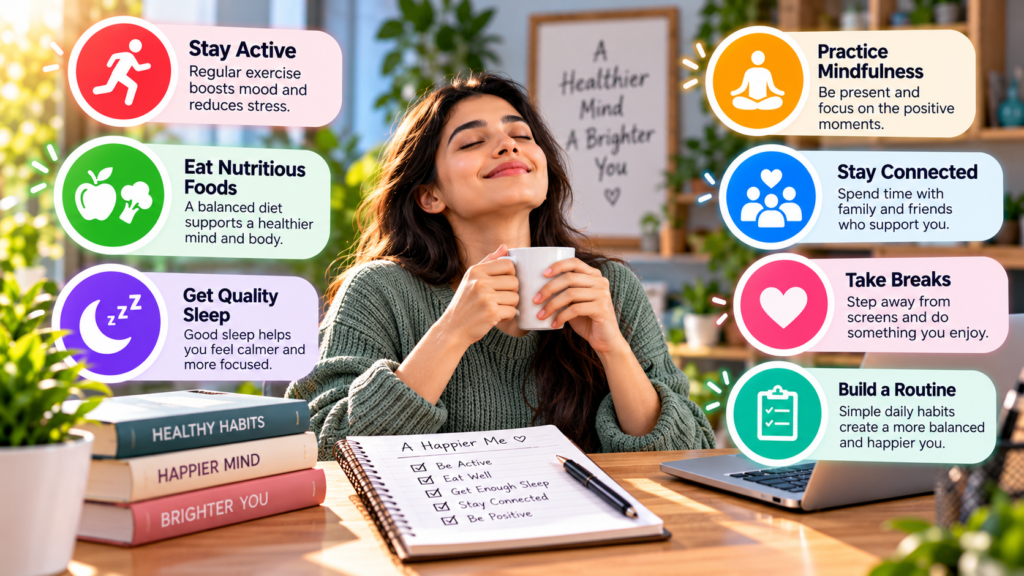
In my opinion, small daily actions can make a meaningful difference over time. Getting enough sleep, staying physically active, spending time with supportive people, eating balanced meals, and making room for relaxation are practical ways to support emotional health.
I do not need to change my entire lifestyle in one day. By introducing manageable habits and practicing them consistently, I can build a routine that supports both my physical health and emotional wellbeing.
1. Maintain a Consistent Sleep Schedule
Sleep plays an important role in emotional wellbeing. When I do not get enough rest, I may feel more irritable, find it harder to concentrate, or struggle to manage everyday problems. A tired mind can sometimes make small challenges feel much bigger than they really are.
One useful habit is maintaining a reasonably consistent bedtime and waking time. A regular schedule helps me create a predictable routine and gives my body an opportunity to rest properly.
Most adults need around seven to nine hours of sleep each night, although individual needs can vary.
I can improve my sleep habits by creating a comfortable bedroom, reducing unnecessary screen time before bed, and avoiding caffeine late in the day if it affects my sleep. I can also establish a relaxing evening routine that includes reading, gentle stretching, or listening to calming music.
If my mind feels busy at bedtime, writing down tomorrow’s priorities may help me avoid repeatedly thinking about unfinished tasks.
Good sleep cannot remove every emotional challenge, but adequate rest can support a more balanced mood and help me approach daily responsibilities with greater patience.
2. Stay Physically Active
Regular physical activity is another useful habit for supporting emotional wellbeing. Exercise provides an opportunity to move my body, take a break from daily responsibilities, and focus my attention on something positive.
I do not need to complete intense workouts to become more active. Walking, cycling, dancing, swimming, gardening, and simple home exercises can all be suitable options.
For example, I might take a short walk in the morning or spend ten minutes stretching after a long period of sitting. If I enjoy outdoor activities, I can visit a nearby park or walk around my neighborhood.
Physical activity can help improve mood for many people and may support better sleep and stress management. However, the effects vary from person to person, and exercise should not be treated as a replacement for professional care when needed.
The best approach is to choose activities that match my abilities and interests. Starting with a small amount of movement and gradually increasing it can make exercise easier to maintain.
By making physical activity part of my routine, I can support my overall health while creating regular opportunities to refresh my mind.
3. Eat Balanced and Nutritious Meals
The food I eat supports my body’s energy needs and provides nutrients that help maintain normal physical functions, including those involved in brain health. Regular, balanced meals can also make my daily routine feel more stable.
I can support healthy eating by including a variety of vegetables, fruits, whole grains, beans, nuts, and suitable protein sources in my meals. Eggs, yogurt, fish, lentils, and other foods can be useful choices depending on my preferences and dietary needs.
I should also avoid putting unnecessary pressure on myself to follow a perfect diet. Healthy eating does not require expensive ingredients or complicated recipes. Simple home cooked meals can provide a practical foundation for everyday nutrition.
Skipping meals because I am too busy may leave me feeling tired or distracted. Planning meals in advance and keeping nutritious snacks available can help me make convenient choices.
Drinking enough water throughout the day is also important. I can keep water nearby and drink regularly according to my needs and activity level.
Food alone cannot guarantee emotional wellbeing, but balanced nutrition is one part of a broader lifestyle that supports physical and emotional health.
4. Learn to Recognize Your Emotions
Understanding my emotions can help me respond to difficult situations more thoughtfully. Sometimes, I may feel frustrated, worried, or disappointed without immediately understanding why.
Instead of ignoring these feelings, I can take a moment to identify what I am experiencing.
For example, I might recognize that I feel anxious because I have several deadlines approaching. I may feel disappointed because an important plan did not work out. Naming the emotion can help me understand what may be contributing to it.
I can ask myself a few simple questions:
- What am I feeling right now?
- What situation may have contributed to this feeling?
- Is there something practical I can do to address it?
- Would it help to talk to someone or take a short break?
I do not need to judge myself for having uncomfortable emotions. Feeling upset does not mean that I am weak or incapable.
By developing greater emotional awareness, I can learn to respond to my needs rather than reacting automatically to every difficult situation.
5. Practice Mindfulness Every Day
Mindfulness involves paying attention to the present moment with an open and nonjudgmental attitude. It can be a useful habit when my thoughts are focused on past mistakes, future worries, or a long list of responsibilities.
I can practice mindfulness through simple daily activities without needing special equipment.
For example, while drinking tea, I can notice its taste and warmth. During a walk, I can pay attention to the sounds around me and the movement of my body. I can also spend a few minutes noticing my breathing while sitting comfortably.
When my mind wanders, I can gently bring my attention back to the activity. The goal is not to stop all thoughts but to become more aware of where my attention is going.
Even a few minutes of mindfulness may provide a helpful pause during a busy day. I can practice it in the morning, during a work break, or before going to bed.
With regular practice, mindfulness may help me become more aware of my reactions and approach some stressful situations with greater calmness.
6. Build Strong and Supportive Relationships
Healthy relationships can play an important role in emotional wellbeing. Having people I can talk to may help me feel understood and less alone when life becomes challenging.
I can maintain relationships by checking in with family members, spending time with friends, and making an effort to communicate openly.
These interactions do not always need to involve serious conversations. Sharing a meal, taking a walk together, discussing daily experiences, or enjoying a hobby with someone can strengthen a relationship.
I should also recognize the importance of listening. When someone shares a concern, giving them my attention and responding with kindness can help build trust.
At the same time, healthy relationships require boundaries. I should respect my own needs and recognize when a relationship consistently leaves me feeling pressured, unsafe, or emotionally exhausted.
If I am struggling, I can reach out to someone I trust rather than assuming that I must solve every problem alone.
Supportive relationships can provide encouragement, practical assistance, and a valuable sense of connection.
7. Manage Everyday Stress in Healthy Ways
Stress is a normal part of life, but ongoing pressure can make it harder to maintain emotional balance. Work deadlines, financial concerns, family responsibilities, and unexpected changes can all contribute to stress.
I can begin by identifying which situations create the most pressure in my daily routine. Once I understand the causes, I can consider realistic ways to manage them.
For example, if I feel overwhelmed by a long task list, I can divide my responsibilities into smaller steps. If constant notifications interrupt my concentration, I can silence unnecessary alerts during focused work.
Relaxation techniques may also help. I can take a short walk, practice comfortable breathing, listen to music, or spend a few quiet minutes away from my screen.
It is equally important to recognize what I cannot control. I may not be able to change every situation, but I can decide how to organize my time, seek support, and respond to certain challenges.
Healthy stress management is not about avoiding every difficulty. It is about developing practical ways to cope without allowing pressure to take over my entire routine.
8. Set Realistic Goals and Expectations
Unrealistic expectations can contribute to frustration and disappointment. If I expect myself to complete every task perfectly, satisfy everyone, and make constant progress, I may feel that I am never doing enough.
I can support my emotional wellbeing by setting goals that reflect my actual time, energy, and responsibilities.
Instead of trying to change several habits at once, I might focus on one or two manageable improvements. For example, I could aim to walk for fifteen minutes several days a week or establish a regular bedtime.
Breaking large goals into smaller steps makes it easier to begin and recognize progress.
I should also allow room for mistakes. A difficult day does not mean that I have failed, and a missed goal does not erase the effort I have already made.
It can be helpful to measure progress according to my own circumstances rather than comparing my achievements with other people.
Realistic expectations allow me to work toward improvement while maintaining a more compassionate attitude toward myself.
9. Make Time for Hobbies and Enjoyable Activities
Daily responsibilities can sometimes leave very little room for activities that bring enjoyment. When most of my time is spent working, studying, or handling household tasks, life may begin to feel repetitive.
Making time for hobbies can help create a healthier balance.
I might enjoy reading, cooking, gardening, drawing, listening to music, photography, or learning a new skill. I can also spend time outdoors or explore an activity that I have always wanted to try.
These activities do not need to be expensive or require several hours. Even fifteen minutes spent doing something I enjoy can provide a useful break.
I should choose hobbies because they interest me, not because I feel pressured to turn every activity into a productive achievement.
For example, I can read for pleasure without needing to finish a certain number of books. I can garden simply because I enjoy caring for plants.
Allowing myself to enjoy activities without constantly measuring results can support a more balanced relationship with time and personal achievement.
10. Reduce Unnecessary Social Media Use
Social media can help me stay connected with others, discover useful information, and enjoy entertainment. However, excessive use can sometimes contribute to stress, distraction, and unhealthy comparisons.
When I repeatedly compare my daily life with carefully selected online images, I may begin to believe that everyone else is more successful, happier, or more productive.
I should remember that online content rarely shows the full picture of someone’s life.
One useful habit is deciding when I want to use social media rather than checking it automatically throughout the day. I can turn off nonessential notifications, take breaks from applications, and avoid scrolling when I need to concentrate or rest.
I can also review the accounts I follow. If certain content repeatedly leaves me feeling discouraged, I can reduce my exposure to it.
Instead of spending every free moment online, I can use some of that time to walk, read, talk with someone, or enjoy a personal interest.
The goal is not to eliminate technology but to use it in a way that supports my emotional wellbeing.
11. Practice Gratitude Without Ignoring Difficulties
Gratitude involves noticing and appreciating positive aspects of life. It can help me pay attention to experiences that I might otherwise overlook during a busy or stressful day.
I can practice gratitude by writing down a few things I appreciated. These might include a supportive conversation, a meal I enjoyed, completing an important task, or having a quiet moment to myself.
The examples do not need to be extraordinary. Ordinary experiences can also be meaningful.
However, gratitude should not become a reason to dismiss difficult emotions. If I am disappointed, worried, or facing a serious problem, I do not need to pretend that everything is fine.
I can acknowledge what is difficult while also recognizing what remains positive or supportive in my life.
This balanced approach allows me to appreciate good experiences without placing pressure on myself to feel happy all the time.
Over time, a brief gratitude practice may help me reflect more thoughtfully on my everyday experiences.
12. Spend Time Outdoors
Spending time outdoors can be a simple way to add variety and relaxation to my daily routine. Natural surroundings, fresh air, and gentle physical activity may help some people feel calmer and more refreshed.
I can take a short walk in a park, sit in a garden, care for plants, or spend a few minutes outside during a break.
If I work indoors for most of the day, even a brief outdoor break can provide a change of environment.
I do not need to travel to a distant location to enjoy nature. A balcony with plants, a nearby green space, or a quiet outdoor area may be enough.
I should choose a safe and comfortable time, especially when the weather is very hot, and take suitable precautions such as drinking water and protecting myself from excessive sun exposure.
Outdoor activities are not a solution for every emotional difficulty, but they can be an enjoyable part of a broader self care routine.
13. Develop Healthy Boundaries
Emotional wellbeing can become harder to maintain when I repeatedly agree to responsibilities that exceed my capacity. I may feel pressured to respond to every request, solve other people’s problems, or remain available at all times.
Setting healthy boundaries helps me recognize my limits and make more realistic commitments.
For example, if my schedule is already full, I can explain politely that I cannot take on another responsibility right now. I can also establish reasonable limits around work messages during personal time.
Healthy boundaries do not mean ignoring the needs of others. They mean respecting my own needs while treating other people fairly.
I can practice communicating clearly rather than agreeing automatically and becoming overwhelmed later.
It is also important to understand that I cannot control every person’s reactions or expectations. I can be respectful and considerate without making myself responsible for everyone else’s feelings.
By protecting time for rest, relationships, and personal priorities, I can create a more sustainable daily routine.
14. Seek Professional Support When Needed
Healthy habits can support emotional wellbeing, but they do not solve every problem. Sometimes, difficult feelings become persistent or begin interfering with sleep, relationships, work, study, or everyday activities.
If this happens, I should consider speaking with a qualified mental health professional or healthcare provider.
A professional can help me understand what I am experiencing and explore suitable ways to manage it. Seeking support is a practical step toward better health, not a sign of personal weakness.
I can also reach out to a trusted person if I feel overwhelmed or isolated.
It is important to seek appropriate help when emotional difficulties continue or become difficult to manage alone. Daily habits can complement professional support, but they should not replace it when care is needed.
Conclusion
Healthy habits that support emotional wellbeing do not need to be complicated. Small daily actions, such as getting enough sleep, staying physically active, eating balanced meals, recognizing emotions, and maintaining supportive relationships, can help create a healthier lifestyle.
I can also make time for hobbies, practice mindfulness, manage stress, set realistic goals, and reduce unnecessary digital distractions.
In my opinion, the most important step is to start with changes that fit my current lifestyle. I do not need to develop every habit at once or expect myself to feel positive every day.
Emotional wellbeing is an ongoing process that requires patience, self awareness, and flexibility. Some days will be easier than others, and experiencing difficult emotions is a normal part of life.
By taking small steps, respecting my personal needs, and seeking support when necessary, I can build healthier habits that support a more balanced and fulfilling everyday life.