Introduction
Modern life can feel busy and overwhelming. Between work, family responsibilities, daily tasks, and constant notifications from our phones, it is easy to spend most of the day thinking about the past or worrying about the future. Sometimes, we complete our daily activities without paying much attention to what we are doing or how we are feeling. This is where mindfulness can make a positive difference.
Mindfulness is the practice of paying attention to the present moment without judging our thoughts, emotions, or experiences. It does not require special equipment, expensive classes, or hours of meditation. Beginners can start with a few simple exercises and gradually make mindfulness part of their everyday routine.
In my view, mindfulness is most useful when it becomes a small, realistic habit rather than another task on a busy schedule. Even a few minutes of focused breathing, mindful walking, or quiet reflection can help us become more aware of our thoughts and daily experiences.
In this guide, I will explain simple mindfulness practices for beginners, how to use them in everyday life, and how to develop a routine that feels comfortable and manageable.
What Is Mindfulness?
Mindfulness means paying attention to what is happening in the present moment. It includes noticing your breathing, observing your surroundings, recognizing your emotions, and becoming aware of your thoughts without immediately reacting to them.
For example, when drinking a cup of tea, you might usually check your phone or think about your next task. A mindful approach involves noticing the warmth of the cup, the smell of the tea, its taste, and how you feel while drinking it.
Mindfulness does not mean forcing your mind to become completely empty. Thoughts naturally appear, and feelings change throughout the day. The goal is to notice these experiences and gently bring your attention back to the present.
For beginners, the most important thing is to practice without expecting perfection. Your mind may wander many times, and that is a normal part of the process.
1. Start With Simple Breathing Exercises
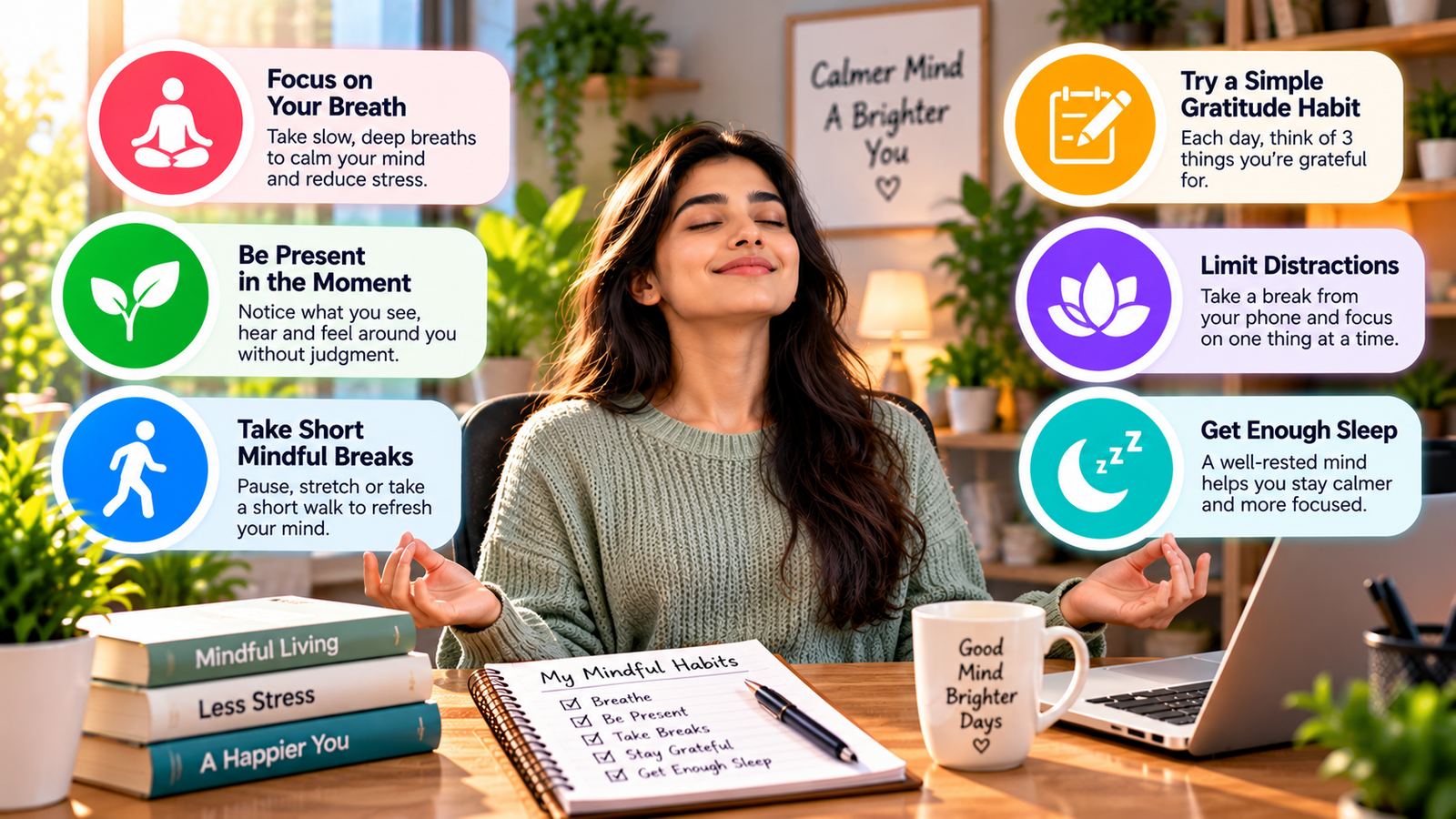
Focused breathing is one of the easiest mindfulness practices for beginners. You can practice it at home, during a break at work, or whenever you need a quiet moment.
Find a comfortable position and allow your shoulders to relax. Breathe naturally and pay attention to the air moving in and out of your body. Notice the gentle movement of your chest or abdomen as you breathe.
When your mind moves toward a worry or unfinished task, acknowledge the thought and return your attention to your breathing.
Start with two to five minutes each day. There is no need to control every breath or breathe deeply if it feels uncomfortable. Natural breathing is enough.
I recommend practicing at a consistent time, such as after waking up or before going to bed. A regular time can make the habit easier to remember.
2. Practice Mindful Walking
Walking provides an excellent opportunity to practice mindfulness without sitting still. This is especially helpful for people who find traditional meditation difficult.
Choose a safe and comfortable place to walk. Pay attention to how your feet touch the ground, how your body moves, and how the air feels against your skin.
You can also notice nearby sounds, trees, buildings, or other details that you usually overlook. Try to experience the walk without constantly checking your phone or planning your next activity.
Begin with five minutes of mindful walking. You do not need to walk unusually slowly or change your normal pace. Simply bring more attention to the experience.
Mindful walking can also help you add moments of awareness to an existing daily habit. For example, you might practice while walking around your garden, moving through a quiet park, or taking a short break outside.
Always remain aware of traffic and your surroundings, particularly when walking near roads.
3. Eat Your Meals With Attention
Many people eat while watching videos, scrolling through social media, or working. Although this may seem convenient, it can make meals feel rushed and less enjoyable.
Mindful eating means paying attention to your food and your experience while eating. Start by looking at your meal and noticing its colors, smells, and textures.
Take a comfortable bite and notice the taste. Chew at a relaxed pace and put your utensils down occasionally if that helps you slow down.
You can also pay attention to your hunger and fullness signals without judging yourself for what or how much you eat.
You do not need to make every meal a mindfulness exercise. Start with one meal or snack each day. Even a few attentive minutes can help you become more aware of your eating habits.
The purpose is to enjoy food more consciously, not to create strict rules or feel guilty when you eat while distracted.
4. Try a Short Body Scan
A body scan is a mindfulness exercise that involves noticing sensations in different parts of your body. It can help you become more aware of physical tension and how your body feels.
Sit comfortably or lie down in a quiet place. Begin by noticing your feet. Pay attention to any sensations, such as warmth, pressure, or contact with the floor.
Gradually move your attention to your legs, hips, abdomen, hands, shoulders, neck, and face. Spend a few moments noticing each area without trying to change anything.
If you notice tension, you can allow the muscles to relax gently if that feels comfortable. However, the main purpose is simply to observe.
A short body scan may take three to ten minutes. Beginners can start with only a few body areas and gradually extend the practice.
If focusing on physical sensations feels uncomfortable, keep your eyes open, shorten the exercise, or shift your attention to sounds in the room.
5. Notice Your Thoughts Without Judging Them
One important mindfulness skill is learning to observe thoughts without automatically believing or reacting to every one of them.
For example, you might think, “I have too much work, and I will never finish everything.” Instead of immediately becoming caught up in that thought, notice that your mind is producing a worried thought.
You might gently say to yourself, “I am noticing a worry about my workload.”
This simple change can create a little distance between the thought and your response. It does not mean ignoring real problems or pretending everything is fine. You can acknowledge the concern and then decide what practical step to take.
When practicing this skill, avoid labeling your thoughts as good or bad. Thoughts are part of the human experience, and they often appear automatically.
Over time, observing your thoughts may help you recognize patterns in how you respond to everyday situations.
6. Use Your Senses to Return to the Present
A simple way to practice mindfulness is to use your five senses. This exercise encourages you to notice what is happening around you instead of becoming completely absorbed in your thoughts.
Pause for a moment and identify:
- Five things you can see.
- Four things you can physically feel.
- Three things you can hear.
- Two things you can smell.
- One thing you can taste, if a taste is naturally present.
You can adjust the exercise to suit your environment. For example, notice the color of nearby objects, the feeling of your feet on the floor, or the sound of a fan.
This practice can be useful during an ordinary break or when you feel distracted. If focusing on the senses makes you uncomfortable, choose just one neutral sensation, such as the feeling of your feet resting on the ground.
The aim is to reconnect with the present moment in a simple and manageable way.
7. Take Mindful Breaks During the Day
Mindfulness does not need to be limited to formal meditation. You can practice it during short breaks between daily responsibilities.
If you spend many hours working at a desk, pause occasionally and notice your posture, breathing, and surroundings. Relax your shoulders, stretch gently if comfortable, and allow your attention to move away from your screen for a moment.
You can also take a mindful break before starting a new task. Instead of immediately rushing into the next activity, take a few natural breaths and decide what deserves your attention first.
These short pauses can make your day feel less automatic. They may also help you notice when you are tired, distracted, or becoming overwhelmed.
For beginners, one minute of mindful attention is a useful starting point. You can gradually increase the duration as the habit becomes more familiar.
8. Practice Gratitude Mindfully
Gratitude is another simple practice that encourages you to notice positive or meaningful parts of everyday life.
At the end of the day, take a few minutes to think about something you appreciated. It could be a helpful conversation, a comfortable place to rest, a meal you enjoyed, or progress on a small task.
Rather than simply listing several things, spend a moment remembering what made the experience meaningful to you.
You can write your reflections in a notebook or think about them quietly before sleeping.
Gratitude does not mean ignoring difficulties or forcing yourself to feel happy. Difficult emotions and appreciation can exist together. The purpose is to give meaningful experiences some attention rather than allowing the entire day to be defined by its problems.
9. Reduce Distractions During Everyday Activities
Phones, notifications, and frequent interruptions can make it difficult to remain attentive. Although technology is useful, constantly switching between activities can leave us feeling mentally scattered.
Try choosing one everyday activity and giving it your attention. You might prepare breakfast without checking your phone, listen carefully during a conversation, or complete a small household task without switching between multiple activities.
You can also silence unnecessary notifications during focused work periods.
The goal is not to avoid technology completely. Instead, become more intentional about when you use it and when you give your attention to something else.
Start with a manageable period, such as ten minutes. Once this feels comfortable, experiment with other activities.
10. Create a Simple Daily Mindfulness Routine
A consistent routine can help beginners practice mindfulness without spending too much time planning.
Here is an example of a simple daily schedule.
Morning: Spend three minutes noticing your breathing before beginning your daily tasks.
During the day: Take a one minute mindful break between activities or practice paying attention to your surroundings during a short walk.
At mealtime: Eat a few bites slowly and notice the taste and texture of your food.
Evening: Spend five minutes reflecting on your thoughts, physical sensations, or one meaningful experience from the day.
You do not have to follow this schedule exactly. Choose the practices that fit your lifestyle and adjust them whenever necessary.
Consistency is more important than duration. A short practice that fits your routine is often easier to maintain than an ambitious plan that feels difficult to follow.
Common Mindfulness Mistakes Beginners Should Avoid
When starting mindfulness, it is helpful to understand that progress does not mean having a perfectly calm mind.
One common mistake is expecting every session to feel relaxing. Some days, you may feel calm, while on other days, you may notice restlessness or distracting thoughts. Both experiences are normal.
Another mistake is criticizing yourself whenever your attention wanders. Mindfulness involves noticing that your attention has moved and gently bringing it back. That moment of returning is part of the practice.
Some beginners also try to practice for too long at the beginning. Starting with a few minutes can make the experience less intimidating and easier to repeat.
Finally, avoid treating mindfulness as a way to eliminate every difficult emotion. It is better understood as a way to become more aware of your experiences and respond to them with greater intention.
If mindfulness exercises increase distress, anxiety, or uncomfortable memories, stop or modify the practice. Consider seeking guidance from a qualified mental health professional if these reactions continue.
Benefits of Mindfulness for Everyday Life
Regular mindfulness practice may support several aspects of daily wellbeing. It can help people become more aware of distractions, recognize emotional reactions, and pay closer attention to ordinary experiences.
Some people find mindfulness useful for managing everyday stress, improving concentration, or approaching difficult situations more thoughtfully. It may also encourage a more deliberate approach to habits and relationships.
However, the benefits vary from person to person. Mindfulness is not a guaranteed solution for stress, sleep difficulties, anxiety, or other health concerns. It can be one useful part of a broader approach to wellbeing that includes adequate rest, physical activity, supportive relationships, and professional care when needed.
The best way to begin is to experiment with a few simple techniques and notice which ones feel helpful in your own life.
Conclusion
Simple mindfulness practices for beginners can be an accessible way to bring more awareness into everyday life. You do not need special equipment, extensive experience, or a large amount of free time. Focused breathing, mindful walking, attentive eating, body scans, and short daily pauses are practical places to start.
In my opinion, the most important part of mindfulness is learning to pay attention without constantly judging yourself. Your mind will wander, and your routine will not always go as planned. Instead of treating these moments as failures, use them as opportunities to begin again.
Start with one practice that feels comfortable and spend a few minutes doing it each day. As you become more familiar with mindfulness, you can introduce other exercises that suit your schedule.
With patience and regular practice, mindfulness may help you approach daily activities with greater awareness and develop a more thoughtful relationship with your thoughts, feelings, and surroundings.