Introduction
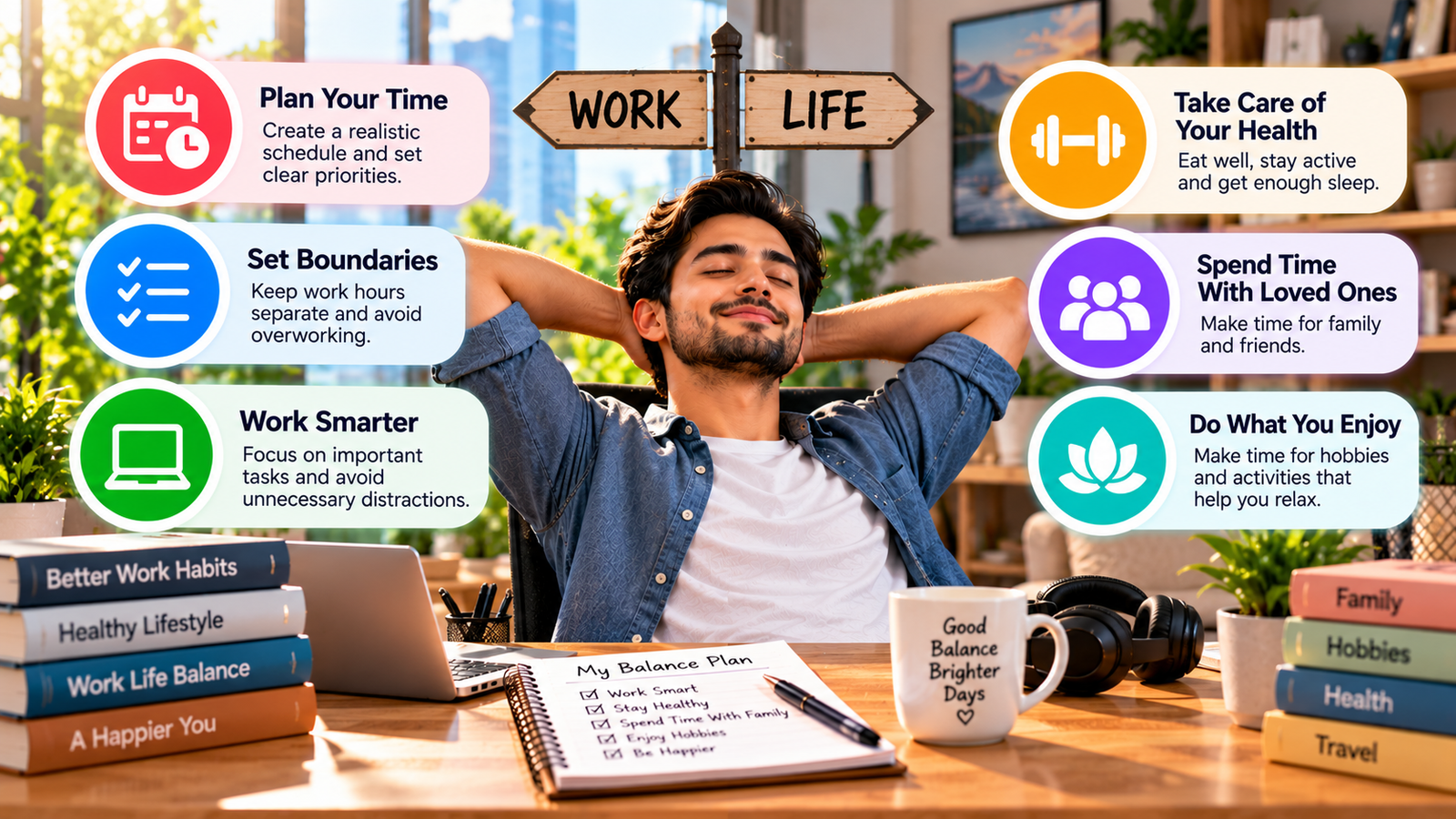
Maintaining a healthy work life balance has become increasingly important in today’s busy world. Many people spend long hours working, managing deadlines, responding to messages, and handling responsibilities at home. When work takes up too much time and attention, it can become difficult to enjoy personal activities, spend time with family, or get enough rest.
In my opinion, a healthy work life balance is not about giving exactly the same number of hours to work and personal life every day. It is about managing responsibilities in a way that allows you to work productively while also taking care of your physical health, emotional wellbeing, relationships, and personal interests.
Whether you work in an office, run a business, study while working, or work from home, small changes to your daily routine can make a meaningful difference. You do not need to change your entire lifestyle overnight. Instead, you can start by setting realistic priorities, managing your time, and creating clear boundaries between professional and personal responsibilities.
In this guide, I will explain practical ways to maintain a healthy work life balance and build habits that support a more organized and satisfying lifestyle.
What Is Work Life Balance?
Work life balance refers to the ability to manage professional responsibilities alongside personal needs and activities. It includes making time for work, family, friends, hobbies, physical activity, relaxation, and sleep.
A balanced lifestyle does not mean that work will never become stressful or that every day will follow a perfect schedule. Some weeks may require extra effort at work, while other periods may allow more time for personal activities.
The important point is to prevent temporary busy periods from becoming a permanent pattern that leaves you exhausted or disconnected from the people and activities that matter to you.
A healthy balance also looks different for everyone. A parent may need more flexibility around family responsibilities, while a remote worker may need clear boundaries between working hours and personal time. Understanding your own priorities is the first step toward finding an approach that works for you.
1. Set Clear Boundaries Between Work and Personal Life
One of the most effective ways to improve work life balance is to establish clear boundaries. Without boundaries, professional responsibilities can gradually take over your personal time.
For example, you might plan to finish work at a certain time but continue checking emails throughout the evening. Although each task may seem small, these interruptions can make it difficult to relax.
Try setting a realistic starting and finishing time for your workday whenever your job allows it. Communicate your availability to colleagues and avoid accepting additional responsibilities when your schedule is already full.
If you work from home, create a specific workspace that helps you separate professional activities from personal activities. When your workday ends, close your laptop, organize your desk, and move to another area if possible.
Some jobs require evening availability or changing schedules, so strict boundaries may not always be practical. In those situations, focus on protecting regular periods of personal time whenever possible.
2. Plan Your Day According to Priorities
Poor time management can make even a manageable workload feel overwhelming. When every task seems equally important, it becomes difficult to decide where to begin.
I recommend starting each day by identifying the two or three tasks that matter most. These should be the activities that require your attention first or contribute most directly to your goals.
You can write your priorities in a notebook, use a digital task manager, or create a simple daily checklist.
Divide larger assignments into smaller steps so that you can make steady progress without feeling overwhelmed. For example, instead of writing an entire report in one sitting, plan time for research, outlining, writing, and reviewing.
It is also helpful to leave some space in your schedule for unexpected requests. A timetable that is completely full can become stressful when something takes longer than expected.
Remember that being productive does not mean completing every possible task. It means using your time thoughtfully and focusing on the work that matters most.
3. Learn to Say No When Necessary
Many people struggle with work life balance because they find it difficult to refuse additional responsibilities. They may accept extra assignments to avoid disappointing others or because they want to appear dependable.
However, agreeing to everything can lead to an unrealistic workload and leave little time for personal needs.
Learning to say no politely is an important professional skill. Before accepting a new task, consider your current responsibilities, available time, and deadlines.
You do not always need to reject a request completely. You can explain that you are currently working on other priorities and ask whether the task can be scheduled for another time.
For example, you might say that you can complete the assignment next week but cannot reasonably finish it today. This gives the other person a clear understanding of your availability.
When possible, discuss competing priorities with your manager instead of silently taking on more work. Clear communication can help everyone understand what can realistically be completed.
4. Take Regular Breaks During the Workday
Working continuously for long periods can make it harder to maintain concentration and manage daily stress. Short breaks provide an opportunity to step away from demanding tasks and reset your attention.
You can stand up, stretch gently, drink water, look away from your screen, or take a brief walk. Even a few minutes away from your desk can create a useful pause in a busy schedule.
One simple approach is to work for a focused period and then take a short break. Some people prefer working for 25 minutes followed by a five minute break, while others find longer work periods more suitable.
Experiment with different schedules to discover what works best for your responsibilities.
Try not to spend every break checking work messages or browsing information that keeps your mind focused on deadlines. When possible, use some of your break time for an activity that helps you feel refreshed.
Regular breaks are not a waste of time. They are part of creating a sustainable approach to work.
5. Make Time for Family and Relationships
Professional success is important, but personal relationships also contribute to a satisfying life. When work consistently receives all your attention, it may become difficult to maintain meaningful connections with family and friends.
You can begin by setting aside specific periods for the people who matter to you. This might include having dinner together, calling a family member, spending time with your children, or meeting a friend during the weekend.
Quality time does not always require expensive activities or long outings. A thoughtful conversation or a short walk together can be meaningful when you are fully present.
Try to reduce unnecessary phone use during these moments. Constant notifications can interrupt conversations and make it difficult to give others your attention.
If your work schedule is unpredictable, communicate with your family about your availability and make plans that fit your circumstances.
Maintaining relationships requires effort, but these connections can provide encouragement and support during challenging periods.
6. Create a Healthy Routine for Working From Home
Working from home can offer flexibility, but it can also blur the boundaries between professional responsibilities and personal life.
When your workplace is also your living space, you may feel tempted to continue working after normal hours. Household tasks and personal distractions can also interrupt your concentration.
To create a healthier routine, begin your day at a consistent time whenever possible. Get dressed, prepare your workspace, and identify the tasks you want to complete.
Choose a specific area for work, even if it is only a small desk or a quiet corner. Keeping your work materials organized can make it easier to concentrate.
Schedule breaks and meals rather than allowing work to continue without interruption. At the end of the day, review your progress, prepare for tomorrow, and close your work applications.
If you cannot maintain a separate workspace, use a simple routine to mark the beginning and end of your workday. For example, you might put away your laptop and take a short walk after finishing your tasks.
These small signals can help create a clearer distinction between work and personal time.
7. Protect Your Sleep and Physical Health
A healthy work life balance depends partly on taking care of your body. When work regularly interferes with sleep, meals, and physical activity, it becomes harder to maintain energy throughout the day.
Try to establish a consistent sleep schedule that allows enough rest for your needs. Avoid making late night work a routine whenever it can reasonably be prevented.
Plan regular meals and keep simple, nutritious food available during busy periods. Skipping meals because of work can leave you feeling uncomfortable and may make your day more difficult to manage.
Physical activity is another useful part of a balanced routine. You do not need an intense exercise program to begin. Walking, stretching, cycling, or doing a short home workout can help you include movement in your day.
If you spend many hours sitting, stand up and change positions regularly.
The goal is not to create another demanding list of responsibilities. Instead, make basic health habits a natural part of your schedule.
8. Reduce Unnecessary Digital Distractions
Digital devices make it easier to communicate and complete professional tasks, but they can also extend the workday beyond its intended limits.
Frequent notifications, emails, and messages can interrupt personal activities and make it difficult to concentrate on one task at a time.
Start by reviewing which notifications genuinely require your immediate attention. Silence nonessential alerts during focused work periods and consider limiting work related notifications during personal time.
You can also schedule specific periods to check emails rather than responding to every message as soon as it arrives, provided your role allows this approach.
Outside working hours, avoid checking professional messages simply out of habit. If you need to remain available for urgent situations, establish clear rules about what qualifies as urgent.
These changes can help you use technology more intentionally while protecting your attention and personal time.
9. Make Time for Hobbies and Personal Interests
A balanced life should include activities that you enjoy for reasons unrelated to work. Hobbies can provide a welcome change from professional responsibilities and create opportunities for learning, creativity, and relaxation.
Think about activities that make you feel interested or refreshed. You might enjoy reading, gardening, cooking, photography, playing a sport, listening to music, or learning a new skill.
You do not need to spend hours on a hobby every day. Even 15 or 20 minutes can help you make room for something personally meaningful.
Schedule these activities just as thoughtfully as you schedule important work tasks. If you always wait until every responsibility is finished, you may never find enough time.
Personal interests are not simply rewards for completing work. They are a valuable part of a balanced lifestyle.
10. Review Your Workload and Adjust Your Expectations
Sometimes, poor work life balance is not caused by a lack of organization. The actual workload may be too large for the available time.
If you regularly work late, miss important personal activities, or struggle to recover between working days, take a closer look at your responsibilities.
Identify which tasks are essential, which can be postponed, and which may be delegated. If the workload remains unrealistic, discuss possible changes with your manager or clients.
It is also important to examine your own expectations. You may feel pressure to produce perfect results in every area of life, but this can create unnecessary stress.
Focus on doing important tasks well rather than trying to make every activity flawless.
Review your schedule weekly and identify what worked, what caused difficulties, and what could change. Small adjustments are often more sustainable than completely redesigning your routine.
11. Recognize Signs of an Unhealthy Work Life Balance
It is useful to notice when work begins to affect your everyday wellbeing. Possible warning signs include persistent tiredness, difficulty relaxing, irritability, reduced interest in hobbies, or regularly missing personal commitments because of work.
You may also find yourself thinking about work during nearly every free moment or feeling guilty whenever you take a break.
These experiences do not automatically mean you have a specific health condition, but they can indicate that your current routine needs attention.
Start by identifying the main source of pressure. It might be an unrealistic deadline, frequent interruptions, unclear expectations, or a lack of support.
Choose one practical change instead of trying to solve everything at once. You might protect your lunch break, discuss workload concerns, or set a more consistent finishing time.
If ongoing stress significantly affects your wellbeing, consider speaking with a qualified health professional or an appropriate workplace support service.
12. Build a Realistic Work Life Balance Plan
The most effective plan is one that matches your actual responsibilities and circumstances.
You can start by selecting three areas to improve. For example, you might want to finish work on time more often, include regular physical activity, and spend more uninterrupted time with family.
Next, turn each goal into a specific action. Instead of saying you want to relax more, decide to spend 15 minutes reading after dinner or take a short walk during your lunch break.
Review your progress at the end of each week. Ask yourself whether the changes were realistic and whether they improved your daily routine.
If something does not work, adjust it rather than abandoning the entire plan.
Remember that work life balance can change according to your circumstances. A busy period may require temporary adjustments, but it is important to return to healthy routines when possible.
Conclusion
Learning how to maintain a healthy work life balance is an ongoing process that requires awareness, planning, and realistic expectations. It involves more than managing a calendar. It means protecting your personal time, caring for your health, maintaining relationships, and setting boundaries that allow you to work without neglecting other important areas of life.
In my opinion, the best place to begin is with small changes that you can maintain consistently. Set clear working hours when possible, identify your main priorities, take regular breaks, reduce unnecessary distractions, and make time for activities that help you feel refreshed.
You do not have to achieve perfect balance every day. Some days will be more demanding than others, and that is a normal part of life. What matters is recognizing when work is taking too much of your time and making adjustments before the pattern becomes difficult to manage.
With practical habits and regular reflection, you can build a routine that supports both professional responsibilities and personal wellbeing. A healthier work life balance can help you approach your responsibilities more thoughtfully while making room for the people, activities, and experiences that matter most to you.